

When Medicine Meets Humanity – A Conversation with Queen Sofía About Brain Health
MADRID, SPAIN – Throughout my work as a professor of medicine and public health, I have often found myself returning to one fundamental question: How much of our health is determined by biology and how much by the society and culture in which we live?
That question has taken me to communities whose histories, traditions and genetic backgrounds have shaped their health in distinctive ways. In my writing, I have explored the relationship between genetics and disease among the Druze of the Middle East and the Karaite community of Eastern Europe. In both cases, I found that understanding disease requires looking beyond the laboratory and into the history, family structures, traditions and social environments that shape people’s lives.
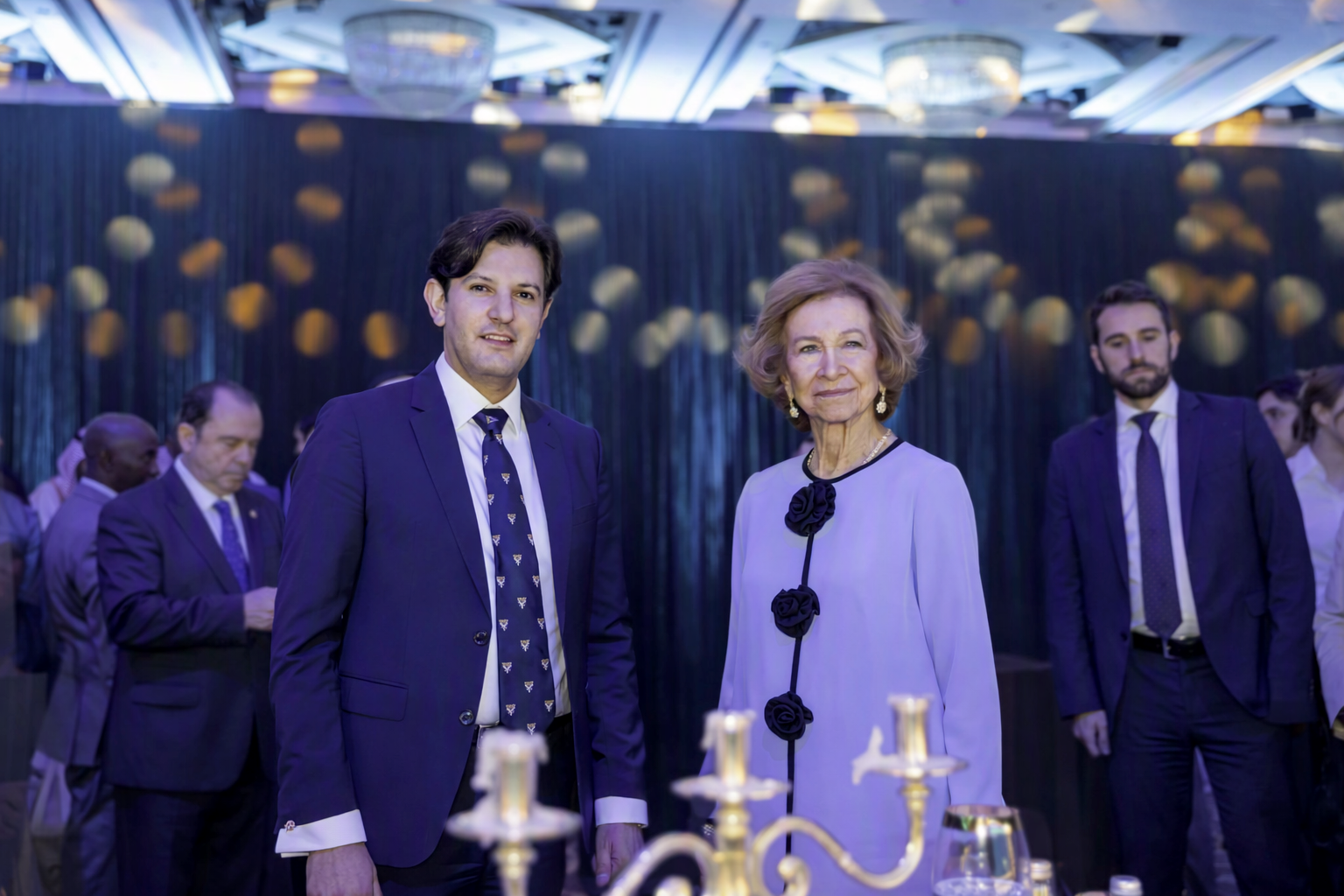
It was with this perspective in mind that meeting Queen Sofía of Spain was particularly meaningful to me.
Queen Sofía has devoted many years to raising awareness of Alzheimer’s disease and supporting research into neurodegenerative disorders. Her interest is not simply institutional. The Queen Sofía Foundation’s work has developed into a sustained commitment to Alzheimer’s research, patient care, education and support for families. The Foundation’s Alzheimer’s Center in Madrid incorporates research alongside care and training, reflecting a philosophy that neurological disease must be approached from more than one direction. That philosophy resonates with my own research.
One of my recent academic studies examined the way societies understand neurodevelopmental disorders. In reviewing the scientific literature, my colleagues and I found that knowledge and attitudes toward conditions affecting cognition and behavior can have profound consequences for patients and their families. Misunderstanding can lead to stigma, inadequate awareness can delay recognition and appropriate support and the burden of a neurological condition can extend far beyond the individual patient.
Although neurodevelopmental disorders such as autism and ADHD are fundamentally different from neurodegenerative diseases such as Alzheimer’s, there is an important connection between them, the health of the brain cannot be separated from the human environment surrounding it.
A diagnosis does not occur in isolation. It occurs within a family, a community and a healthcare system. How people understand a condition can influence whether patients seek care, how families respond, how healthcare professionals communicate and whether individuals experience acceptance or stigma.
This broader perspective is particularly important as the world confronts the growing challenge of neurodegenerative disease. Alzheimer’s and related disorders affect not only memory and cognition but also families, caregivers and communities. Queen Sofía’s work has recognized this wider social dimension. Her foundation has supported research ranging from early diagnosis to broader investigations into neurodegenerative diseases, while also emphasizing care, education and awareness.
In fact, the Foundation’s recent initiatives continue to emphasize the importance of scientific research and the search for earlier ways of detecting and understanding neurological diseases. In 2025, Queen Sofía presided over the launch of the Foundation’s “Cerebros Extraordinarios” campaign, promoting brain donation to advance research into neurodegenerative diseases.
This intersection between science and humanity is what I find most compelling.
My research has taught me that genetics can explain susceptibility, but it rarely explains the whole story. Culture can influence behavior, family structures can influence resilience, social attitudes can influence whether people seek treatment and healthcare systems can determine whether scientific knowledge ultimately reaches those who need it. Queen Sofía’s work reminds us of another essential dimension; research must ultimately serve people.
Whether we are studying the genetic history of a small community, examining attitudes toward neurological conditions, or searching for earlier markers of Alzheimer’s disease, the objective should remain the same, to understand disease more deeply while preserving the dignity of the people living with it.
Meeting Queen Sofía therefore gave me an opportunity to see my own research from a somewhat different perspective. My work has often taken me across cultures and communities in search of the relationship between biology and society. Her work has followed a different path, focusing much of its attention on one of humanity’s most challenging neurological diseases.
Yet both paths lead to the same place. Medicine is not only about understanding disease. It is about understanding people. And perhaps that is where science and humanity meet most meaningfully: in our effort not simply to add years to life, but to preserve cognition, dignity, independence, compassion and human connection for as long as possible.