
When Memory Is Weaponised: The Shame of Appropriating Jewish Suffering
There are sacrileges so obscene that they require no embellishment to be recognized for what they are. One such act — a Palestinian flag planted beside a memorial in Conselice honoring Jews arrested under the 1943 Nazi-Fascist racial laws and deported to Auschwitz — is not merely tasteless or provocative. It is a deliberate, grotesque distortion of history. It is an act that turns a place of mourning into a theatre of political theatre, substitutes reflection for performance, and mocks the dead to score partisan points.
To be blunt: equating the present conflict in Gaza with the systematic extermination of European Jewry trivializes the Holocaust and insults every soul whose life, family or future was extinguished in that industrialized evil. Holocaust memorials are sacred spaces — sites for grieving, learning and remembering the boundaries of human depravity. They are not staging grounds for contemporary grievance, nor should they be repurposed as props in propaganda campaigns.
But this lament is not about one isolated incident. Over the past two years a pattern has emerged among certain pro-Palestinian movements and actors which ought to alarm anyone who cares for historical truth and civic decency. The pattern is predictable and, unfortunately, effective: appropriating Jewish pain to claim victimhood; equating Israel — a pluralistic, democratic polity — with Nazi Germany; dressing contemporary tactical grievances in the language of genocide; and therefore demanding moral equivalence while absolving or excusing acts of political violence.
This is not merely rhetorical excess. It is an effort at narrative capture. By taking the vocabulary of Jewish suffering — Auschwitz, genocide, annihilation — and grafting it onto a wholly different historical and political context, these actors invert perpetrator and victim. They create a moral fog in which nuance is smothered, historical specificity erased, and the unique crime of the Holocaust reduced to a rhetorical device. When that device is draped over memorials, synagogues, or streets where Jews live and worship, it is not protest: it is desecration.
Why does this matter beyond the obvious moral outrage? Because history matters. The Holocaust is a particular horror with particular causes, particular victims and particular lessons. When we dilute those lessons by sloppy analogies or outright false equivalence, we impoverish public understanding. Worse, we provide cover for arguments that minimize antisemitism and recast it as legitimate dissent. That, in turn, endangers Jewish citizens in their daily lives. The data is stark: increases in antisemitic incidents, harassment of Jewish schools and synagogues, and a climate in which Jewish children are advised to hide visible signs of their faith. These are not abstractions. They are a concrete erosion of liberty and safety.
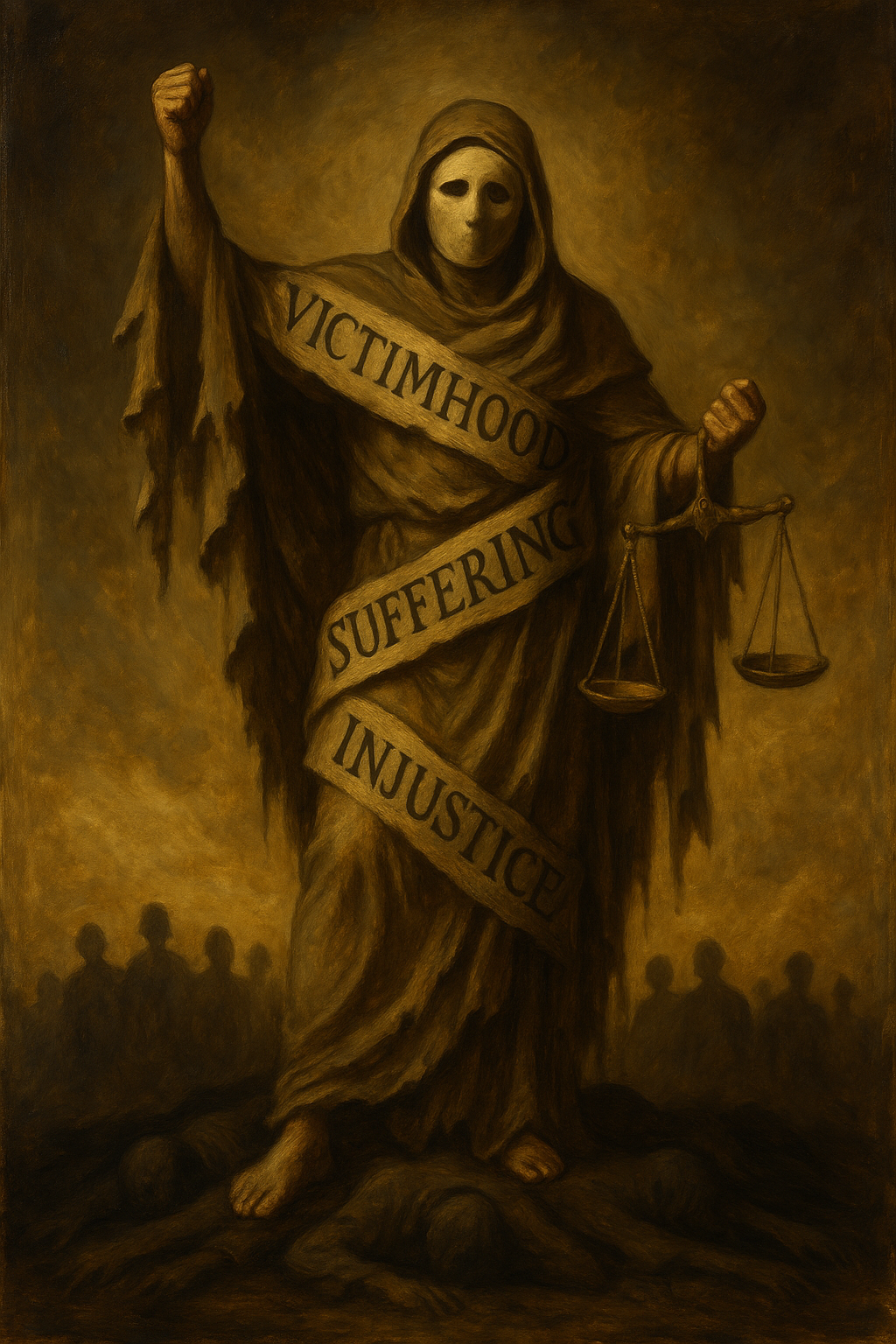
There is also an unmistakable tactical aim. By feigning the mantle of the aggrieved — by appropriating symbols and language of victimhood — contemporary activists seek to immunize themselves from criticism, to weaponize compassion, and to delegitimize any defense of Israel as moral callousness. It is a cynical manoeuvre that turns memory against its rightful purpose: remembrance for the prevention of recurrence.
We must anticipate where this may escalate. Remembrance Day, with its medleys of poppies and public commemoration, is a particularly vulnerable ritual. It gathers the nation in a collective act of memory and moral reckoning. It is precisely on such occasions — when the public mind is primed for empathy — that spectacle can be most damaging. Expect, therefore, attempts by some to convert remembrance into a platform for political theatre: to juxtapose Holocaust memorials and images of contemporary conflict as if the two are morally interchangeable; to stage displays that seek to shame rather than to enlighten; to perform a virtue that is merely rhetorical.
Let us call this what it is: hypocrisy. To appropriate the Holocaust in the service of a contemporary political grievance is to engage in moral theft. It is to turn the suffering of one people into a tool for another’s public relations. It is not solidarity; it is exploitation.
So what must be done? First, guardianship of memory must be reclaimed. Memorials, museums and remembrance events deserve a firm, non-partisan defense. Local authorities, museum curators, and custodians of public memory must establish clear rules: these are spaces for education and reflection, not for political staging. Where incidents occur, they must be recorded, publicly condemned and, where appropriate, prosecuted under laws guarding against hate or public disorder.
Second, we must insist on intellectual rigor and moral clarity in public discourse. Media outlets and commentators must refuse facile analogies and demand historical accuracy. Universities and schools should teach the Holocaust’s unique history with the care it requires, and simultaneously equip pupils to recognize bad-faith analogies when they are deployed.
Third, political leaders have a duty to speak plainly. Equivocation and euphemism are complicit. When elected figures use the language of the Holocaust as a blunt instrument or remain silent in the face of its misuse, they fail in their duty to protect both truth and citizens. Leadership requires the courage to condemn acts of appropriation and the humility to remember that remembrance itself must be protected from being converted into propaganda.
Fourth, civil society must mobilize. Interfaith groups, cultural organizations and Jewish communal bodies should be supported in creating alternative platforms of commemoration and education that reaffirm the integrity of memory and provide zero space for opportunism. The fabric of liberal society depends on the mutual recognition of tragedies and wrongs; we cannot allow that recognition to be monopolized by those who wish to instrumentalize it.
Finally, let us be clear-eyed about motives. Criticism of any state, including Israel, is legitimate and, in many cases, morally necessary. But criticism becomes delegitimization when it traffics in false equivalence, when it trades in symbols of genocide without grasping their gravity, and when it uses the language of victimhood to obscure responsibility. There is an ethical line between protest and profanation; we must mark it firmly.
The memorial in Conselice is a small, shameful example of a broader trend that corrodes memory and damages civic trust. If we permit such acts to pass without robust censure, we will not merely tolerate a single outrage—we will rewrite the terms of remembrance into something hollow. In this season of national memory, let us pledge to keep remembrance sacred, honest and untarnished. The dead demand no less, and the living owe them a dignity that cannot be bargained away for political convenience.