
When Politics Becomes Existential, Violence Follows
The lesson of the White House Correspondents’ Dinner shooting is not about left or right—but about what happens when we teach Americans to see each other as threats
The scene was jarring precisely because of where it unfolded.
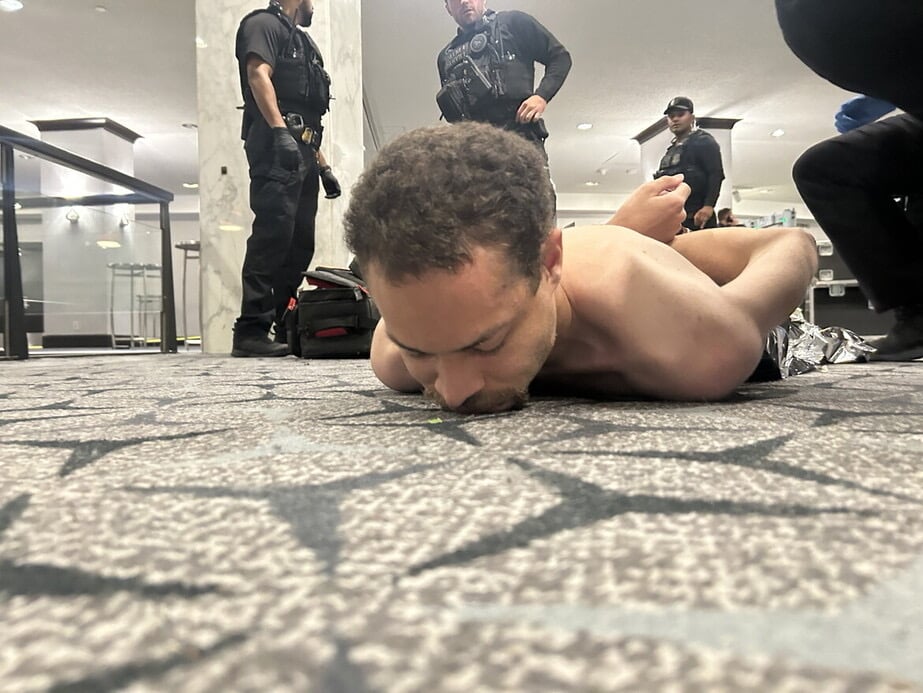
Black tie. Cameras. Journalists and elected officials gathered for what is supposed to be one of Washington’s most ritualized, almost self-congratulatory evenings—the White House Correspondents’ Dinner. And then, suddenly, chaos. A gunman, security scrambling, the President evacuated, attendees ducking for cover.
This was not supposed to happen there.
But perhaps that assumption is the problem.
We have spent years telling ourselves that political violence in America belongs to the “other side”—that it is the product of one ideology, one movement, one kind of extremism. The facts no longer support that comfort.
The shooting at the Correspondents’ Dinner—whatever investigators ultimately conclude about motive—arrives in a country already conditioned by a series of politically tinged acts of violence. A gunman targeting Republican members of Congress at a baseball practice in 2017. Multiple attempts on the life of former President Donald Trump amid a climate of relentless political hostility. High-profile killings and attacks in which perpetrators cast their actions as morally justified responses to perceived injustice.
The details differ. The ideologies differ. The targets differ.
But the underlying logic is disturbingly similar.
It is the logic that says political opponents are not merely wrong, but dangerous. Not misguided, but illegitimate. Not fellow citizens, but threats.
Once that line is crossed, the next step becomes easier to imagine.
We have normalized a language of politics that is saturated with existential stakes. Every election is described as the last. Every policy disagreement becomes a moral emergency. Every opponent is cast as uniquely unfit—not just to govern, but to exist within the bounds of acceptable society.
Call it what you will—some have labeled it “Trump Derangement Syndrome,” others see parallel pathologies on the right—but the effect is the same. A steady erosion of the distinction between political opposition and moral evil.
And when that distinction collapses, it is not surprising that a small number of individuals decide that removing the “evil” becomes a form of civic duty.
This is not a claim of moral equivalence between political movements. It is something both simpler and more unsettling: that extremism, once it takes hold, produces similar outcomes regardless of its ideological origin.
The danger is not confined to one party or one faction. It lies in the broader culture we have built—one that rewards outrage, amplifies fear, and treats compromise as betrayal.
Even now, the reaction to violence often depends less on the act itself than on who the victim is presumed to be. Outrage is filtered through political alignment. Condemnation is conditional. And so, the cycle continues, each side convinced that its own excesses are justified by the greater sins of the other.
The White House Correspondents’ Dinner shooting should have shattered at least one illusion—that certain spaces, certain institutions, certain rituals of American life are insulated from the consequences of our political climate.
They are not.
A country that teaches its citizens that their political opponents are existential threats should not be surprised when someone eventually decides to eliminate the threat.