When Refuge Turns into Reversal
Minneapolis–Saint Paul, antisemitism, and the danger of collective judgment
The Minneapolis–Saint Paul metropolitan area is home to the largest Somali community in the United States—a genuine American success story rooted in refuge from state collapse, civil war, and predation. That success is now under strain, threatened by a civic climate that has grown openly hostile to Jews and by the way antisemitism collapses nuance into collective blame.
This danger runs in two directions. Jewish residents increasingly experience intimidation in public space. At the same time, Somali Minnesotans risk being painted with the very brush they fled—associated with lawlessness and moral breakdown—because antisemitism erodes sympathy and accelerates stereotyping.
A Public Square That Feels Unsafe
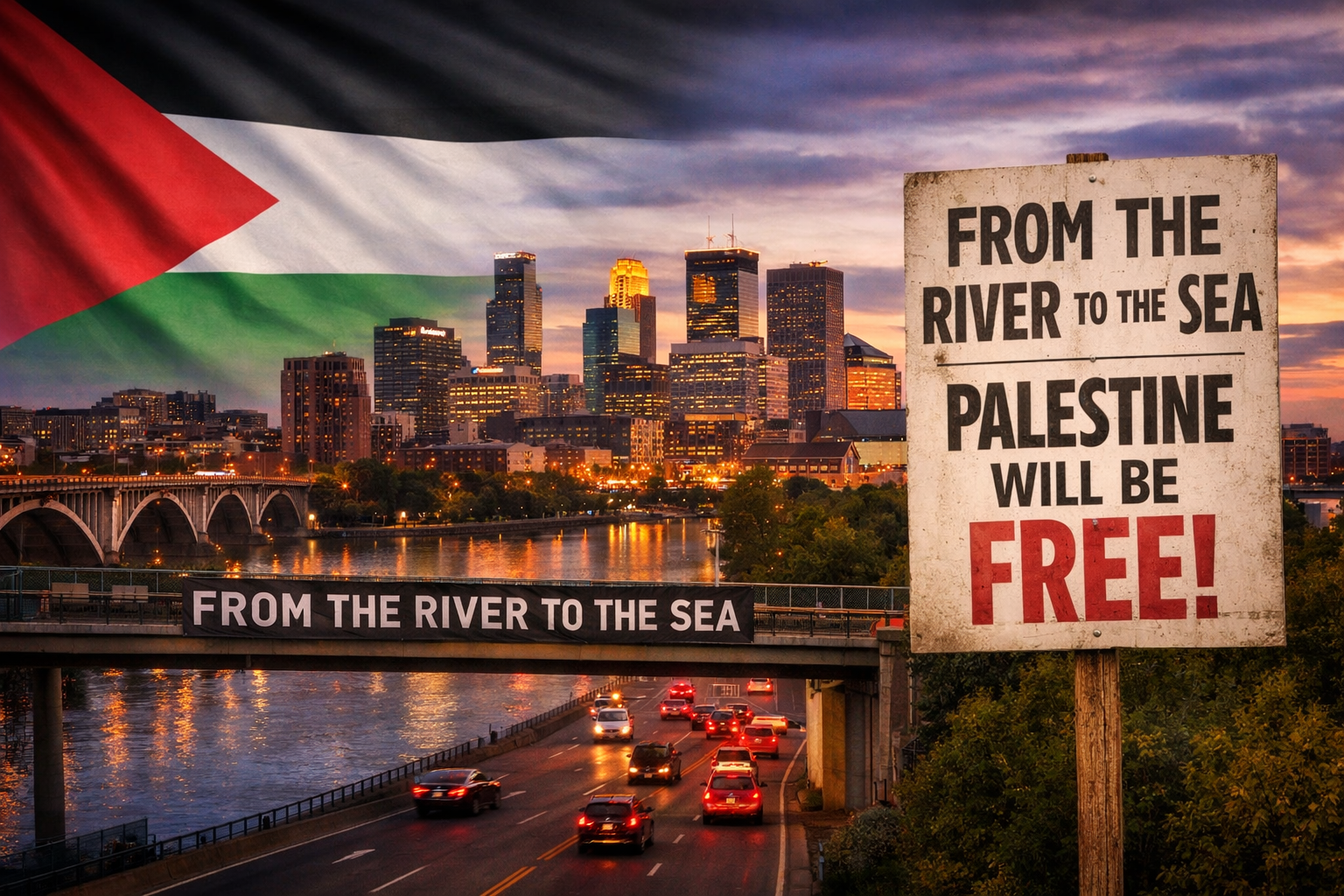
In recent months, the streets and campuses of Minneapolis and Saint Paul have become visibly hostile to Jews. Palestinian flags and signs bearing slogans such as “From the river to the sea”—widely understood by Jewish communities as calling for Israel’s elimination—appear not only at protests but strung across highway overpasses and carried into residential neighborhoods. For visibly Jewish residents, this is no longer abstract politics. It is an environment in which simply walking down the street can feel unsafe.
The problem is acute on campus. At the University of Minnesota, faculty statements, student testimony, and external analyses describe a sharp rise in antisemitic incidents, social exclusion, and ideological coercion. Jewish students report being shouted down, ostracized, or treated as moral contaminants because of who they are. The cumulative effect is a campus—and a city—experienced by many Jews as hostile terrain.
Why Antisemitism Harms Everyone
None of this indicts “the Somali community.” That framing would be false and destructive. Most Somali Minnesotans are neither antisemitic nor politically radical. Many came precisely to escape societies where intimidation and predation were the norm.
But antisemitism is uniquely corrosive. It does not remain a discrete prejudice. It collapses moral distinctions. When it is normalized—especially under the banner of “justice”—legitimate concerns about unrelated issues, including public-sector fraud, are quickly reinterpreted as cultural indictments. Nuance disappears. Individual wrongdoing becomes collective suspicion.
This is how communities lose control of their own narrative.
Institutions as Amplifiers
Universities are not neutral bystanders. When antisemitic rhetoric is excused as political speech and Jewish fear is dismissed as disagreement, institutions amplify intolerance. What begins on campus spills into the street. What begins as activism hardens into civic identity.
At that point, everyone loses.
The Cruel Irony—and the Choice Ahead
There is a cruel irony unfolding in Minnesota. A community that fled collapse now risks being symbolically collapsed into it—judged not as refugees from disorder, but as its carriers—precisely because antisemitism erases the distinctions liberal societies are meant to protect.
This is not because Somali Minnesotans are collectively antisemitic. They are not.
It is not because they are collectively criminal. They are not.
It is because unchecked antisemitism poisons the well, and once that well is poisoned, collective judgment follows.
Minneapolis–Saint Paul still has a choice. Community leaders can draw bright lines against antisemitism. Universities can enforce neutral standards and protect Jewish students as they would any other minority. Law enforcement can prosecute fraud rigorously without stigma.
Doing so protects Jews—and it protects Somali Minnesotans from the very stereotyping that refugees flee. Failing to act invites a far uglier outcome, one that serves no one and damages the moral credibility of the city itself.
References & Further Reading
- Anti-Defamation League, Audit of Antisemitic Incidents (most recent edition)
- University of Minnesota faculty statements and campus climate reports on antisemitism (2023–2025)
- Minnesota State Demographer and U.S. Census Bureau data on Somali population in the Twin Cities
- U.S. Department of Justice court filings in the Feeding Our Future prosecutions
- International Holocaust Remembrance Alliance, Working Definition of Antisemitism