


When the Father Does Not Come, Part II
Survival, Shame, Revenge, and the Theology of Divine Absence
IV. Shame: The Crime That Migrates
Sexual violence carries a particular moral obscenity. The perpetrator commits the act, and the shame takes up residence in the victim. Helen Block Lewis drew the distinction on which the later literature rests: guilt concerns what I have done, and shame concerns what I am [13,14].
A violated child rarely has the concepts to say that an autonomous moral agent has wronged her and that she bears no responsibility. Another sentence forms in their place: something about me has become wrong. Ferenczi saw the mechanism. The adult disowns his guilt, and the child, who cannot afford to see the adult as bad, takes that guilt in as her own [11]. Primo Levi observed the same transfer on the largest scale, in the shame of the liberated: a shame the just feel at a wrong another has committed, because it has been brought irrevocably into the world of things that exist [15].
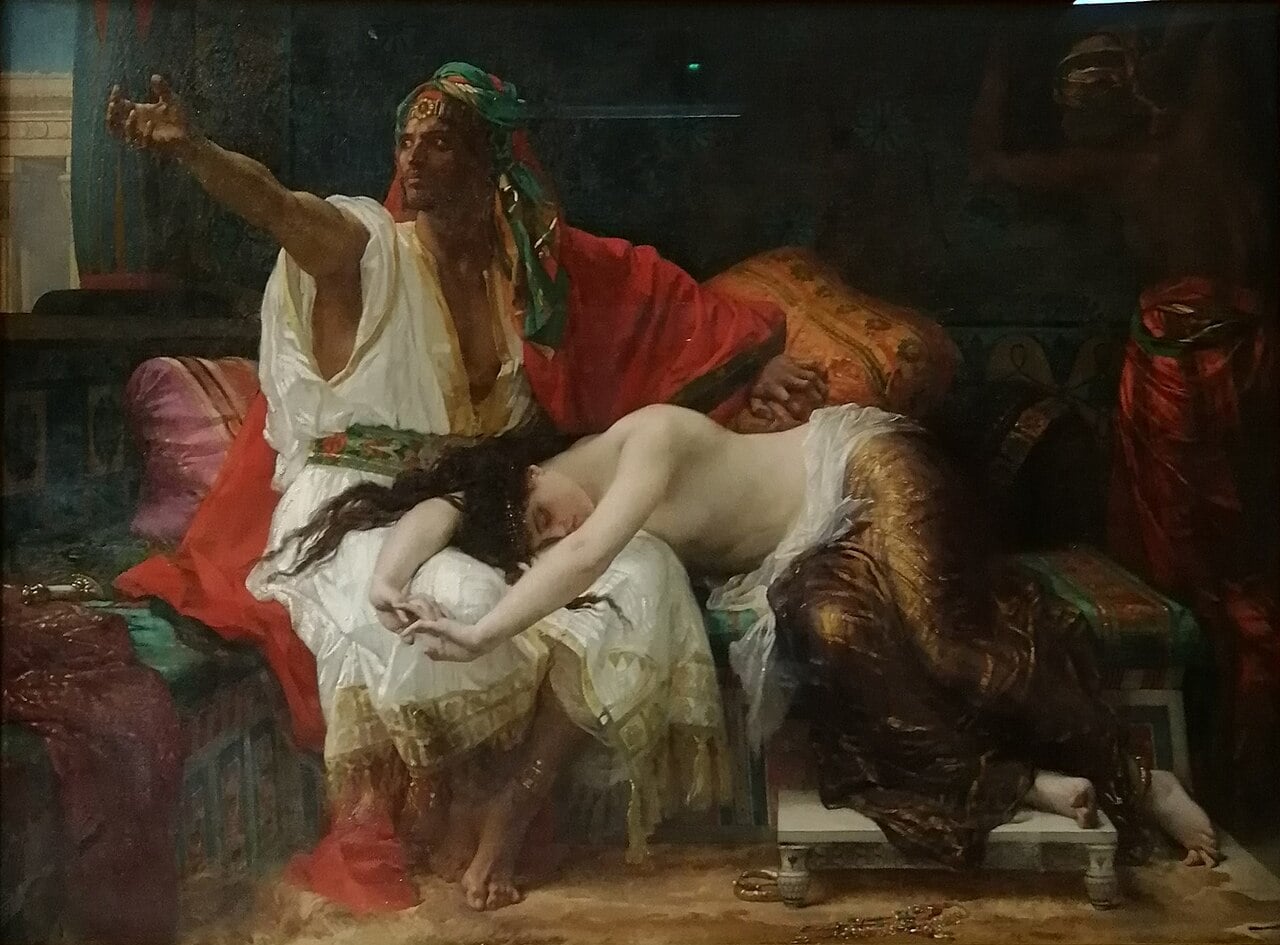
Scripture gives this migration its most exact sentence and gives it to a woman before the act. Tamar, daughter of David, pleads with her half-brother Amnon: such a thing is not done in Israel; “and I, where could I carry my shame?” (2 Samuel 13:13). She already knows that the shame will be hers to carry and that there will be nowhere to set it down. Afterward she puts ashes on her head, tears the long robe of a king’s virgin daughter, and goes away crying aloud. Her brother Absalom meets her with the sentence that every violated woman has since heard from someone who loved her: hold your peace, my sister; he is your brother; do not take this thing to heart. “So Tamar remained desolate in her brother Absalom’s house” (13:20). Phyllis Trible, whose reading of this chapter remains the indispensable one, notes that after this verse Tamar never speaks again [16].
The Torah’s own law refuses the migration in principle. Of the girl seized in the open country it rules: “to the girl you shall do nothing; she has no sin worthy of death; for as when a man rises against his neighbor and murders him, so is this matter. For he found her in the field; the girl cried out, and there was none to save her” (Deuteronomy 22:26-27). I have discussed this chapter and its afterlife at length elsewhere [17]. Two things in it matter here. The law likens rape to murder, which places the whole of the guilt on one side. And it names the condition of the victim in three Hebrew words, ve-ein moshia lah, there was none to save her. Those words are the title of this essay in the Torah’s own mouth. Lili cried out, inwardly or aloud, in her parents’ house, and for the purpose that mattered the house was a field.
Read against these texts, the construction of “Betty” is more than a stratagem. Betty is certainly a deception: the elderly vulnerability, the loneliness, the financial innocence, the affection. Roy believes he is studying her while she is studying him. Beneath the ingenuity lies a proposition that I find almost unbearably sad. Lili can control the encounter only by ceasing, for its duration, to appear as Lili. The self that was once exposed survives behind a made face. Biblical humanity hides after shame from the beginning. Adam and Eve cover themselves; Jacob enters his father’s tent as another son; Joseph stands unrecognized before the brothers who sold him; Esther conceals her people until concealment has done what disclosure could not. The moral meaning of concealment in Scripture is never simple. There are concealments of cowardice and concealments of predation, and there are concealments practiced under the shadow of power. Lili’s belongs to the third kind.
Physicians should recognize this, because medicine manufactures shame of its own and then meets the patient’s older shame without noticing it [18]. The patient who presents a composed and cooperative surface may be presenting Betty. The clinician who takes the surface for the person has been conned, though not by a liar.
V. The Arithmetic of the Dead
Survivor guilt contains an impossible arithmetic. Why am I alive when they are dead? The question has no satisfactory answer because it does not arise from logic. It arises from attachment. William Niederland, who gave the survivor syndrome its clinical name, found this guilt at the center of his patients’ suffering decades after liberation [19], and Levi gave it its most honest form: the suspicion, which no evidence can lay to rest, that one is alive in another’s place [15].
Lili loses almost everyone. Her father is executed on Hans’s word. Her mother dies by her own hand. Her sisters are killed two weeks before the war’s end. She alone receives what all of them were denied, which is time: sixty-six years of it, with a family, a grandchild and a home. Every one of those years can be felt as a gift and as an accusation. The dead remain a silent constituency. They do not age, and the survivor does. They do not marry or grow old or become grandparents, and the survivor does all of these while knowing that history distributed the possibilities without regard to merit.
There is a further turn that the film leaves implicit and that I think should be stated. Her father was killed because he dismissed the tutor, and he dismissed the tutor to protect his daughters. A child in that position can reason her way to a dreadful conclusion: my father died of defending us, and so, by a child’s logic, of me. Nothing in the film says that Lili thinks this. Survivors of family catastrophe very often do, and the thought does not yield to argument, because, like shame, it has taken up a responsibility that the guilty party declined.
Elie Wiesel’s testimony lives in this territory. Night does not resolve suffering into doctrine. It records a pious boy watching a child hang and hearing a voice within him answer that God is hanging there on the gallows, and yet the man who wrote it went on arguing with that God for sixty years [20]. There is a kind of unbelief that simply walks away, and there is a wounded faith that will not leave the courtroom. Job belongs to the second kind. He never stops speaking to God. He indicts God, and the indictment preserves a strange covenantal intimacy, since no one prosecutes a party whose existence is a matter of indifference [21].
Survivor guilt may work in the same way. The dead stay present because love will not let their disappearance be complete. Memory becomes obligation: to remember them is painful, and not to remember them would be betrayal. The survivor therefore lives in a temporal double bind. Life requires movement forward, and loyalty seems to require looking back.
Lili resolves the bind by moving forward through going back. She organizes the present around an unfinished event of girlhood. The emblem of this is the locket. For sixty-six years she has kept, in a locket from her girlhood, a strand of the hair of the man who destroyed her family. The film does not explain why a girl would have such a thing, and I will not guess. What matters is what it becomes. In a story composed entirely of forged papers and assumed names, it is the one document that cannot lie. The body of the liar tells the truth about him. Hans believed that history had buried what he did. Lili had kept the evidence on her person and so had only postponed the hearing.
Job, at the lowest point of his argument, says: “I know that my redeemer lives” (Job 19:25). The word is go’el, the kinsman whose duty it is to redeem, and in the law of homicide the same word names the avenger of blood. Job expects that someone will stand up for him at the last. Lili stops expecting. I return to that word below.
VI. The Father Who Did Not Come
At the center of the film stands a father who cannot save his daughter. This is no accusation against Herr Schröder. He acted on what he knew, and he was killed for it. But for the child in extremity the distinction between “my father abandoned me” and “my father was prevented from reaching me” does not close the wound. The essential fact stays simple. He did not come. Jennifer Freyd has shown why the injury is deepest when the violator stands inside the circle of trust [22]: Hans was no stranger in a field. He was the tutor, admitted to the house by the parents, and the protection the house offered was the thing he used.
The Bible has two fathers of violated daughters, and both fail in the same way. When Jacob hears that Dinah has been defiled, “Jacob held his peace until they came” (Genesis 34:5). He says nothing to her at any point. His only speech in the chapter comes after his sons’ massacre, and it concerns his own standing among the neighbors (34:30). When David hears what Amnon has done to Tamar, he is “very wroth” (2 Samuel 13:21), and nothing follows. The Septuagint and a Samuel scroll from Qumran preserve a longer verse that explains the silence: he would not grieve the spirit of Amnon his son, because he loved him, for he was his firstborn. In one story the father is prudent and in the other he is fond. Neither comes. In both, brothers step into the space the father left empty, and they fill it with deceit, a feast and blood. I will return to them.
From here the film opens into theology, because Jewish prayer names God with exactly the compound that suffering splits. Avinu Malkeinu: our father, our King. A father loves, and a king has power. The metaphor promises intimacy and sovereignty at once. The child’s question (why did my father not come?) becomes the theological question in the same words, and the survivor can put it with a rigor that embarrasses most theodicy. If God is Father and watched, why did He not stop it? If He could not, in what sense is He King? If He could and did not, in what sense is He Father? This is rigorous theology and should not be dismissed as adolescent rebellion. Philosophers ask whether omnipotence and perfect goodness are logically compatible with evil. The survivor asks something else: where were You? The grammar is relational and has little to do with metaphysics, which is why Job remains stronger than the systems built to answer him. Job does not seek information about the necessity of suffering. He wants an audience. “Oh, that I knew where I might find Him” (Job 23:3). The scandal for him is divine unavailability more than pain [21].
Blumenthal went further than most Jewish theologians have been willing to go. Having listened to survivors of childhood abuse, he concluded that an honest theology must be able to say, at least in the voice of protest, that God has at times behaved as an abuser, and must then go on addressing that God [6]. I do not adopt his sentence. I record that a serious and observant thinker found he could not keep faith with those survivors without it.
The pastoral consequence is plain. For those whose experience of fathers is of failure, violation or absence, “Father” is not a neutral word. It can magnify the injury it is offered to heal [23]. One cannot tell an abused person that God is “really” a loving father and expect the analogy to repair itself. Theological language must submit to the moral experience of the wounded. A theology that protects its metaphors at the survivor’s expense has chosen the wrong thing to protect.
Part II of a five-part series. Notes and references appear at the end of Part V.