

When the Father Does Not Come, Part V
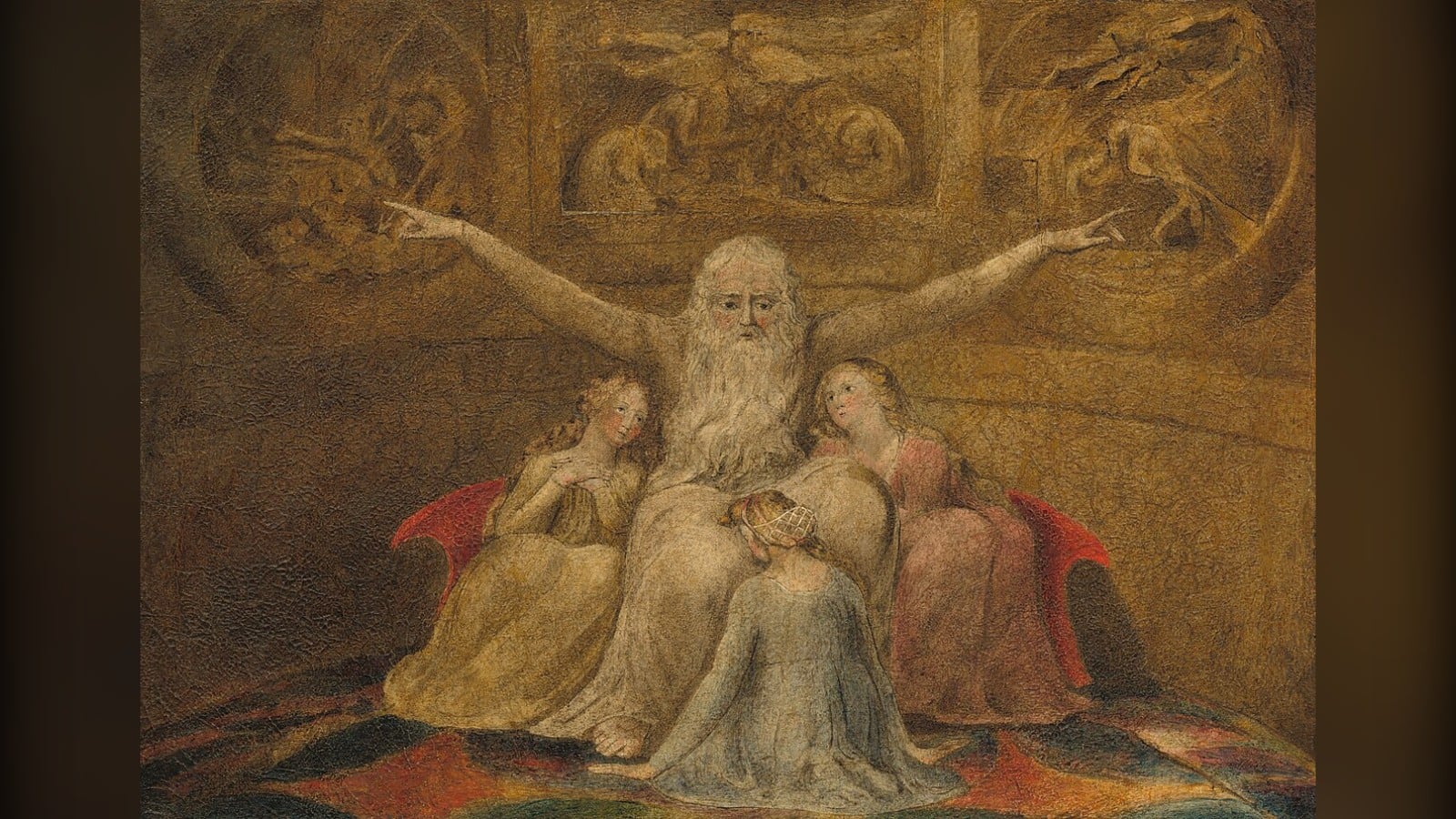
Survival, Shame, Revenge, and the Theology of Divine Absence
XIII. The Clinic
I said at the outset that this question usually arrives without a film attached. It arrives in a consulting room, often decades after the event, and often disguised as something else: pain without a lesion, a sleep that will not come, a body that flinches from examination. The neurobiology of such presentations is by now well described, and I have reviewed it elsewhere [58]. My concern here is what the patient is asking of the physician, and I think the film answers with some precision.
The physician is always a late witness. By the time the history is told, if it is told, the father has long since not come, and nothing the physician does will alter that. What remains possible is what Stephen does. To read a patient’s history as a text is to give it the kind of attention that changes the standing of what is said [59]. The first clinical act in the presence of such a history is belief, and belief in the sense defined above: a willingness to bear some of the cost of its being true. Herman’s stages of recovery begin with safety and pass through remembrance before they reach reconnection, and none of them can begin with a clinician who is waiting to be convinced [9].
From my analysis I draw three prohibitions for the clinician.
- Do not supply a theodicy. No sentence of the form “everything happens for a reason” passes Greenberg’s test, and none belongs at a bedside. This holds for the refined versions as much as for the crude ones [53].
- Do not ask for forgiveness on the perpetrator’s behalf. It is not the clinician’s to request, and a patient who is urged toward it will reasonably conclude that her anger is unwelcome in the room.
- Do not use the patient’s strength to close the file. “You are so resilient” can be heard as “so nothing further is owed to you.”
There is also a caution about religious language. For many patients the religious vocabulary of childhood is bound up with the injury. Sometimes the perpetrator used it, and sometimes its promise of protection is the promise that was broken. Restoring the image of the protecting Father by pastoral insistence repeats the original confusion of tongues: an adult’s reality is once more laid over a child’s experience [23]. The clinician can follow where the patient’s own speech goes and must be content when for a long time it goes nowhere near God.
Finally, the clinician should expect Betty. The composed, obliging, faintly apologetic patient who gives no trouble has sometimes learned to be that person under conditions we would rather not imagine. The mask is an achievement, and stripping it would be a second violation. What can be offered is a room in which, eventually, it is not needed. What survivors say they want from justice is very nearly what they want from medicine: to have the truth acknowledged by someone with standing, and to have the weight of it shared [46]. Absalom told his sister to hold her peace. The physician’s whole task in this encounter may be to say the opposite and reveal the wound beneath, calling it for what it is.
XIV. Conclusion: You Did Not Get All of Me
At the center of trauma lies one memory: no one came. The violated child called, inwardly or aloud, and was not rescued. The survivor of historical catastrophe looked at civilization and found it brittle. The believer looked toward heaven and met silence. Out of that silence come shame, guilt, rage, concealment, memory and sometimes revenge.
The Good Liar gives us a woman who answers the silence by becoming the author of the judgment that history denied her. There is magnificence in her refusal to disappear, and heartbreak in its necessity. She had to be her own witness because the witnesses failed, and her own judge because judgment failed. Providence could not be seen, and so she became that as well. I have argued that her judgment was more measured than Scripture’s own avengers managed, and that it was nonetheless a counterfeit of the thing it stood in for. It could expose Hans. It could not restore what he took.
The film appears to know this, because it does not end in the emptied house. Its last images separate the two liars completely. Hans lies in a hospital bed without speech, and Lili is among her family. Here Fackenheim’s reading seems to me the true one [30,31]. Her greatest victory over Hans is that he did not determine how her life would end, and his punishment counts for less than that. Trauma tempts us to imagine that the perpetrator stands at the center of the survivor’s story forever. His act said: I have the power to define what happens to you. Her sixty-six years answer that he did not finish the story. Revenge stays tethered to the perpetrator, and her life exceeds him. If the film has an eschatology that is not counterfeit, it lies in her return, and the punishment has no part in it.
Survivor guilt whispers that happiness betrays the dead. I think memory makes another demand, which is to live. The demand rests on no claim that the catastrophe had meaning, or that everything happens for a reason, or that suffering strengthens. Those formulas are unbearable. One lives because the man who did the harm has no right to the years that remain. The dead need witnesses and are not served by additional corpses. And tenderness after brutality contradicts the metaphysics of the abuser. The survivor owes history no heroic life. Simply living is enough.
One image from the tradition holds what I have been trying to say about this peace. When Phinehas takes a spear and performs with his own hand the judgment that no court had issued, God grants him “My covenant of peace” (Numbers 25:12). The scribal tradition, recorded in the Talmud, requires that the letter vav in the word shalom in that verse be written broken, with a gap in its stem (Kiddushin 66b). The peace given to the one who took judgment into his own hands is a real peace, and it is written with a fracture that no scribe is permitted to repair. I have written before about that broken letter as a theology of wholeness that carries its wound [60]. It is the right letter for the final scene. Lili’s peace among her family is real, and it is written with a broken vav.
What, then, of God? The survivor does not prove that God was present, and she does not explain why God was absent. She lives, and her life leaves the question open. Post-traumatic theology may have to remain in the space she makes, where facile faith and facile despair are both refused, and to give up the hope of an answer to the absent Father. Job never receives an explanation. Wiesel never lets the accusation lapse. Rubenstein will not rescue providence at the cost of moral sense, and Fackenheim will not let the catastrophe own the future. Lili will not let the man who violated her girlhood own what is left of her life.
The Father did not come. The dead did not return. The past was not repaired. Yet the survivor stands, and theology may begin again there. Its starting point is a human being who stands during what should have destroyed her and declares, by continuing to exist: You did not get all of me.
Part V of a five-part series.
References
- The Good Liar [film]. Condon B, director; Hatcher J, screenwriter. Burbank (CA): Warner Bros. Pictures; 2019.
- Searle N. The Good Liar. London: Viking; 2016.
- Ungar-Sargon J. ‘And so, it goes with God’: the patient’s two accounts, the mashal as clinical instrument, and what Life of Pi teaches hermeneutic medicine. J Behav Health Psychol. 2026;15(4):1-12.
- Ungar-Sargon J. The wizard behind the curtain: divine concealment, and human suffering in Frank Baum’s American midrash. J Behav Health. 2025;14(5):1-5.
- Ungar-Sargon J. The mockingbird and the concealment of innocence. Am J Med Clin Res Rev. 2026;5(6):1-20.
- Blumenthal DR. Facing the Abusing God: A Theology of Protest. Louisville (KY): Westminster/John Knox Press; 1993.
- Sandmel S. Parallelomania. J Biblic Lit. 1962;81(1):1-13.
- Kenigsberg B. ‘The Good Liar’ review: for Helen Mirren and Ian McKellen, the truth hurts. New York Times. 2019 Nov 14. Available from: https://www.nytimes.com/2019/11/14/movies/the-good-liar-review.html
- Herman JL. Trauma and Recovery: The Aftermath of Violence—From Domestic Abuse to Political Terror. New York: Basic Books; 1992.
- Améry J. At the Mind’s Limits: Contemplations by a Survivor on Auschwitz and Its Realities. Rosenfeld S, Rosenfeld SP, translators. Bloomington: Indiana University Press; 1980.
- Ferenczi S. Confusion of tongues between the adults and the child. Int J Psychoanal. 1949;30:225-230.
- Ungar-Sargon J. The hands and the face: detachability and the brother I did not want to see. Am J Med Clin Res Rev. 2026;5(9):1-35.
- Lewis HB. Shame and Guilt in Neurosis. New York: International Universities Press; 1971.
- Tangney JP, Dearing RL. Shame and Guilt. New York: Guilford Press; 2002.
- Levi P. The Drowned and the Saved. Rosenthal R, translator. New York: Summit Books; 1988.
- Trible P. Texts of Terror: Literary-Feminist Readings of Biblical Narratives. Philadelphia: Fortress Press; 1984.
- Ungar-Sargon J. The patient who cannot be discharged: licensed access, retrospective consent, and the ethics of release in the clinical encounter. Int J Psychiatr Res. 2026;9(5):1-14.
- Ungar-Sargon J. From medical shame to sacred healing: integrating recovery principles and theological medicine in healing spaces. Addict Res. 2025;9(3):1-12.
- Niederland WG. Clinical observations on the “survivor syndrome.” Int J Psychoanal. 1968;49(2):313-315.
- Wiesel E. Night. Wiesel M, translator. New York: Hill and Wang; 2006.
- Ungar-Sargon J. Suffering in the therapeutic space: Job’s dialogue with suffering in contemporary medical practice. J Relig Theol. 2025;7(3):49-74.
- Freyd JJ. Betrayal Trauma: The Logic of Forgetting Childhood Abuse. Cambridge (MA): Harvard University Press; 1996.
- Ungar-Sargon J. Religious trauma and the hermeneutic clinical encounter: from modern scholarship to an integrated recovery-informed framework. Biomed J Sci Tech Res. 2026;65(4):57897-57909.
- Buber M. Eclipse of God: Studies in the Relation Between Religion and Philosophy. New York: Harper & Brothers; 1952.
- Berkovits E. Faith After the Holocaust. New York: Ktav; 1973.
- Soloveitchik JB. Kol Dodi Dofek: Listen—My Beloved Knocks. Gordon DZ, translator. New York: Yeshiva University; 2006.
- Ungar-Sargon J. Revelation in concealment: toward an embodied post-Holocaust spirituality. J Relig Theol. 2025;7(3):1-23.
- Ungar-Sargon J. Questioning divine absence: interpretations of Exodus 17:7 through contemporary theological discourse implications for therapeutic language. Int J Psychiatr Res. 2025;8(1):1-7.
- Rubenstein RL. After Auschwitz: Radical Theology and Contemporary Judaism. Indianapolis: Bobbs-Merrill; 1966.
- Fackenheim EL. God’s Presence in History: Jewish Affirmations and Philosophical Reflections. New York: New York University Press; 1970.
- Fackenheim EL. To Mend the World: Foundations of Future Jewish Thought. New York: Schocken Books; 1982.
- Wiesel E. The Trial of God (as It Was Held on February 25, 1649, in Shamgorod). Wiesel M, translator. New York: Random House; 1979.
- Greenberg I. Cloud of smoke, pillar of fire: Judaism, Christianity, and modernity after the Holocaust. In: Fleischner E, editor. Auschwitz: Beginning of a New Era? Reflections on the Holocaust. New York: Ktav; 1977. p. 7-55.
- Braiterman Z. (God) After Auschwitz: Tradition and Change in Post-Holocaust Jewish Thought. Princeton (NJ): Princeton University Press; 1998.
- Ungar-Sargon J. The wound as altar: an anti-theodicy of the Shoah. J Relig Theol. 2026;8(2):6-28.
- Ungar-Sargon J. The serpent’s bite: divine complicity and therapeutic presence in post-Holocaust healing. Jpn J Med Res. 2025;3(3):1-17.
- Wolfson ER. Giving Beyond the Gift: Apophasis and Overcoming Theomania. New York: Fordham University Press; 2014.
- Ungar-Sargon J. Between divine judgment and divine absence: post-Holocaust theology in the dialectic of Midas HaDin and Midas HaRachamim. J Relig Theol. 2025;7(1):40-49.
- Scholem G. On the Mystical Shape of the Godhead: Basic Concepts in the Kabbalah. Neugroschel J, translator. New York: Schocken Books; 1991.
- Ungar-Sargon J. Chesed and Gevurah and the tzimtzum—between mercy and judgment in the theology of healing. J Psychol Neurosci. 2025;7(3):1-12.
- Ungar-Sargon J. The shared abyss: trauma, responsibility, and the space between mutual wounding and the ethics of reconciliation between perpetrator and victim. Adv Med Clin Res. 2025;6(2):194-205.
- Arendt H. The Human Condition. Chicago: University of Chicago Press; 1958.
- Wiesenthal S. The Sunflower: On the Possibilities and Limits of Forgiveness. Rev ed. New York: Schocken Books; 1997.
- Jankélévitch V. Should we pardon them? Hobart A, translator. Crit Inq. 1996;22(3):552-572.
- Murphy JG. Getting Even: Forgiveness and Its Limits. New York: Oxford University Press; 2003.
- Herman JL. Truth and Repair: How Trauma Survivors Envision Justice. New York: Basic Books; 2023.
- Spiegel S. The Last Trial: On the Legends and Lore of the Command to Abraham to Offer Isaac as a Sacrifice: The Akedah. Goldin J, translator. New York: Pantheon Books; 1967.
- Shapira KK. Sacred Fire: Torah from the Years of Fury 1939-1942. Worch JH, translator; Miller DS, editor. Northvale (NJ): Jason Aronson; 2000.
- Polen N. The Holy Fire: The Teachings of Rabbi Kalonymus Kalman Shapira, the Rebbe of the Warsaw Ghetto. Northvale (NJ): Jason Aronson; 1994.
- Jonas H. The concept of God after Auschwitz: A Jewish voice. J Relig. 1987;67(1):1-13.
- Ungar-Sargon J. The pain of the Shekhinah: from midrashic exile through to embodied theology. J Relig Theol. 2026;8(1):58-77.
- Ungar-Sargon J. The duality of divine presence: exploring the dark Schechina in Jewish mystical thought and post-Holocaust theology. J Behav Health. 2025;14(2):1-10.
- Ungar-Sargon J. The third grammar: an anti-theodicy for the clinical encounter. Am J Med Clin Res Rev. 2026;5(9):1-30.
- Levinas E. Loving the Torah more than God. In: Difficult Freedom: Essays on Judaism. Hand S, translator. Baltimore: Johns Hopkins University Press; 1990. p. 142-145.
- Levinas E. Useless suffering. Cohen R, translator. In: Bernasconi R, Wood D, editors. The Provocation of Levinas: Rethinking the Other. London: Routledge; 1988. p. 156-167.
- Ungar-Sargon J. The wagons of indictment: Zohar, Rav Shagar, and the theology of betrayal—an addendum on the Nova Festival massacre: how we failed them spiritually on Simchat Torah. J Relig Theol. 2026;8(1):9-20.
- Felman S, Laub D. Testimony: Crises of Witnessing in Literature, Psychoanalysis, and History. New York: Routledge; 1992.
- Ungar-Sargon J. Bridging the divide: neurophysiological signatures and holistic treatment models for PTSD and complex PTSD. Med Clin Res. 2025;10(7):1-14.
- Ungar-Sargon J. Applying hermeneutics to the therapeutic interaction: the act of interpreting the patient history as a sacred text—sacred listening as experiential encounter versus rational faith. Int J Psychiatr Res. 2025;8(1):1-6.
- Ungar-Sargon J. The fractured vav: a theology of sacred brokenness as portal between healing and holiness. J Behav Health. 2025;14(4):1-9.