
When the Holocaust becomes evidence against Jews
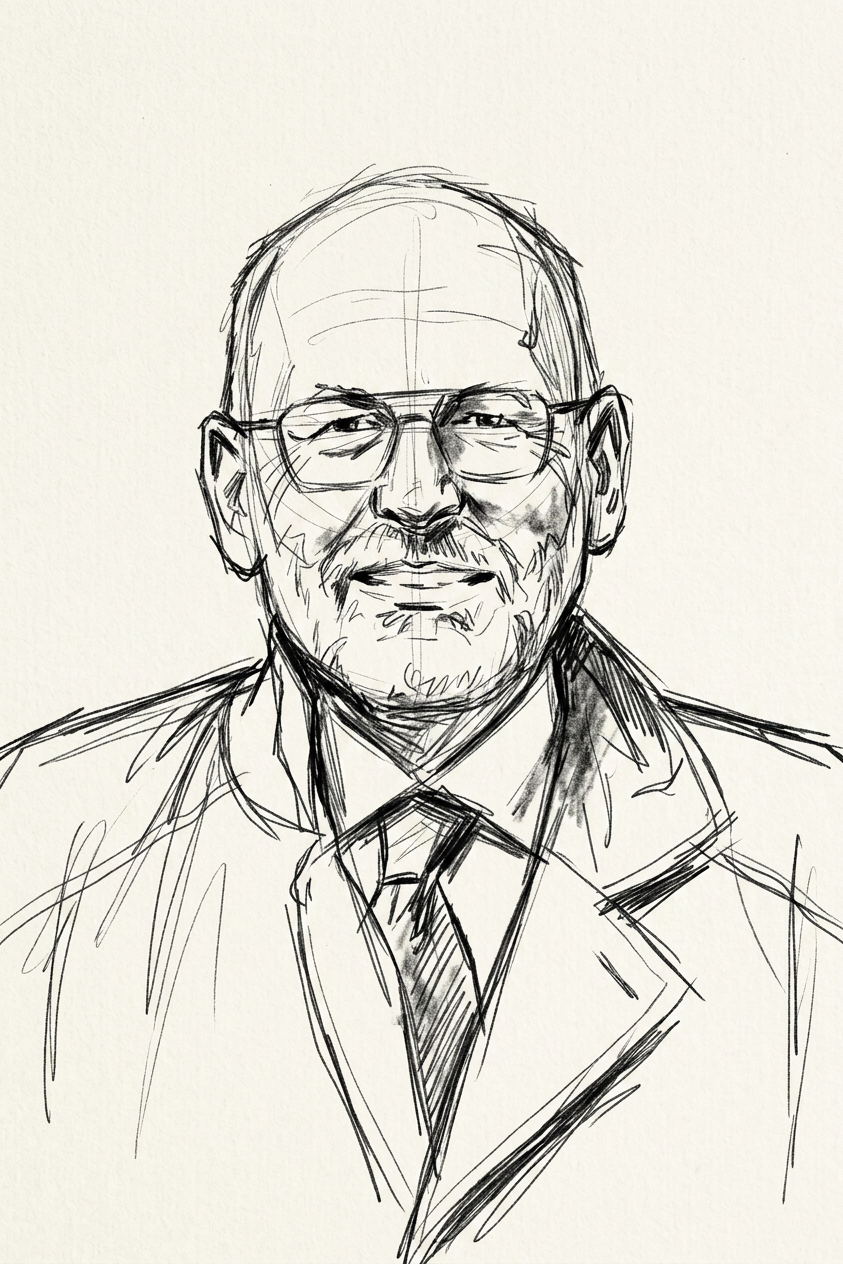
TL;DR: Frans Timmermans presents himself as a defender of complexity, historical responsibility, and European political maturity, yet abandons all three when judging Israel. He transfers the language of Jewish existential danger to the Palestinians, recasts Israeli extremists as “we Jews,” turns Holocaust ancestry into aggravating evidence, and accepts reduced protection for Israeli civilians as an instrument of political pressure. The result is an antisemitic structure in which Jewish suffering remains Europe’s moral possession, while Jewish protection still requires European permission.
*
The rehabilitation of the Europhile statesman
Frans Timmermans, a former Dutch foreign minister and first vice president of the European Commission, embodies a Europhile green and social-democratic culture that sees itself as the institutional heir of postwar anti-fascism, human rights, historical responsibility, and informed political judgment. In a July 25, 2026 De Morgen interview with Ilja Leonard Pfeijffer, Timmermans is presented as a statesman awaiting historical vindication. The politician who lost the Dutch election returns as cultivated, multilingual, intellectually serious, and recently appointed Minister of State. The premise is that expertise itself was his political weakness: he should have led the European Commission, should have become prime minister, and was rejected because an age hostile to knowledge could no longer recognize the man it needed. Even his childhood poverty enters the restoration, replacing the distant cosmopolitan with the misunderstood public servant. Political failure becomes collective misunderstanding.
The interview is generous with explanation. Capital escaped democratic control, social media corroded trust, voters came to experience change as loss, and the right discovered that it could survive through simplification. Timmermans remains the man who understands what happened, including how political projects he helped shape produced consequences their architects did not intend. His own political world receives history, constraints, and causation. When Israel becomes the object of judgment, explanation gives way to accusation.
Timmermans matters because of what his position reveals. Extreme claims made by marginal figures tell us little about the political mainstream. The same claims, when voiced by someone of Timmermans’s stature, show what can pass through the institutional center of his political tradition without being recognized as a violation of its own principles. His case does not show how widespread this reasoning is, but it does show that it has become permissible.
Near the end of an interview otherwise devoted to complexity, Timmermans turns to Israel:
In the Middle East, an entire people is currently being exterminated. We watch and remain silent while Palestinians are literally being driven into the sea, and worse. The reasoning of the right and far right in Israel is: we Jews can survive only if the Palestinians are gone. That is exactly the same reasoning as that of the Nazis at the time: we, the German people, the Aryan race, can survive only if the Jews are gone. I find that frankly staggering. Something terrible happened to their grandparents and great-grandparents in the Nazi era: the Holocaust, in which they were destroyed, and now they are doing precisely the same to another people.
“I am still burdened by the history of the Holocaust, but my children do not understand any of this. They say: ‘What do you mean, Israel’s right to exist is at stake? You cannot infer from the right of one people to exist that it may exterminate another people, can you?'”
The construction of Jewish culpability
A historical comparison is persuasive only when the similarity exists independently of the language used to describe it. Timmermans reverses that order. He reformulates the position of the Israeli right as “we Jews can survive only if the Palestinians are gone,” placing it in the same verbal structure as the Nazi claim that Germans or Aryans could survive only if the Jews disappeared. He then presents the resemblance created by his own formulation as evidence that the two forms of reasoning are “exactly the same.” This matters because his analogy does not test whether the cases are equivalent, but manufactures the equivalence in advance. The conclusion is embedded in the premise, while the rhetorical force of Nazism makes that construction appear like a discovery rather than an accusation.
Timmermans may be ventriloquizing Israeli extremists. But his use of pronouns reveals how the subject of the accusation expands. He begins with “the right and far right in Israel,” then gives that faction the collective voice “we Jews” (wij Joden). The pronouns shift again when he invokes “their grandparents and great-grandparents” (hun grootouders en overgrootouders) and concludes that “they” are now “doing precisely the same” (nu doen zij precies hetzelfde) to another people. A political faction has become a Jewish collective defined through ancestry. Even if the first formulation accurately reproduces the words of particular extremists, the pronoun shifts do more than report their position: they transfer responsibility from political actors to Jews as a historical and genealogical subject. The faction must first become “the Jews” before the Nazi analogy can do its work.
The sentence immediately preceding the analogy deepens its construction. “Driven into the sea” is not an exclusively Jewish formulation, but in the history of the Arab-Israeli conflict it carries a specific and unmistakable resonance. The phrase became associated especially with the eliminationist rhetoric of Ahmad Shuqayri, then chairman of the PLO, before the 1967 war, and more broadly with threats that Israel and its Jewish population would be destroyed. Timmermans transfers this vocabulary of Jewish existential danger to the Palestinians, while “and worse” opens an undefined escalation that the surrounding passage fills with extermination and Nazism. Before Jewish history is used as aggravating evidence, the language through which Jewish destruction has been imagined has already been reassigned to the people Israel is accused of destroying.
The passage therefore collapses particular extremists, a political faction, i.e., the Israeli right and far right, government policy, the conduct of a war, and finally the Jewish people as a historical subject. Political agency, collective identity, ancestry, Holocaust memory, and inherited victimhood are fused into a single accusatory category. The comparison can appear exact only after every distinction between faction and people, policy and identity, present conduct and historical memory has been removed. What begins as an accusation against political actors ends by making Jewish history itself part of the evidence against Jews.
Nothing in this argument depends on engaging with Timmermans’s claims about Israel. Grant every one of them, solely to test whether they establish the Nazi analogy. They do not. Even if every allegation he makes against Israel were accepted arguendo, the Holocaust would add nothing to their proof. Even if genocide were occurring, that would identify the alleged crime. It would not make the descendants of Holocaust victims Nazis, or make the catastrophe suffered by their ancestors relevant to its proof. By introducing that ancestry, Timmermans does not clarify or substantiate the accusation. He turns inherited victimhood into aggravating evidence and makes Jewish history itself part of the case against Jews. For Timmermans, the Holocaust no longer demonstrates the danger of Jewish powerlessness but becomes evidence against the exercise of Jewish power. That reversal is Holocaust inversion.
Jewish vulnerability as political leverage
The interview and an earlier dispute within GroenLinks-PvdA, the Dutch green and social-democratic alliance Timmermans then led, expose the same structure in rhetoric and policy. In June 2025, Kati Piri, a Labour parliamentarian from Timmermans’s alliance, proposed a temporary and comprehensive arms embargo against Israel. A separate motion would have exempted components required specifically for Iron Dome, Israel’s missile-defense system. Timmermans supported the comprehensive embargo and opposed the exemption.
At the alliance’s party congress, Timmermans defended the decision. Withholding defensive weapons, he argued, might show the alleged perpetrator that he was not invulnerable and therefore had to negotiate. In the same remarks, he acknowledged the competing argument advanced by members of the Dutch Jewish community: Iron Dome prevents innocent people from dying when missiles are fired at Israel. He described both arguments as conclusive.
Missile defense may reduce the domestic and military costs of continued operations. Neither that strategic effect nor the dual-use character of particular components removes the decisive fact: a specific exception for Iron Dome was placed before Timmermans, and he opposed it.
The alleged perpetrator is the intended target of pressure. The means of applying that pressure, however, is reduced protection for the population and critical infrastructure beneath incoming missiles. The political actor supplies the moral target while civilians supply the pressure. The political actor is expected to negotiate because the population becomes less secure.
Timmermans recognized that Iron Dome protects innocent lives and supported withholding the components needed to preserve that protection. Vulnerability became leverage. Calling both arguments conclusive did not create balance. One became policy, while the other became recognition. Jewish fear was acknowledged only after it could no longer affect the outcome.
At every decisive point, Timmermans himself makes Jewishness part of the reasoning. The political claim is voiced as “we Jews”; Holocaust ancestry makes the alleged conduct especially culpable, and in the Iron Dome dispute, the case for protecting Israeli civilians is assigned to the Dutch Jewish community. Jewishness is not added afterward by the critic. It determines who is made to speak, why the accusation acquires special historical weight, and whose fear may be recognized without being allowed to change the policy.
In each instance, the ordinary moral meaning of Jewish vulnerability is reversed: ancestral victimhood aggravates culpability, civilian protection becomes governmental impunity, and acknowledged fear loses the power to generate protection. Private motive is beside the point. Antisemitism names the structure produced by Timmermans’s own categories and political choices. He had once warned that hostility to Jews could emerge from the left and appear “masked as antizionism.” That distinction disappears precisely where applying it would challenge a policy adopted by his party and defended under his leadership.
The repossession of Jewish memory
Timmermans places his children’s judgment immediately after saying that he remains “burdened by the history of the Holocaust.” The contrast gives the passage its generational logic: memory appears as a source of complication, while distance from that memory appears as moral clarity. By placing the unqualified verdict in his children’s mouths, he presents the generation for whom the Holocaust carries less political meaning as the one able to judge Israel most clearly. The more memory, the greater the burden; the greater the distance, the clearer the judgment.
What remains intact in Timmermans’s account is the universal prohibition he draws from the Holocaust: the suffering of one people cannot justify the destruction of another. What is placed under review is the Zionist answer to Jewish political dependence. Jewish survival could no longer remain contingent upon states capable of revoking Jewish rights, collaborating in Jewish destruction, or failing to prevent it. Zionism preceded the Holocaust. The Holocaust confirmed with catastrophic finality the condition it had already identified.
Holocaust memory remains morally authoritative while the institutions built to end Jews’ exclusive dependence upon the protection of others are detached from it and placed under European review. Appropriation borrows another people’s memory. Repossession claims jurisdiction over what that memory is permitted to mean politically.
The same hierarchy of protection appears in Timmermans’s account of Europe. Europe, he argues, must escape dangerous dependencies and acquire the material capacity to protect its interests. In his European argument, dependence compromises political freedom and protection enables autonomy. In his argument about Israel, the logic is reversed: reducing civilian protection becomes desirable precisely because it increases vulnerability and makes political pressure more effective. Europe must become harder to coerce; Israel must become easier to coerce. Protection is treated as a condition of freedom when Europe seeks it, and as an obstacle to justice when Jews possess it.
The interview and the earlier policy dispute expose this reversal in both rhetoric and institutional decision. The structure appears as public accusation, parliamentary motion, party policy, and statesmanlike justification without disturbing the culture’s anti-racist self-understanding. The instability is exact: Jews are recognizable as a historically vulnerable minority, while the moral grammar falters when they appear as sovereign political agents capable of exercising power.
Jewish suffering remains intelligible to Europe as something it is responsible for remembering, condemning, and mourning. Jewish sovereignty is more disruptive because it claims that Jews themselves possess the primary authority to define threats to Jewish security and act against them, without making that authority dependent upon European approval. Criticism becomes repossession when Europe moves from judging particular Israeli conduct to deciding what political meaning Jewish history is permitted to have and whether the institutions Jews built to escape dependence on others may still function as instruments of their protection. At that point, Europe is no longer merely judging Jewish power. It is claiming jurisdiction over the conditions under which Jews may protect themselves.
The same distribution governs the wider interview. Timmermans’s own political world receives the dignity of explanation: history, incentives, constraints, and unintended consequences. Israel is denied that dignity and reduced to a compressed moral object: extermination, Nazism, repetition. The very faculty for which the interview seeks to rehabilitate him, the capacity to hold complexity without surrendering judgment, disappears when Israel becomes the object of judgment. Complexity is not a discipline he applies. It is a privilege he grants.
Timmermans does not forget the Holocaust. He repossesses it. He preserves its moral authority for Europe while reclaiming jurisdiction over what Jews may conclude from it politically and whether the institutions they built against dependence may still function as instruments of protection. The interview was intended to restore the statesman. It instead reveals the limit of his moral recognition. In Timmermans’ moral world, Jewish suffering belongs to Europe, and Jewish protection still requires European permission.