


Rabbi & Entrepreneur
Featured Post
When the Jewish calendar doesn’t cooperate with Christmas
Maccabeak, the Hanukkah porch goose, may stay out a little longer this year as many Americans count down to their biggest holiday
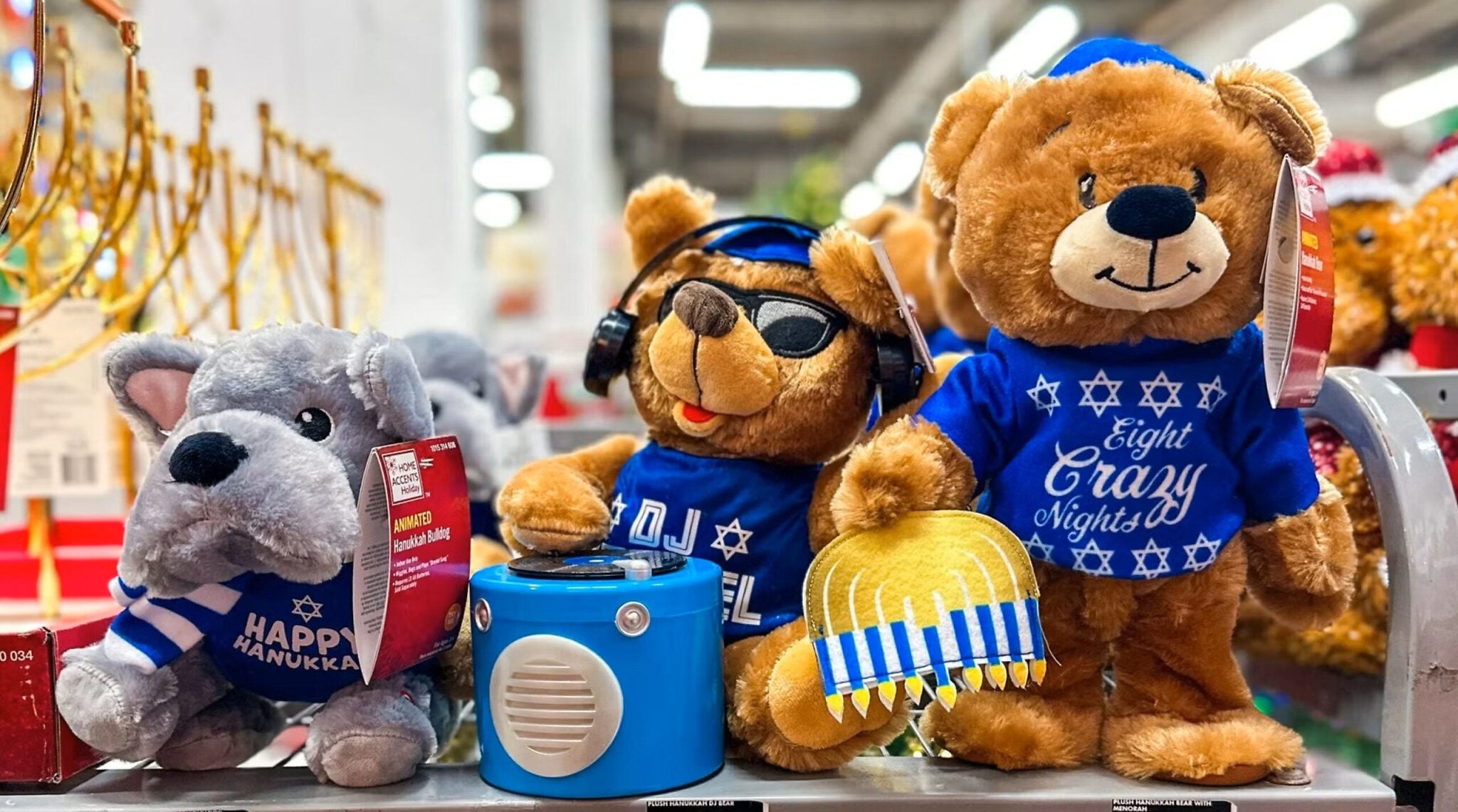
DJ Dreidel poses with friends, at The Home Depot in West Nyack, New York, October 20, 2026. (Yael Buechler)
JTA — At 5:30 a.m. one recent morning, I set out on a pilgrimage to Home Depot. The day ahead was packed, but I’d heard that DJ Dreidel, the musical Hanukkah stuffed bear who plays “Hava Nagila,” had made a triumphant return after being sold out since 2023. Coffee in hand, I grabbed a cart and navigated past a forest of Christmas trees and giant inflatables, only to discover that DJ Dreidel was nowhere to be found.
But I would not be deterred.
At a second location, DJ Dreidel was waiting alongside two musical friends: a sweet teddy bear and a cuddly gray pup. With the press of the buttons on their paws, a chorus of “I Have a Little Dreidel,” “Oh Hanukkah,” and “Hava Nagila” filled the store. And it wasn’t even 7 a.m.
There’s something thrilling about the hunt for Hanukkah merchandise. And this year, retailers have really outdone themselves. There are hanukkiyot in every imaginable theme, garlands with shimmering dreidels and Jewish stars, oversized outdoor inflatables, and enough challah-themed merchandise to decorate an entire home. I even have an inflatable Hanukkah octopus, currently taking up residence in my trunk.
Suffice it to say, we’ve become remarkably good at turning eight nights into an entire season of anticipation.
But this year, the Jewish calendar has other plans. Hanukkah begins at sundown December 4 and ends at nightfall December 12, leaving nearly two weeks until Christmas.
Have we made Hanukkah such a big part of the American holiday season that it feels disappointing when it comes and goes long before Christmas? Maybe an early Hanukkah offers an opportunity to reflect on just how far it has come.
The irony is that Hanukkah’s prominence in American Jewish life owes so much to Christmas. When waves of Jewish immigrants arrived in America in the late 19th and early 20th centuries, they encountered a society in which Christmas shopping and gift-giving were becoming an increasingly inescapable part of December.
Jewish newspapers and advertisers helped shape a Hanukkah experience that could stand alongside Christmas. In my research into early Yiddish newspapers, I’ve encountered everything from dolls to dental cream marketed as Hanukkah gifts. One advertisement in a 1902 edition of Forverts, the Yiddish-language Jewish Daily Forward, was titled “The Newest Hanukkah Presents.” It even spelled out the English word “presents” phonetically in Yiddish, as though it were a piece of American vocabulary every Jewish immigrant should know.
The Americanization of Hanukkah extended into the kitchen, too. A Yidishe Tageblatt ad from 1917 promoted pancake flour for making latkes, offering an American shortcut to traditional potato latkes, which were often fried in schmaltz, rendered chicken or goose fat. (More on geese later.)
Over the generations, rabbis, educators, parents and retailers have invested in making Hanukkah a more visible and exciting part of December, a month largely shaped by Christmas. In many ways, we’ve succeeded beyond what those early advertisers could have imagined. Hanukkah is no longer confined to Jewish homes and communities; it’s become a recognizable presence in the broader American holiday marketplace.
That visibility takes on particular significance when Hanukkah falls closer to Christmas. There’s a sense that we’re all celebrating at once, even if we’re observing different holidays. Our decorations, music and traditions become part of the larger excitement of December.
But this year, by December 13, we’ll be pondering the usual post-Hanukkah questions: how to scrape the wax off our hanukkiyot and whether anyone will ever finish those half-empty jars of applesauce at the back of the fridge. Meanwhile, Christmas trees will seem brighter than ever, holiday music will be playing nonstop, and much of the country will still be counting down to its biggest celebration.
Perhaps that’s the unexpected consequence of Hanukkah’s success in America: The more closely we associate it with December’s festivities, the more noticeable the calendar mismatch becomes.
The good news is that Hanukkah will linger in our home long after the final night. Between packing away years’ worth of decorations and finding room for all of this year’s new additions, we may still be at it when Christmas rolls around. DJ Dreidel and his musical friends will stay on display a little longer. And they won’t be alone.
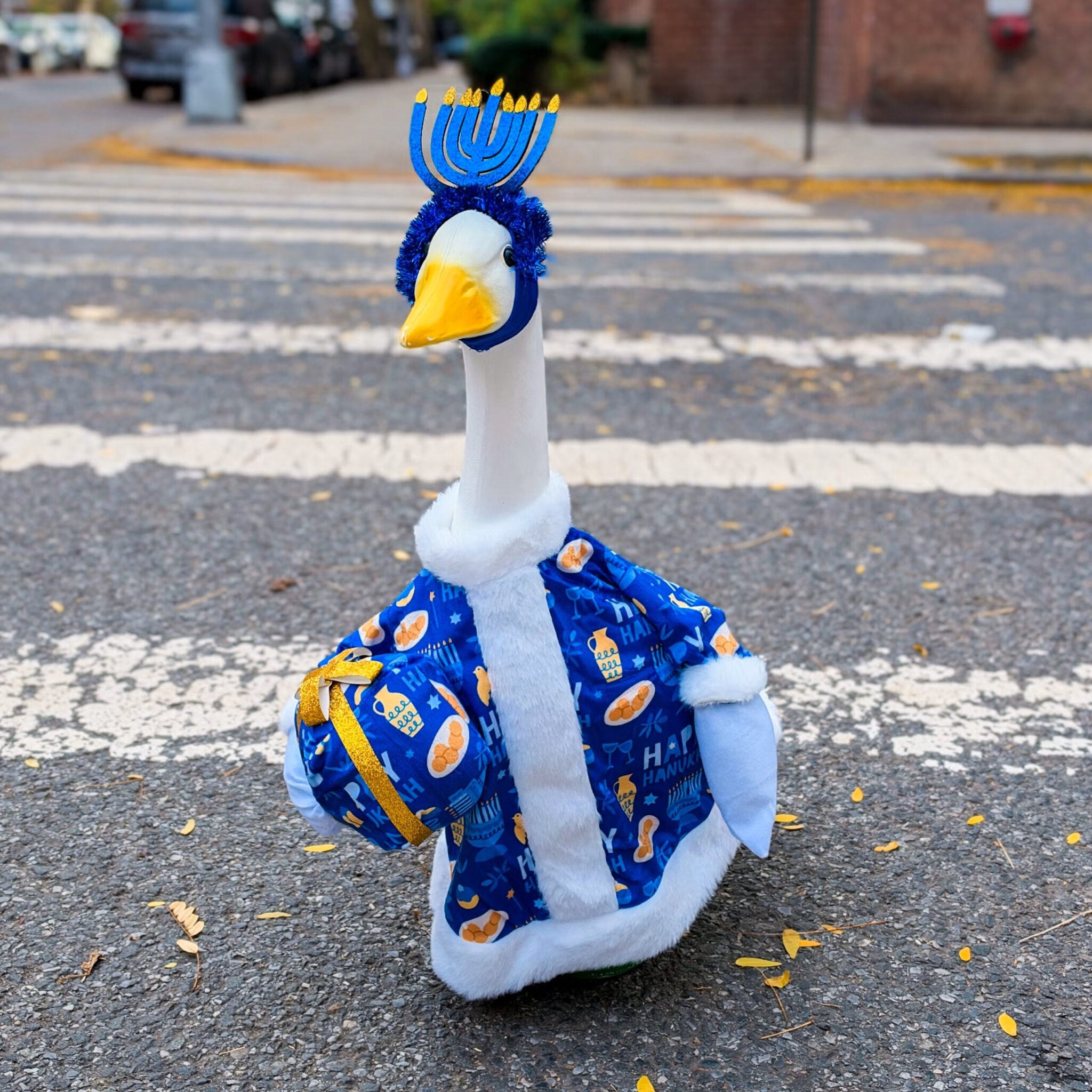
It turns out we’ve come a long way from frying latkes in goose schmaltz. These days, instead of cooking a goose, my family dresses one up. Our decorative porch goose, Maccabeak, has four Hanukkah outfits.
I can only imagine what our ancestors would think.
And we don’t even have a porch.
The views and opinions expressed in this article are those of the author and do not necessarily reflect the views of JTA or its parent company, 70 Faces Media.