CEO of Jewish Federation of British Columbia
When the Ride Doesn’t End
Two weeks ago, I wrote that the world had changed in a night. I was in New Jersey for my sister’s wedding when the Vancouver results came in, and I flew home with a sentence I still believe: our JCC will always be a safe place, even if City Hall may not be.
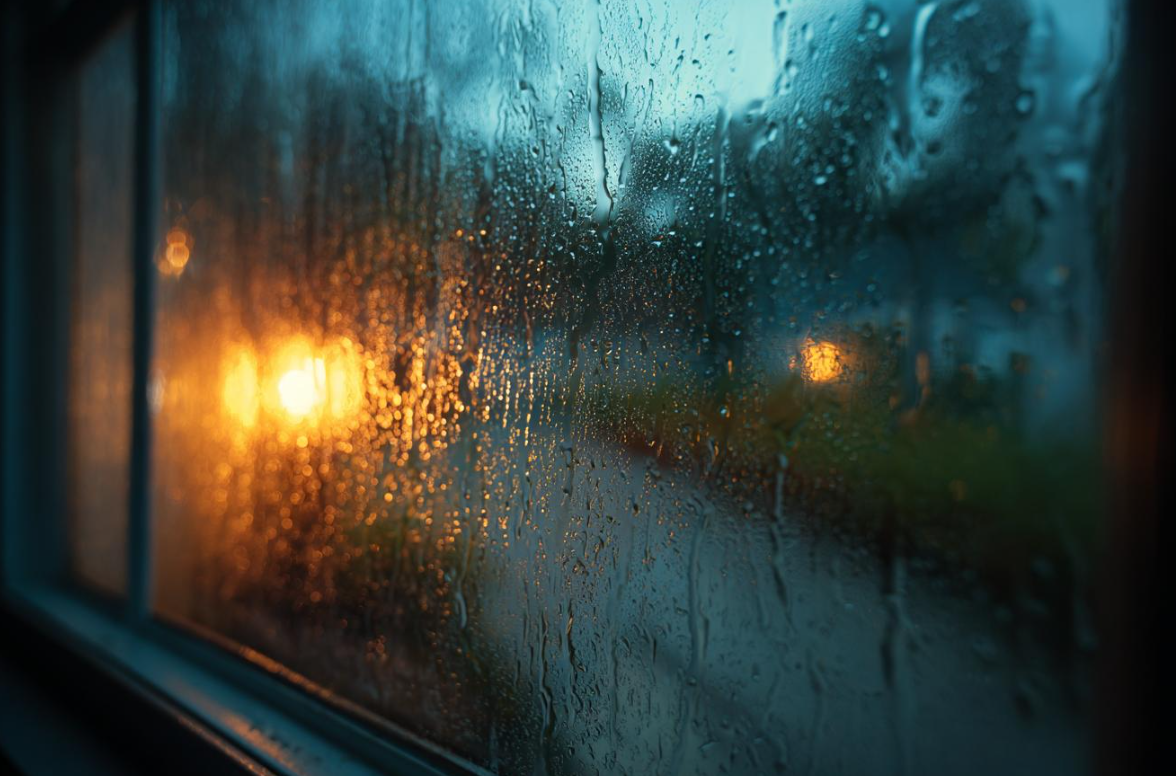
I am writing this one from my desk at that same JCC, on a cool, wet, grey afternoon, ordinary here as October gives way to November. Nobody who moves to a coastal rainforest may complain about rain. It is the natural state of this place, and after a decade, it is the dry, bright days I find unsettling.
The week after that first piece brought two more elections, one in our province and one in our homeland. It also brought more mail than I am used to. People are anxious, and they have asked whether I have anything to say that might help.
This is the closest I can come.
Rain is something you can live in. You dress for it, you build for it, and after a while you stop noticing it. The past several weeks have not felt like rain. They have felt like a roller coaster whose end you cannot see: every time the car seemed to slow, the track opened into another descent.
Three elections, two of them a week apart. The first was Vancouver. Of the eleven people elected mayor or councillor, eight had committed to some or all of a four-point platform: condemn Israel as genocidal, declare the city “apartheid-free,” sever ties with Israeli institutions, and adopt a definition of anti-Palestinian racism that captures much of what Jews say about themselves. All nine school trustees had made the same commitments.
For many in our community, the results were deeply unsettling. They raised fundamental questions about whether Jewish Vancouverites would continue to be recognized as full and equal members of the city they call home.
A week later, the province returned a two-thirds majority for a government that had put its commitments in writing. “The Jewish community deserves more than empty words,” the incoming premier wrote to our leadership. The campaign behind those four demands ran in ten BC cities and prevailed in one. A different province came into view that night, one that had not abandoned us.
The third election, in Israel, is still being counted. Dread from the city, hope from the province, and from Jerusalem, uncertainty.
I know I am writing for readers in Jerusalem, London and New York about a city council on the far edge of Canada. But this is not simply a Vancouver story. The front line has moved to the most local layer of government, the one that runs schools and fixes roads, in diaspora cities everywhere. Vancouver is simply where the picture came into focus.
What I told the people who wrote to me, I will say here: we are not walking away.
On Tuesday, we convene an urgent summit called For Our Children. Jewish teachers and parents in Vancouver’s public schools have carried this largely alone for three years: the Grade 5 teacher who had Jewish students stand and account for Israel; the children met with Hitler salutes on the sidewalk.
No child should have to carry that burden.
The Talmud teaches that the world is sustained by the breath of schoolchildren. It is a powerful teaching at a moment when some of our children are questioning whether they belong in the very institutions that should be nurturing them. We are gathering to make sure that breath is not held.
We will be at the inauguration of the new council, and present every day after it. Hineni. Here I am. The mayor’s office is working with ours on a meeting. Before council was sworn in, the mayor-elect made another consequential decision, appointing a councillor whose public positions on Israel have raised significant concerns within our community as deputy mayor. It arrived just as we thought we could see the station.
Here the metaphor fails, and I am glad. A roller coaster happens to you. A city belongs to you. It is a house, and houses are something you take care of.
Rick Mercer, writing about 24 Sussex Drive, tells the story behind every neglected house in this country: Nan died, the next generation did nothing, and the grandchildren cannot agree what to do with it. A city with antisemitism in it is a house with a leak in the ceiling. The only real question is whether we want to fix it.
We do. And this is where the uncertainty of the past month has become an opening. I see three.
The first is to become the neighbours who keep City Hall focused on the city. Some 80,000 people voted for the new deputy mayor, on a ballot with ten names, in a city of 700,000. That is a seat on council. Most of this city asked for affordable housing, a family doctor, and a school their children can walk to without a guard at the gate. These are concerns that belong to all of us. The opportunity is to become a community that shows up for the city, not only when the subject is us, so that when it is, we are not alone. That is not a stand against anyone. It is an invitation.
The second is to leave the door open. Our tradition calls it teshuvah: to name what you said, to regret it, and when the moment returns, to choose differently. I do not know whether the deputy mayor will walk through that door. But a community that keeps it open is stronger than one that nails it shut. Holding people accountable and leaving room for change are not mutually exclusive. And if he does, we should be the first to say so.
The third is to measure our hopes as carefully as our fears. For the first time in years, we have a government’s commitments to our community in writing. That matters. But commitments are only the beginning. The opportunity is to spend the next hundred days counting what has been done rather than rehearsing what we dread.
None of this is particular to Vancouver. Every Jewish community reading this has a council, a school board and a deputy mayor of its own. The circumstances may differ, but the responsibility is shared. Show up for the city. Keep the door open. Count what is done. Insist that City Hall stay local. It is the only answer I know that works in the rain.
I ended my last piece with a promise: that our JCC will always be a safe place, even if City Hall may not be. I stand by it. It is not enough. A community safe only inside its own walls is a family with the doors locked and the roof leaking.
The past month felt like a ride that would never end. It was not. It was weather. Jewish life has always been lived in the rain, and we have been building for it for three thousand years. We also pray for it. On the morning after Vancouver voted, Jews in Israel began adding four words to their daily prayers, as they do every autumn: grant dew and rain, for a blessing. Not for a curse, for a blessing. We do not leave our own house because the roof leaks.
You get on the roof.
Related Topics