
When the Symbol Becomes an End in Itself, It Erases the Signified
Israel is one of the few countries in the world where a person’s religious, communal, or political affiliation can often be identified in the public sphere at a glance, solely from clothing and other outward markers. Among the Jewish population, this phenomenon is particularly conspicuous within the ultra-Orthodox community, where each faction adheres meticulously to its own distinctive dress code. Yet the phenomenon extends far beyond the Haredi world. When Israel’s Arab citizens are also taken into account, the scale of the phenomenon becomes even more striking: large segments of Israeli society live side by side, but rarely together. One might even speak of a distinctive form of social segmentation, unlike that found elsewhere in the developed world, in which communal, religious, political, and national identities are publicly and conspicuously displayed.
Ultra-Orthodox Jews, religious Zionists, settlers, and Arab citizens of Israel do not generally live together, as is common in most developed democracies regardless of socio-economic status. They reside in separate neighborhoods, attend different educational institutions, fulfill different forms of service—or no service at all—to the state, rarely share meals, seldom work in the same environments, and only exceptionally enter into intermarriage. It is difficult to identify another developed country in which social fragmentation has become so deeply institutionalized. It would, of course, be easy to assign responsibility for this situation to one particular group. In reality, however, many of these mechanisms of separation are the result of government policies implemented over decades in response to the electoral imperatives of parliamentary coalition politics.
Among these identity markers, religious symbols now occupy an increasingly prominent place in the public sphere. This raises a fundamental question: are these symbols still connected to their original meaning, or have they become primarily markers of religious, communal, political, or cultural affiliation? Do they still express faith, values, or a worldview, or have they been reduced to emblems of collective identity?
The knitted kippah immediately identifies its wearer—often before a single word is spoken—as belonging to the Religious Zionist community and, consequently, to a particular political orientation, social milieu, and often even a specific geographical area. By contrast, a wide black hat worn together with a large black kippah instantly signals membership in the ultra-Orthodox world. A simple article of clothing thus becomes a genuine identity card, rendering any personal acquaintance almost unnecessary.
The same phenomenon can be observed in the case of the mezuzah, which today often functions more as a marker of Jewish identity than as an object of religious devotion. Some attribute to it a protective power against harmful forces; others regard it primarily as evidence that the occupants of a home have not renounced their Jewish identity. Consequently, the absence of a mezuzah may be interpreted as much as an ideological statement as its presence. Likewise, some businesses display kosher certification or portraits of revered rabbis as substitutes for moral credibility, as though the mere display of such images were itself a guarantee of honesty.
The proliferation of public stands inviting passers-by to put on tefillin likewise illustrates the transformation of a private religious act into a public and demonstrative ritual. Many secular young Israelis agree to don tefillin not out of commitment to halakha or to the theological meaning of the ritual, but because it has become a public performance of communal belonging.
Religious markers thus increasingly become the principal criterion by which individuals are judged, often more than their actions themselves. A person may be regarded as trustworthy simply because he belongs to a religious community, even when his conduct toward others contradicts the most elementary moral principles. Once the defense of the symbol becomes more important than the values it is supposed to embody, a rupture emerges between the symbol and what it represents. Within the philosophy of religion, such a situation is commonly understood as a form of idolatry: the veneration of the symbol replaces the spiritual reality it was originally intended to signify.
It is from this perspective that one should understand the criticisms directed at religious institutions in Israel, which are often accused of privileging the external and symbolic dimensions of religion at the expense of inner faith and moral values. In such circumstances, the symbol no longer represents religious principles—it replaces them. Religion has become more visible than ever in the public sphere, while its substantive content has gradually been emptied of much of its moral and spiritual significance.
The widening gap between religious symbols and the values they were intended to express is not merely a theoretical issue. It appears that in societies where religious signs occupy a particularly prominent place, one often observes a parallel erosion of certain fundamental values that religion itself claims to uphold. This phenomenon is certainly not confined to religious communities, nor would it be fair to attribute it to all believers. Nevertheless, it represents a social development that deserves careful reflection.
Thus, within certain sectors of both the ultra-Orthodox community and Religious Zionism, one may observe a growing tension between scrupulous adherence to external religious symbols and respect for essential moral principles. The commandment, “You shall love your neighbor as yourself,” together with the principle of respect for human dignity, is at times relegated to a secondary position—or even openly violated—through hostility directed toward other groups: secular Jews, Arabs, women, LGBT individuals demanding equal treatment in the public sphere, as well as other streams of Judaism, including Reform Judaism and women serving in rabbinical roles. Discourses of exclusion, boycott, and delegitimization are not uncommon precisely within circles that place the greatest emphasis on their religious identity. Under such circumstances, it becomes difficult not to ask whether the religious symbol still serves a genuine moral universe or whether it has become primarily a tribal marker separating “us” from “them.” Increasingly, one is led to the troubling impression that the more religious symbols proliferate, the lower the moral expectations tend to become.
Another revealing example concerns attitudes toward the rule of law and civic norms. Although the Jewish tradition contains abundant injunctions against theft, exploitation, moral corruption, and harm inflicted upon others, recent years have witnessed an increase in political and verbal violence, acts of vandalism, and attacks against security forces and civilians perpetrated by extremist groups generally associated with radical Religious Zionism. The phenomenon of yeshiva students exempted from military service on the grounds that “Torah study is their vocation” illustrates a profound paradox: while publicly displaying conspicuous signs of piety, some simultaneously engage in conduct that stands in blatant contradiction not only to universal moral principles but also to explicit biblical and rabbinic commandments governing human relations.
Even in the economic and ethical spheres, one occasionally encounters fractures between religious symbolism and the elementary demands of integrity. Cases of corruption, financial fraud, embezzlement of public funds, and sexual abuse that have occurred within certain religious settings obviously cannot be taken as representative of the religious public as a whole. They nevertheless undermine the assumption that the visible display of religious symbols constitutes an automatic guarantee of moral character.
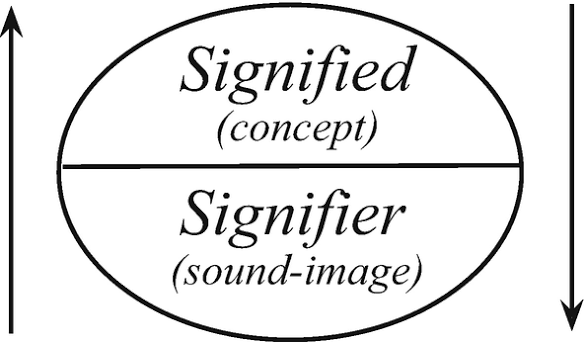
The problem, therefore, does not lie in the existence of symbols themselves. It arises when symbols become detached from the meanings they were intended to convey. When the kippah replaces humility, the mezuzah replaces moral responsibility, the portrait of a messianic figure replaces credibility, or when the rhetoric of human rights substitutes for genuine human compassion, the symbol ceases to open onto a universe of meaning and instead becomes a surrogate both for identity and for morality. At that point, the signifier absorbs—and ultimately erases—the signified.