
When the wind knew our names
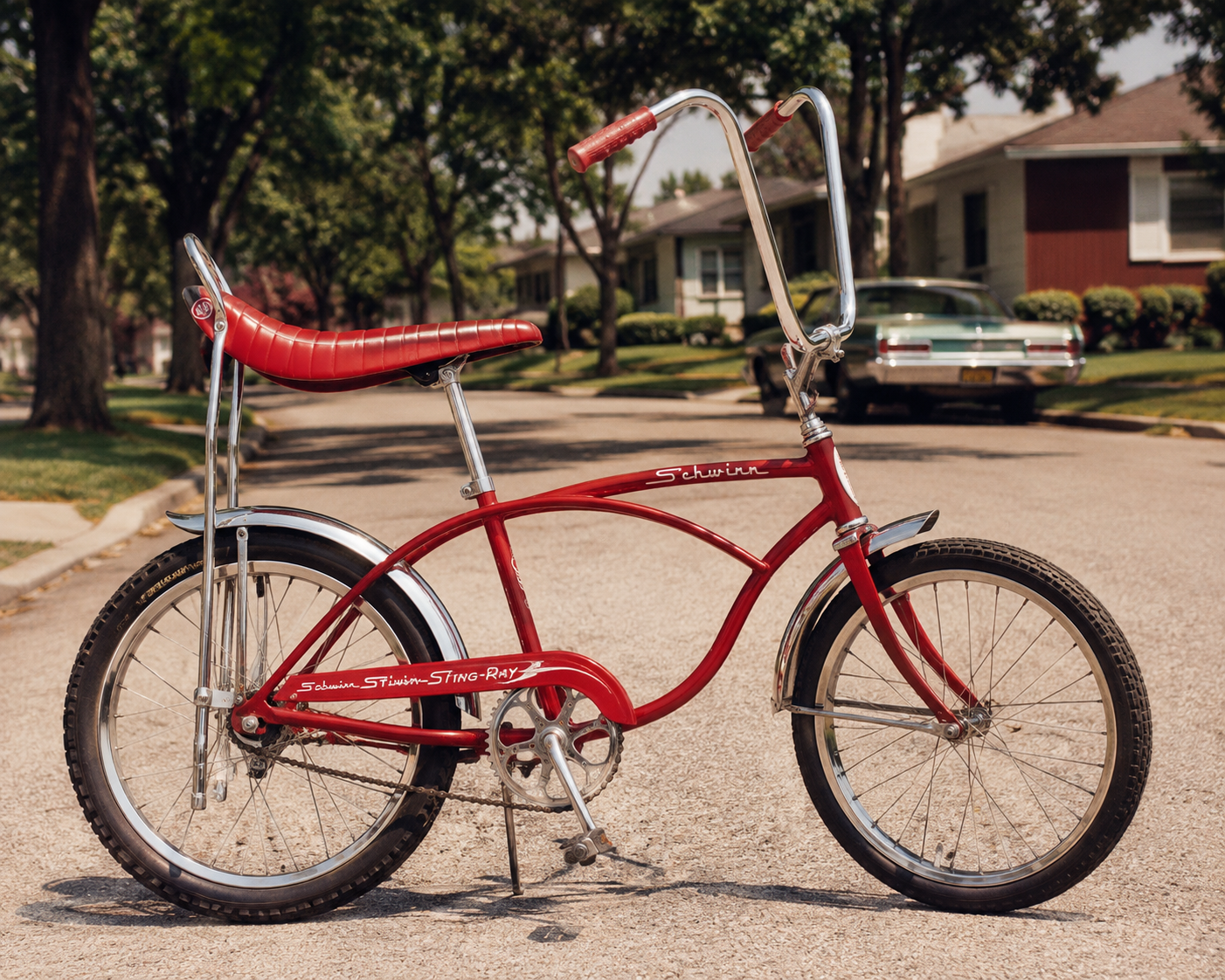
I can still see it as clearly as if it were parked in my driveway yesterday: my very first bicycle, a bright red Schwinn with a long banana seat and high-rise handlebars that made me feel, at least in my own mind, like the coolest kid on the block. It was the late 1960s, and in those days a bicycle wasn’t just a toy — it was freedom on two wheels.
Back then, every kid had a bike. Not some kids. Not a few kids. All of us. It was how we got around, how we found each other, how we filled our days. On Sundays, especially, the hours seemed to stretch endlessly in front of us, and we would spend them riding — just riding. We pedaled across town without much of a plan, heading to the park, or the local Carvel for a cone, or to a friend’s house. The destination almost didn’t matter. The ride itself was the point.
After school, we’d grab a quick snack, maybe toss our books onto the kitchen table, and head right back out. Our bicycles were waiting. We’d meet up with friends, sometimes by design, often by accident, and then just roam. There was a rhythm to it … the hum of tires on pavement, the occasional click of gears, the laughter that came easily when you were moving fast with nothing but time ahead of you. We stayed out until it got dark, guided less by clocks and more by instinct, by the fading light and the unspoken understanding that it was time to head home.
What strikes me now, looking back, is how little supervision there seemed to be. I don’t remember giving my parents a detailed itinerary. There were no texts, no calls to check in. The rule was simple: be home before it got dark. And we were. Somehow, it all worked.
It also felt safer, though I suspect part of that is nostalgia softening the edges of memory. Still, there were fewer cars, less traffic, and a sense — real or imagined — that the world was a bit more forgiving. We didn’t wear helmets. Not one of us. Today, that feels almost unimaginable, even irresponsible. And yet, by some combination of luck and resilience, the worst injuries most of us sustained were scraped knees, bruised elbows, and the occasional spectacular fall after attempting a wheelie that exceeded our abilities. We’d dust ourselves off, maybe wince a little, and then climb right back on.
The bicycle wasn’t just transportation; it was a rite of passage. Learning to ride — really ride, without training wheels — was a milestone that came with a surge of pride and independence. It meant you could go places on your own. It meant you were no longer tethered quite so tightly to the boundaries of your home.
Years later, when we had children of our own, we tried to recreate some of that magic. Of course, we bought them bicycles. Of course, we ran behind them as they wobbled down the side of the street, holding onto the back of the seat until, at some unspoken moment, we let go and watched them discover that they could do it on their own. Their smiles in those moments were every bit as wide as ours had been.
But something had changed.
Their riding, for the most part, stayed close to home — circling the block, maybe venturing a street or two over. The idea of traveling miles across town on a bicycle felt, to us as parents, a little too risky, a little too uncertain. The world seemed busier, faster, less predictable. Distances that once felt manageable suddenly felt too far. And so, for anything beyond the immediate neighborhood, we did what modern parents do: we drove.
In many ways, life had simply spread out. Stores weren’t always just a short ride away. Friends lived farther apart. Schedules became more structured, more programmed. The spontaneous, unplanned afternoons of our youth gave way to playdates, practices, and carpools. The bicycle, while still present, was no longer the center of gravity.
And now, watching our grandchildren grow up, the shift feels even more pronounced. We buckle them into car seats and drive them to places that, in another era, we might have reached on two wheels without a second thought. Safety, convenience, and habit all play their roles. It’s hard to argue with any one of those factors on its own. But taken together, they’ve quietly reshaped childhood.
What gets lost in the process is harder to measure but easy to feel. It’s the sense of independence that comes from navigating your own way through the world, however small that world might be. It’s the unstructured time, the aimless wandering that somehow always led to discovery. It’s the camaraderie of riding side by side with friends, talking about nothing and everything at the same time. It’s the simple, physical joy of movement — the wind in your face, the steady rhythm of pedaling, the feeling that, for that moment at least, you could go anywhere.
None of this is to suggest that the past was perfect or that the present is lacking in its own kind of richness. Every generation finds its own ways to connect, to explore, to grow. But there is something about those long, carefree bicycle rides that feels uniquely ours — a blend of freedom, innocence, and possibility that’s hard to replicate.
Every now and then, when I see a child riding a bike down the street, I’m transported back to that red Schwinn and those endless Sunday afternoons. For a moment, I can almost hear the laughter, feel the pavement beneath the tires, and remember what it was like to have the whole world open up at the push of a pedal.
And I can’t help but think that, in some small but meaningful way, today’s kids are missing out on one of the great pleasures of growing up — the kind that doesn’t require a destination, just a bicycle, a bit of time, and the freedom to ride.