


When the World’s Foundations are Threatened – Kol Nidre 5786
Let me ask: how many of you still get the newspaper delivered to your home?

And how many of you actually read the print paper vs. reading it on a screen?
And how many of you are below the age of 60? 50? 40?
I love the ritual of picking up the paper from the front steps. As a kid, I used to run out, grab it, and find the sports section to see who had won the previous night and check all the details in the box scores – and then memorized all the batting averages back in those days.
As an adult, I head straight to the Opinion section or the front page.

Although if I’m honest — really honest — I still would peek at the Sports section first!
But something for me has shifted.
More and more, I find myself turning first to anything but the front section.
Science.
Travel.
I’ve even started glancing at my wife’s favorite – the cooking section. I was tempted to procrastinate and make Marian Burros’s plum torte instead of writing this sermon!
OK, that’s, that’s not actually true.
I stay away from the front section, not because I don’t care about the big stories, but because the front page has become so hard to face.
The news leaves me with a knot in my stomach — the breakdown of civil discourse, the rise in violence, the polarization, the antisemitism, the erosion of truth, the wars, and on and on.
It can feel overwhelming.
Far too often, I pull the paper out of the bag with dread.
* * *
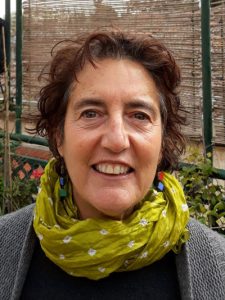
It was with my shoulders heavy that I walked into a class this summer in Jerusalem, given by Dr. Melila Hellner-Eshed, a brilliant scholar of Kabbalah and mysticism, with whom I have been studying for 15 years and who served as our Glatzer scholar on Zoom during the height of Covid.
Her teachings confront the fractures of our world with honesty and depth, and her wisdom can guide us in this fraught moment.
We were meeting just after an important day of mourning in the Jewish calendar: the 17th of Tammuz.
It’s not as well known as Tishah B’Av — the 9th of Av, when we recall the destruction of both of the Temples in Jerusalem — but the Mishnah teaches that the 17th of Tammuz also marks a series of calamities.
According to tradition, on that day, Moses shattered the first set of tablets, the walls of Jerusalem were breached, the Torah was burned, and the daily offering in the Temple came to an end, in Hebrew: — nivtal ha-Tamid (Taanit 4:6).
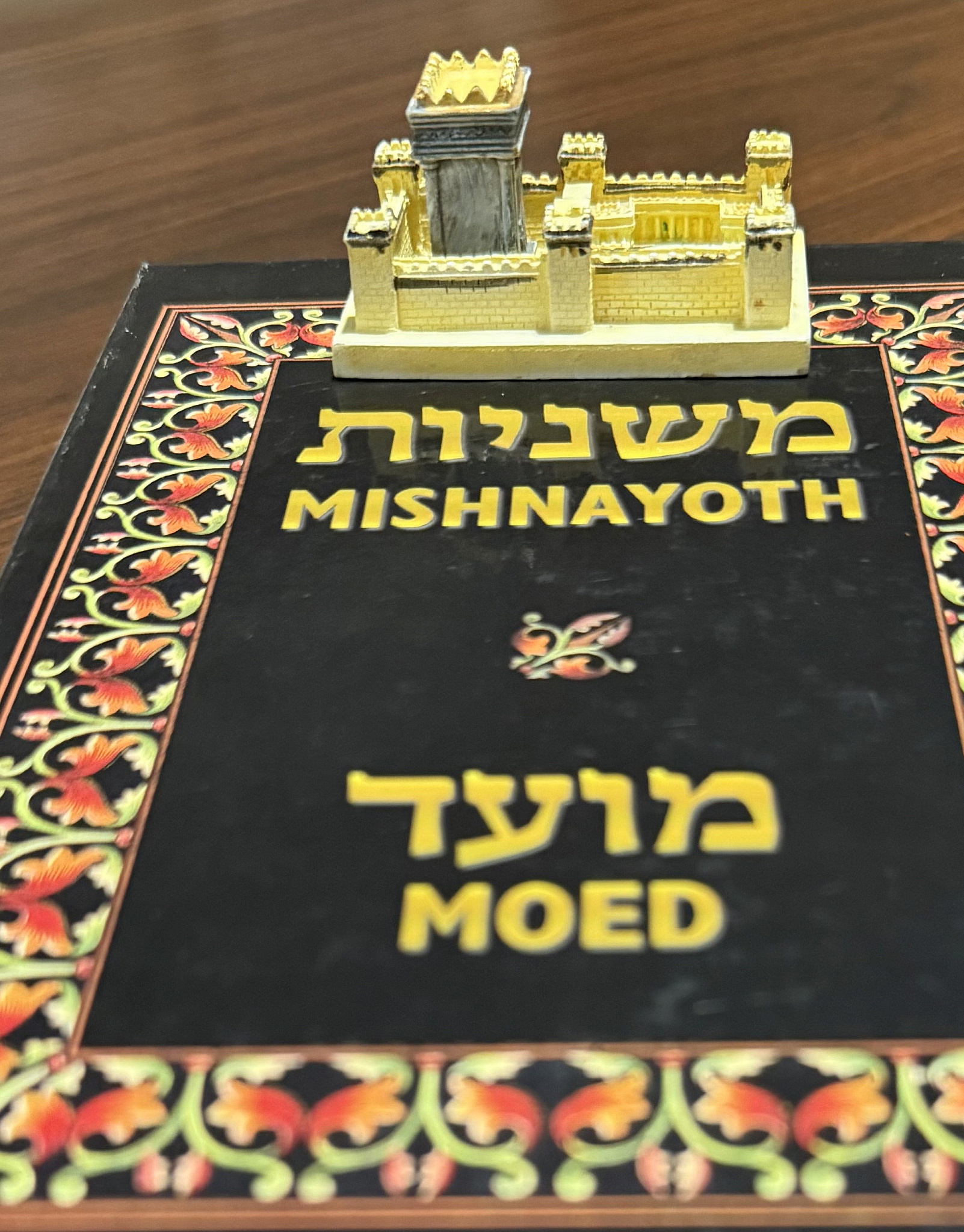
Nivtal ha-Tamid, the cessation of the daily sacrifice — was especially haunting.
The Tamid represented our covenantal relationship with God, serving as a constant reminder of God’s ongoing presence in our lives.
It meant constancy, stability, it was literally the “always.”
Morning and evening, day after day, no matter what else was happening, the lambs were brought.
A national sacrifice offering 24-7 spiritual coverage on behalf of the entire Jewish community – a sacrifice that was offered before even those of Shabbat and holidays.
It was the steady heartbeat of the Temple, of Jewish life.
And then… it stopped.
It ceased to exist.
A century before the Tamid actually ended, we find a foreshadowing in a haunting story from the Talmud (Menahot 64b).
Two Hasmonean brothers, Hyrcanus and Aristobulus, were locked in a bitter civil war for control of Judea. At one point, Aristobulus’s forces besieged Jerusalem, while Hyrcanus and his supporters were trapped inside.
In the midst of this chaos, the priests inside the Temple tried to preserve the sacred rhythm of daily life.
Every morning, they lowered money over the wall in a basket to purchase lambs for the Tamid, the daily sacrifice.
As long as the Tamid was offered, the heartbeat of Jewish life continued.
But one day, the besieging army — their fellow Jews — mocked them. Instead of sending up a lamb, they sent up a pig. And when that pig dug its hooves into the stones of the Temple Mount, the earth itself trembled.
A desecration so unthinkable that creation itself seemed to shudder in protest.
The infighting cracked the foundations of holiness.
Those foundations finally gave way a century later, during the Roman destruction of Jerusalem in 70 CE.
And then the unthinkable became reality: there was no more Tamid at all.
That was not only the loss of a ritual.
It was the collapse of what felt permanent.
Nivtal haTamid.
When the Tamid ended, Israel discovered that the “always” was gone.
And I think some of us feel that too.
The Tamid of our world — the trust that democracy will hold, that science will guide us, that truth will matter, that we can talk across differences — has been interrupted.
The land trembles beneath our feet.
When the “always” is gone, what do we do?
* * * * *

Dr. Hellner-Eshed presented a text from the Zohar, the great mystical text of the 13th century, in which Rabbi Shimon bar Yohai sees the world tipping into danger.
His response is not despair or withdrawal.
He calls out: Et la’asot l’Adonai — “It is a time to act for God.”
And what does he do?
He gathers his companions. Ulu hevraya — “Come, my friends.” In moments of rupture, the mystical response is to convene.
We steady the world not alone, but together.
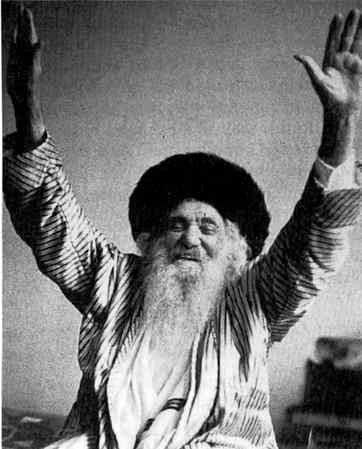
Then he cited the Hasidic master, Rabbi Nahman of Bratzlav (1772–1810).
In his allegory, The Master of Prayer, he describes kingdoms that exalt a single value — joy, wealth, wisdom, power.
Each collapses into absurdity and despair. His point is that no single quality can sustain us.
The world needs balance. We must hold many values simultaneously — justice and mercy, strength and compassion, tradition and innovation.
Our work is not to idolize one truth, but to weave opposites into a tension that creates balance.
And I’ll offer a third answer that comes from our High Holy Day liturgy.
On these Days of Awe, we imagine God seated upon the throne of judgment, weighing every deed. It’s a powerful metaphor.
But we also plead for God to move from judgment to mercy.
As we say in the Selihot – prayers that ask for forgiveness:
קוּם מִכִּסֵּא דִין, וְשֵׁב עַל כִּסֵּא רַחֲמִים, וְהִתְנַהֵג עִם בָּנֶיךָ בְּמִדַּת הָרַחֲמִים, וְקוֹנֵס לָהֶם לִפְנִים מִשּׁוּרַת הַדִּין.
“Arise from the throne of judgment, and sit upon the throne of mercy. Deal with Your children with compassion, and guide them beyond the strict measure of justice.”
If even God is asked to shift from strict justice to mercy, how much more so must we do the same? This is what the Zohar calls hamtakat ha-dinim — the “sweetening of judgment.”
So how do we move forward when the “always” is gone?
The answer is sort-of simple, but demanding: we gather, we balance, and we sweeten.
Here at Temple Emunah, this is what we strive to be:
- A community that gathers in prayer, in learning, in support of our people, in friendship, in song, in deeds of kindness, so no one feels alone.
- A community that balances — honoring many voices, many needs, many expressions of Jewish life, weaving them together into one sacred home.
- A community that sweetens the harshness of the world through kindness: comforting mourners, visiting the sick, delivering a meal, and making the minyan.

And, as most of you know (I hope), I have also been blessed to be part of Prayers for Liberty, an interfaith effort to uphold the most basic foundations of democracy — due process, free speech, the rule of law.
Twice we have retraced Paul Revere’s ride in reverse, walking from Lexington to Boston with hundreds of people: Jews and Christians of different denominations, Democrats and Republicans.
These gatherings are not about partisanship, but about principle.
They remind us that the “always” of our democracy cannot be taken for granted.
We must rebalance our civic life with compassion, justice, and kindness.
What has struck me most in this work is the friendships that I have formed across religious divides. Religious voices from every tradition must unite to reawaken compassion and acts of service, reminding us of the values at the heart of our faiths and our country.
* * * * *
So let us circle back to where we began.
The loss of the Tamid meant the “always” was gone.
And we know that feeling: each of us carries our own version of what feels out of balance or broken — whether in the world or simply the anxiety of daily life.
Whatever it is, our tradition gives us a path: gather, rebalance, sweeten.
Gather — to undo the sense of aloneness that leads to shut-down and despair.
Rebalance — so we do not become fixed and worship a single truth, excluding other perspectives and possibilities.
Sweeten — so judgment is tempered by mercy, so harshness yields to understanding.
This is our calling.
This is our work in the wider world.
And this is our hope for the year ahead: that we may steady ourselves, calm the trembling earth, and embrace rahamim – compassion, more kindness, more mercy — to our world, and to our lives.