When we forget, God remembers
The summer has come to a close, the kids are back in school and Rosh Hashana is just around the corner.
Most years, when I begin thinking about Rosh Hashana, my mind goes immediately to the theme of coronating God as King through the sounds of the shofar. These ideas are especially emphasized in the Musaf prayer. There we talk about accepting His dominion over us, submitting ourselves to His will, standing before Him in judgment, and acknowledging that He and He alone is the One who rules over the world.
But this year, I can’t stop thinking about something else.
Zichronot. Remembrance.
In the middle section of the Musaf Amidah on Rosh Hashana we speak about God’s memory:
“You remember the deeds done in the universe and You recall all the creatures fashioned since earliest times. Before You all hidden things are revealed and the multitude of mysteries since the beginning of Creation, for there is no forgetfulness before Your Throne of Glory and nothing is hidden from before Your eyes. You remember everything ever done and not a single creature is hidden from You.”
I’ve said these words countless times, but this year, I am suddenly struck by how incredible they are.
Because even though human beings forget, God doesn’t.
Memory is one of the things that makes us who we are as people. It reminds us where we have been, the choices we have made, the relationships we have built, the journeys we have taken, our accomplishments, our mistakes, our failures and our successes.
Memory anchors us.
Through memory, I can return to formative places I haven’t been in decades. I can curl up again on the couch in my parents’ bungalow in the Catskills. I can walk through the rooms of my childhood home. I can wander the streets of Great Neck where I grew up. I can be back davening in my father’s shul.
I can remember people I loved. I can think about things I said and did that make me proud. I can cringe about the decisions I regret. I can return to events that I want to reexperience.
Memory is powerful.
Until it isn’t – because human beings don’t remember forever.
If you have loved someone with Alzheimer’s, you know exactly what I mean.
Slowly, drip by drip, a person loses pieces of what once seemed inseparable from who they were.
They forget what they like to do. They forget the things they care about. They forget the people they cherish. Eventually, they may forget how to perform the most basic tasks of everyday life. How to eat. How to speak. How to navigate the world around them.
The person is still physically present. But pieces of the person you knew disappear.
If you are the loved one watching it happen, there is a particular kind of grief in that. Slowly, you are losing someone who is still here.
My father was the backbone of our family.
He was our rock. A source of strength. Someone we relied upon, someone whose presence gave us a sense of stability and security.
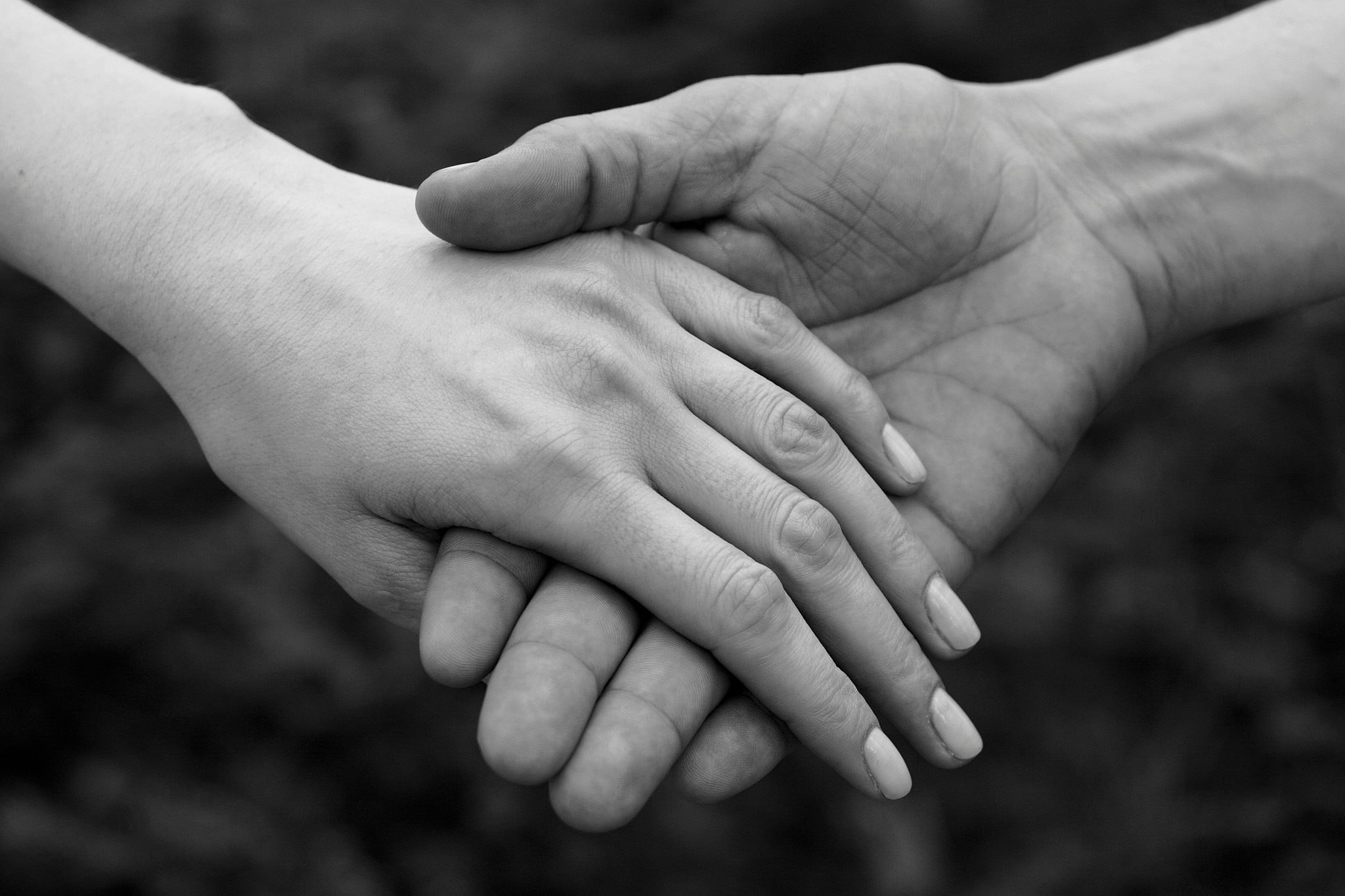
So much of that is a now distant memory. His hands are still soft, his grip is still strong, but the passion in his eyes has dimmed and too often there is an empty look. It can be difficult to connect when someone barely remembers who they are and what they value.
In the same Musaf prayer in which we proclaim that God remembers everything, we say:
“Praiseworthy is the man who does not forget You…
for those who seek You will never stumble,
nor will those who take refuge in You ever be humiliated.”
Even after so many other things faded into the distance, my father did not forget God. He continued to put on tefillin each day. He stumbled through the daily prayers. He washed his hands before eating bread. He still tries his best to say the Grace after Meals.
For as long as it remained within his control, my father remembered his Creator. And yet there is so much humiliation. It is hard to reconcile.
We submit ourselves to God and His will. We believe that He is King. We stand before Him on Rosh Hashana and acknowledge that He determines the course of our lives. But as humans, there is so much we do not understand.
We don’t understand why a strong person becomes weak. Why someone who spent his life caring for others becomes dependent on them for the most basic things. Why a mind that once held so much knowledge and wisdom can become almost entirely inaccessible. Why someone who remembered God when he could no longer remember so many other things should have to endure so much indignity.
As I look through the words of Zichronot, I suddenly see them as more than a statement about God’s omniscience. They give me insight into God’s relationship with us.
God tells us, “I remember for your sake the kindness of your youth, the love of your bridal days, how You followed Me in the wilderness in an unsown land.”
God remembers the early days of our relationship with Him, our youthful devotion, the love and trust with which we followed Him. And we ask Him to draw on those memories and to be there for us when we need Him most.
Throughout Elul and the Ten Days of Repentance, culminating on Yom Kippur, we repeatedly say the verse:
“Do not cast me away when I am old; when my strength fails, do not forsake me.”
It is extraordinarily vulnerable to stand before God and ask Him to be there for us when we can no longer be there for Him.
After years of trying to be strong, we discover that there comes a time when our bodies and minds can fail us, and we can no longer do for ourselves what we once did so effortlessly.
In those moments, there is something deeply humbling about recognizing that we are, ultimately, dependent. Dependent on other people. And dependent on God.
Rosh Hashana asks us to recognize that we stand before God as vulnerable human beings. Nothing is a given and not everything lasts forever. We may be powerful today and powerless tomorrow. We may be wealthy one day and needy the next. We may be healthy and strong and then sick and weak.
We may remember everything today and forget it all tomorrow.
Zichronot reminds us, however, that He remembers what we cannot and, at this point in my life, that feels like an enormous source of comfort. It means that nothing about us disappears simply because we can no longer hold onto it.
God remembers the child I was, the young woman I became, the choices I made, the people I loved, the things I did well, the areas where I struggled, the relationships I built, the moments I have forgotten, the funny things my children said when they were little, the prayers I said, the acts of kindness I performed, the tears I cried, the parts of myself that have been and will be lost along the way.
And perhaps most poignantly for me this year – God remembers my father.
He remembers the father I remember. The strong one, the wise one, the one I could turn to with any question, the one who was always there to support us and reassure us. The one who always knew exactly what to say and when to remain silent and just give a hug.
The one who led a community for 45 years, the one who called out each sound of the shofar in a loud clear voice, the one who gave powerful sermons, the one who davened his heart out on behalf of every single congregant.
I know that God remembers the person my father was before Alzheimer’s began taking him from us. He remembers every piece of him that sometimes I sadly feel like I am forgetting.
“There is no forgetting before His Throne of Glory. Nothing is hidden from before His eyes.”
This year, when I hear the shofar, I will still think about malchuyot and what it means to crown God as King. I will still think about submitting myself to His will, even when I don’t understand it. I will think about my father’s years of faithful service and remember him wrapped in his tallit even if he does not make it to the synagogue this year.
But I will also think about the fact that there is a memory greater than mine. A memory that does not fade. A memory that does not disappear with age or illness. A memory that holds every person and every moment.
“Though my father and mother have forsaken me, the Lord will take me in.” (Psalms 27:10)