Connecting Philanthropy & Capital with Israel
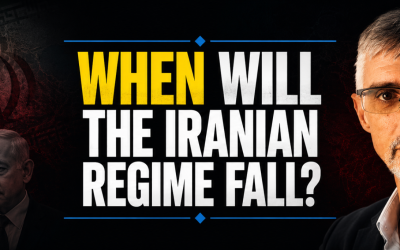
When will the Iranian Regime Fall?
The man who escaped Tehran gives the regime months, not years
The Iranian rial hit two million to the dollar this week. Inflation stands at 66 percent. Washington has launched what it calls the largest financial offensive in its history against Tehran, and the American president says the regime can no longer pay its own soldiers.
Iranians have risen up before. In 1999, in 2009, in 2019, in 2022. Every time the regime survived. So I sat down with a man who has watched it from both sides of the border and asked him the only question that matters. What has to happen for it to fall?
Beni Sabti was born in Tehran in 1972. He was seven when the revolution came. Today he researches Iran at the Institute for National Security Studies in Tel Aviv, after 31 years in Israeli intelligence. In between lies a story that explains why he answers this question differently from any Western analyst.
You can watch our full conversation at this link.
A childhood inside the revolution
Sabti remembers the revolution as noise. Shooting in the streets, no school, whole weeks spent watching from the roof. He remembers crowds running toward the Shah’s tanks rather than away from them, pulling soldiers out and beating them. When he saw the footage of October 7, he recognized the scenes. The motorcycles, the kidnapped officers. He had seen it all before, in Tehran, as a boy.
His family was among the 40,000 Jews who stayed after 80,000 fled in the first year. His mother was a nurse. His father kept the accounts at the Jewish hospital in Tehran, which was enough for the new regime to brand him a Zionist. Beni himself was arrested twice as a teenager. His crime was his hair. They forced him down on the street and cut it off with an old machine. “My hair hurt the revolution,” he told me. “What can I say.”
In November 1985 an IRGC jeep ran his father down in the street outside the hospital. He survived, badly injured. The family understood. In January 1987 a smuggler walked them nine hours through the desert at night. Regime soldiers fired at them in the dark. They shoot first, Sabti says, and ask questions after. On the other side, a hidden Jewish family working for the Jewish Agency gave them passports and tickets. Only then did the Sabtis understand that the operation was run by Israel.
He was 15. Three years later he was in Israeli intelligence, working on Iran. He has never stopped.
Why every uprising failed
Sabti’s answer surprised me. It is not about guns. The Islamic revolution itself, he points out, was made by unarmed masses against a modern army. What tipped it was words from a superpower. When President Carter told the Shah in January 1979 to leave the people alone, the regime began to fall within twelve days.
The uprisings against the Islamic Republic failed, in his telling, because those words never came. He shared a detail I had never heard. In 2009 the protesters chanted “Obama, Obama” at the cameras. In Farsi, the name can be broken into three words that mean “are you with us?” They were asking the American president a direct question. He never answered. “Maybe if he had a few words, a tweet in those days,” Sabti says, “maybe we didn’t have this regime.”
That is why he attaches such weight to the current moment. When President Trump tweeted support during the January protests, Sabti says 16 million Iranians came out, the largest wave since 2009. Their slogan was not about America or Israel. They chanted: no to Gaza, no to Lebanon, I live only for Iran.
What is different this time
Ask him how long the regime can pay for loyalty and he points to something new. Policemen and members of the security forces are now filming themselves, faces uncovered, saying their salaries are not enough to live on. The regular army is hollowing out. Pilots leave to fly civilian routes in Dubai. To Sabti it looks like the Soviet Union in its final months, a system whose own enforcers have stopped believing its story.
The regime’s oldest trick, blaming the foreign enemy, no longer works either. Since 2017 protesters have chanted that the enemy is inside Iran. And Sabti cites the regime’s own secret polling, leaked to the media. In October 2025, 92 percent of Iranians said they hate the regime. An earlier internal poll found 75 percent expressing love for Jews and half accepting the existence of Israel. No country that has actually signed peace with Israel comes close to those numbers.
Who runs Iran today?
His answer is blunt. A handful of aging IRGC generals, ruling like a terror organization rather than a state, with a leader hidden underground and failed retirees called back to duty because no one else is left. Those who claim the regime has emerged stronger, he says, are simply wrong.
The Christian question
omec sits at the meeting point of Israel and the Christian world, so I asked Sabti about the reports of Iranians converting to Christianity in growing numbers. His answer moved me.
Conversion from Islam can carry a death sentence in Iran. New Christians are jailed and sometimes hanged. The regime fears them, Sabti says, no less than it fears American or Israeli attacks, because the threat comes from inside. His message to Christians in the West was direct. Leave Israel aside for a moment. This is about your brothers. They chose Christianity and they are chased for it. Be their voice before your own governments.
Iranians loved Christians for two thousand years, he reminded me. Churches stood in Tehran and Isfahan for centuries. What the regime has done to them is not Iran. It is the regime.
Months, not years
At the end I asked him to look forward. When does it fall?
His answer: months, not years. Perhaps six to twelve until a change so large it shakes the regime to its core. The generals are old and blind with arrogance, and fifteen of them cannot run a country of ninety million on terror alone.
And the sign to watch for? An open fight between the generals. The moment an argument at the top spills into public view, Sabti believes the streets will fill, because Iranians will see that the men who rule them are weak enough to fight each other.
Near the end of our conversation he turned to the camera and spoke directly to the Iranian people in Farsi. I do not speak the language. I grew up in Malmö with Persian friends, close enough to the community to love it, never close enough to learn it. But I did not need a translation to understand what I was watching. A boy who was shot at while fleeing Iran, now a man telling his people that the dawn is close, and that Israel stands beside them.
Whether his timeline proves right, I cannot say. But I left the conversation understanding something I had missed. The fall of this regime will not begin with a bomb. It will begin with words, and with people who stopped being afraid.
Watch the full interview with Beni Sabti on the omec podcast