

A Mermaid in Jerusalem
Featured Post
I’m alive. My son’s alive. My neighbor isn’t. And none of us is OK
I went back inside my Old City home to grab my keys and the terrible, hollow sound of a gas explosion ripped through our courtyard
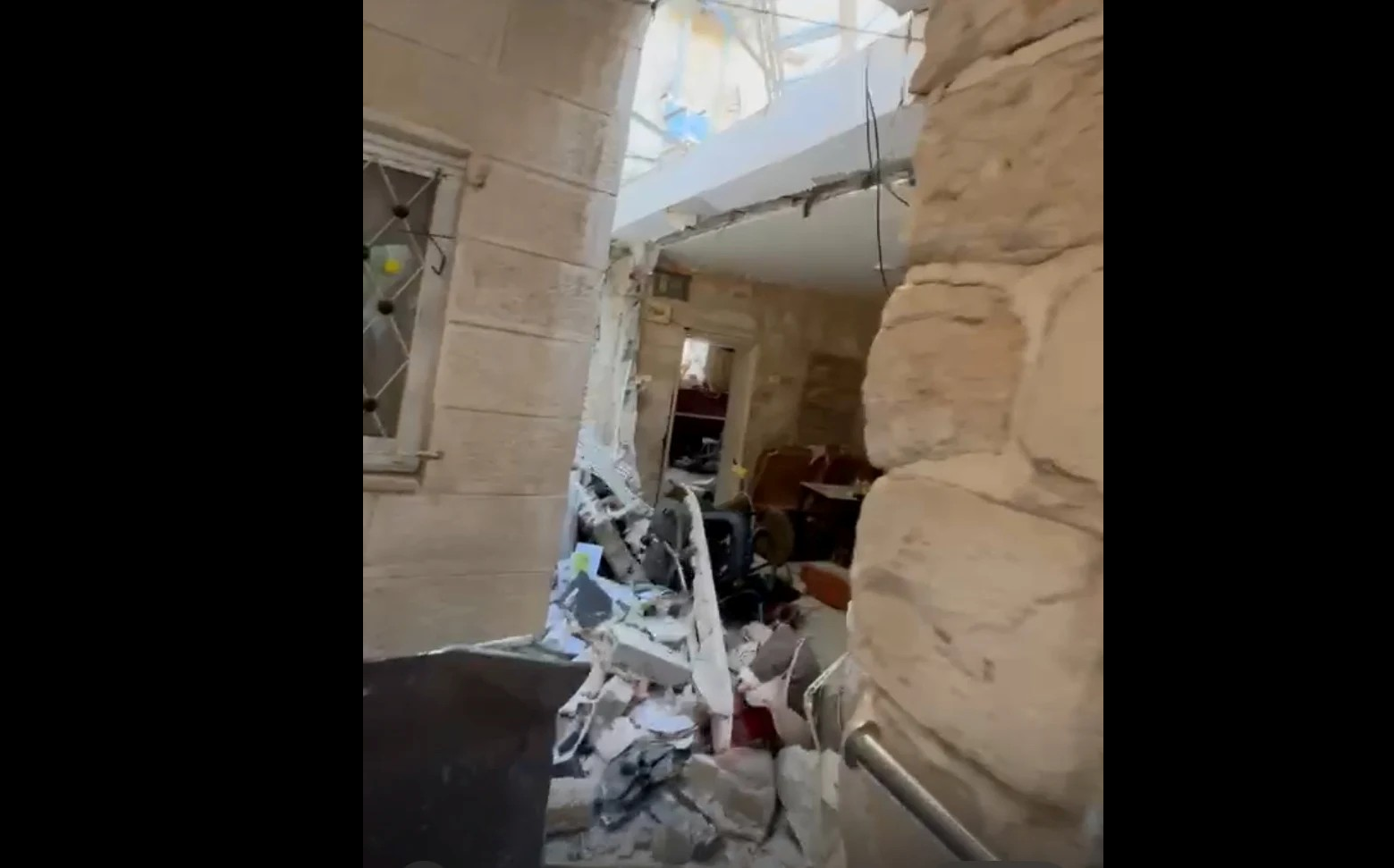
Our destroyed courtyard, June 11, 2026 (Sarah Tuttle-Singer)
You may have read the headline in The Times of Israel:
“Woman killed, man seriously hurt in Jerusalem Old City gas explosion”
What you didn’t read is this:
Their names were Claire and Izaak.
They were my neighbors.
They were our “family” when we sheltered in the Byzantine well during the Iran war.
They were our friends.
And that was my home.
And yes, I almost died.
On Thursday, I got home earlier than usual.
When I entered our courtyard, I smelled gas.
I live in one of those Old City compounds where families share a courtyard but each has their own unit.
Sometimes the rooms aren’t even fully connected — a bathroom here, a living room there. The Ottoman Empire was a jigsaw puzzle, and its architecture follows suit.
Our neighbor below us — Claire — was 80 years old. Her grandson had a room in one section but lived with his grandmother. Her son, Izaak, daughter-in-law and younger granddaughter lived in another.
The gas smell was everywhere.
In the Old City, gas balloons are common.
They’re connected to stoves or heaters and periodically replaced when they run out.
Accidents happen, but they are extremely rare.
I remember thinking about the challah and grape juice I still needed to buy for my son. The next day he was going to be Aba Shel Shabbat at preschool and he was so excited.
I said hello to Claire who was sitting on the chair just below my stairs, her walking cane leaning against her leg.
I was probably the last person to speak to her.
I went upstairs to put down my bags before heading back out.
I was halfway down the old stone steps when I realized I forgot my keys. I went back inside, and the world, as I knew it, broke in half between “before” and “after.”
It was a quiet bright blue day. I still had dishes in the sink. I grabbed my keys, and an explosion ripped through the courtyard with the most hollow and terrible sound I have ever heard.
Dust and debris and stones and metal slammed into the windows.
The building shook.
Thankfully, the old Ottoman walls held.
I tried to get outside — a reflex, really — but the door had jammed shut from the shock wave.
Someone below was wailing.
“She’s dead. She’s dead.”
I called 101 and gibbered and howled.
I ran to the window and screamed into the street for someone — anyone — to help us.
Police officers, United Hatzalah volunteers, MADA, firefighters, neighbors, EVERYONE rushed toward the destruction instead of away from it.
The scene was still dangerous. Another gas balloon could have exploded. The building could have caught fire. In that moment, I was sure we would all die.
Several men — Arabs, Armenians and Jews — managed to pry open the door.
When I looked down at the rubble below, I understood.
My sweet neighbor Claire — the one who admired my pretty fairy lights, who complained about the cats, who gave my son candy after preschool, the one he called “Teta,” grandmother in Arabic — was motionless, grey, and soaked in blood.
Emergency workers were desperately trying to save her.
Someone helped me down the stairs.
I climbed over broken stone and twisted metal, trying not to slip in the blood or disturb the EMTs
The smell was unbearable — gas and blood and dust and the wild stench of fear.
There were dozens, perhaps hundreds, of people by then. Ambulance sirens wailed. Neighbors screamed.
Izaak, terribly burned, was being treated nearby.
Yes: I am lucky to be alive. A few different turns in the day, and I know I wouldn’t be.
Forgetting my keys saved my life.
That knowledge sits beside a profound and horrific grief.
I am heartsick for Claire, may her memory be a blessing.
I am heartsick for her son, who is fighting for his life.
I am heartsick for their family and for an entire community now carrying the weight of this loss.
I am heartsick for the home I built, with its bright yellow kitchen and teal windows, its cozy nooks, the stained glass, my garden with the fairy lights, and the Armenian tiles I painted.
I am heartsick that the place which brought me comfort now triggers a tsunami of panic.
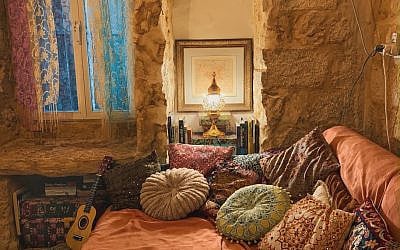
I am heartsick for my young son, who keeps asking when we can go back to his castle. Who wants to visit the woman he called Teta, say hello to our flowers, and look at the fairy lights.
My house is still standing.
But the foundation isn’t stable.
This isn’t a metaphor.
The police have cordoned off the property. We can’t go back now. There is rubble and blood and the aftershock of memory. My sense of trust in the world has been profoundly shaken.
But it has NOT been shattered.
Because there have been so many sparks of light finding their way through this.
The kind neighbor who refused to leave my side while I sat babbling and shaking.
The police officer who quietly handed me a bottle of water.
The security official who stayed with me until my son’s shuttle arrived.
My son’s grandparents and family who’ve taken us in and have to deal with my waves of hysteria.
The one who got me breakfast the morning after when I was just a hollow corn husk pretending to be a human.
The one who drove me back and forth across Jerusalem, and held my hand while I staggered like a zombie around Superpharm.
The ones who’ve sent me apartment listings and have offered to babysit and offered me a place to sleep.
The ones who have asked how to help and have followed through.
The one who knew when to pour the right drink and just sit beside me, and exactly what book might offer solace — or at least a distraction.
The rescue workers and neighbors — Jews, Muslims, Christians, Armenians, Haredim, secular… JERUSALEM at its most whole — who ran toward mayhem instead of away from it.
The ones who’ve prayed for us and for Izaak and his family, and for Claire’s memory.
It’s hard to be vulnerable.
It’s hard to ask for help.
And it’s hard to accept I need it now.
Jerusalem knows the cycle of breakdown and renewal.
Century upon century, we have witnessed this.
The stones here have borne destruction beyond imagination.
They have seen grief, loss, exile, and return.
And still they hold our prayers and our stories — including this one.
For now, I’m spinning through all the galaxies of trauma and grief and fear and confusion, but I know I am carried by the kindness of others until I can stand more steadily on my own.
And I am grateful for every act of kindness, every prayer, every message, every offer of support and every reminder that even in terrible moments, people remain capable of extraordinary goodness.