

Where Healing Begins
I know how to be an army mother. Ask me anything. My four children have all served in elite combat units. Over the years I have become well-versed in the private dialect of acronyms and unit numbers. I have learned to read a text message for what it leaves unsaid. A mother becomes fluent in silence when her child is a soldier.
I did what mothers do. I cooked. I did laundry. I kept the refrigerator full for whoever walked through the door next. I baked chocolate chip cookies and let myself believe, absurdly, that this too was protection, that enough butter and sugar could stand guard between my children and the world. And I waited.
After October 7th, the waiting changed. My children moved between regular service and reserve duty, the way so many of ours have had to. Of course I worried whether they would come home. But a second question surfaced: what would come home with them?
I did not have to imagine the answer for long. Through my volunteer work with IDF veterans, I have come to know a young man who lives it. His name is not really Amir, but I will call him that here. He is around the same age as my own children. Twelve years ago he fought in Tzuk Eitan (Operation Protective Edge), and his life has been forever altered since. He is sweet and funny, with a disarming warmth about him, yet he cannot hold a job long enough to build a life. A supermarket line can undo him. A crowded bus stop can flood him with a danger that is no longer there but feels entirely present. Even the nights offer no relief, sleep is always just out of reach. Twelve years, and some part of Amir never left Gaza while the rest of the country moved on.
This is what PTSD does. It is an alarm that never fully shuts off, a body stuck believing danger is still coming even after the mind has been told a thousand times otherwise. Braced. Always braced, the way a fist stays clenched long after the fight has left the room. Some withdraw from the very people who love them most. Some go hunting for anything that might quiet what will not be quieted. And some suffer so deeply they no longer wish to be alive. Amir is here, but here does not mean whole, and my heart breaks for him every time we meet.
These are our soldiers. The ones we called brave, sent toward the danger, and welcomed home with relief written plainly across our faces. Still, so many came home carrying a war no one else can see, folded small enough to fit inside a duffel bag, tucked beneath the socks.
My years on a yoga mat led me, of all unlikely places, into this territory. Through my training as a yoga therapist I came to understand the ceaseless negotiation between body, breath, and nervous system. The body keeps its own ledger, and it can stay braced against a danger long after being told, again and again, that the danger has gone. I think of Amir often when I am on the mat, and I wish he had found relief years ago, before the trauma had the chance to settle so deep in him.
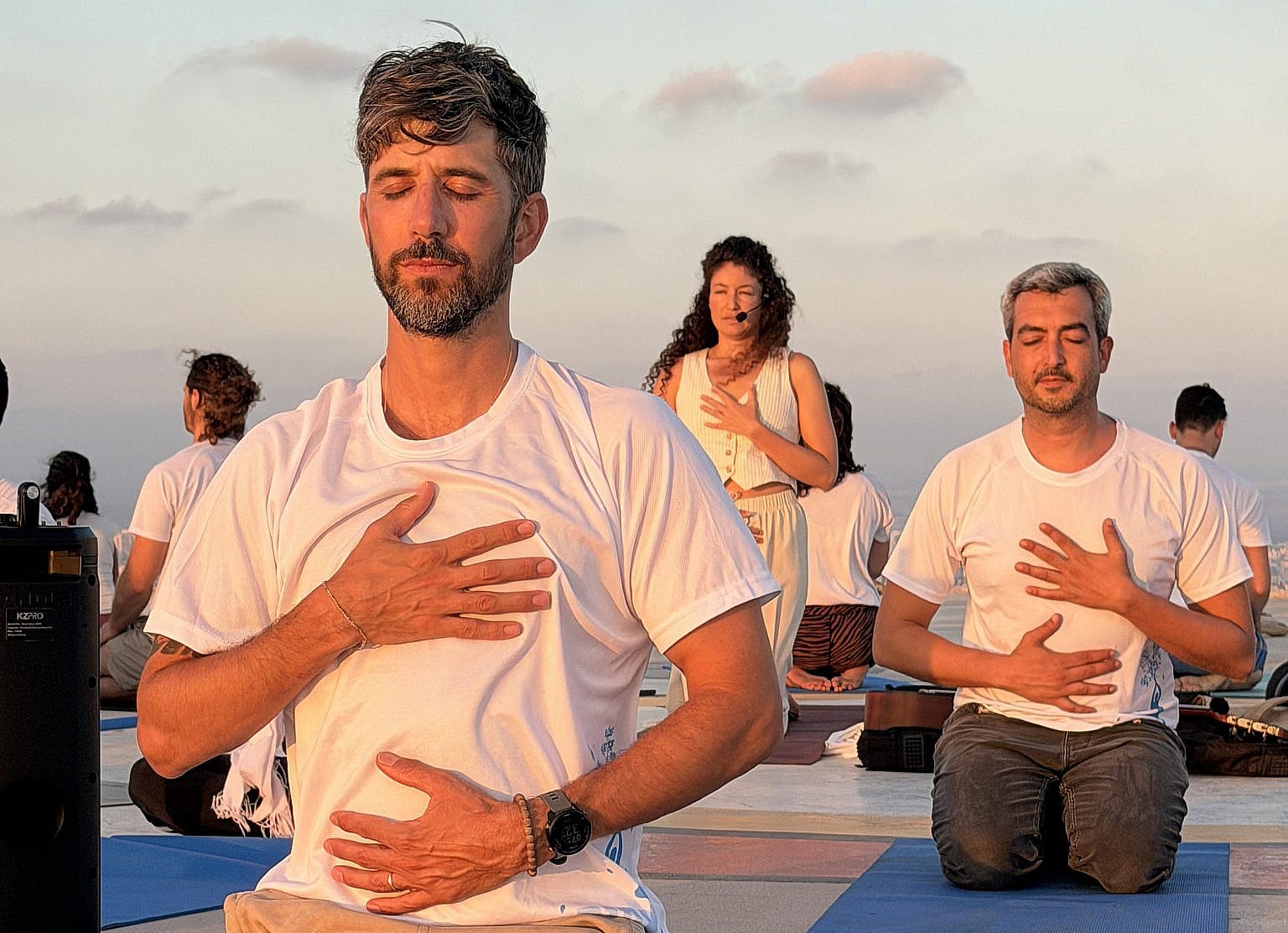
This is what drew me to Brothers in Yoga, an organization created to help people carrying exactly what Amir does. It weaves trauma-sensitive yoga with breath work, relaxation, meditation, and nutrition, led by trauma informed yoga teachers alongside a clinical care team. This kind of yoga does not ask anyone to relive what happened. It offers something smaller, and far more powerful: a string of tiny choices. Observe your breath. Feel the rise and fall of your chest. Plant your feet on the ground. Notice where you can soften. For a body that has spent years at the mercy of an alarm with no off switch, each small choice is its own proof that it is possible to feel safe again, one seam of light under a long-shut door.
What struck me most, watching this work, was not the yoga. It was the energy in the room. There is an ease among people who have lived through the same thing that no outsider could ever achieve, a fluency native to them alone. We underestimate what the loss of belonging can do to a person. Military service is not a job. For so many it is a tribe, a shared language built on the plainest fact there is: your life depends on the person beside you, and theirs on you. Then, one day, the uniform comes off, and a person once held up by brotherhood is suddenly, unbearably, on his own.
The program is built so that rupture does not have to become isolation. Its four-month cycle opens with a weekend retreat, continues through weekly meetings of sharing and practice, and closes with another retreat, though the thread between people does not end there. Brothers in Yoga offers ongoing community practices that provide a deep sense of belonging.
Alongside everything trauma takes, something else stubbornly insists on staying possible, a kind of growth that can take root right alongside the pain. Psychologists call it post-traumatic growth. People who live through it often find a sharper appreciation for the small, ordinary parts of life. They form deeper bonds with the people who stood by them. They discover a strength they didn’t know they had, and sometimes even a new sense of purpose.
I want that for my children, and for Amir. I want their lives to extend far beyond what they experienced in uniform. I want them to sleep deeply, to laugh freely, to love without fear, to make plans without having to question whether the future is safe.
Now when I pass a young man or woman in uniform, I think: someone’s child. Someone left a porch light burning for you tonight. Someone is hoping, hard, that you come home whole. Perhaps that is what being an army mother has done to me. It has widened the borders of my own motherhood until they no longer stop at my own front door.
In Israel we say it often: may we be worthy of those who sacrificed and paid with their lives. I think we owe that same sentence to those who survived, including the ones whose war is still unfolding years later, long after the guns have gone silent. May we be worthy not only of their courage, but of what that courage has spent years concealing. Our obligation does not end the moment they cross the threshold of home. Gratitude alone is not enough. Healing requires treatment, community, patience, and room enough to become something more than what happened to them, long after the rest of us have stopped asking.
For some, the hardest battle only begins once everyone else has quietly decided the war is over. I think of Amir and I know this to be true. We owe him, and everyone like him, our presence in that fight, and our stubborn faith that something still waits on the other side of it, not a return to who they were before, but the possibility of becoming someone they have not yet imagined.
That is where healing begins.
Click here for more information on Brothers in Yoga.