An Iraqi Jewish Writer, Poet, Educator, Mother
Featured Post
Nearly a million Jews were expelled from Arab lands, including my family
Following my grandmother's injunction against anger, I pray for an end to radical Islam and for consummate normalcy between Arabs and Jews
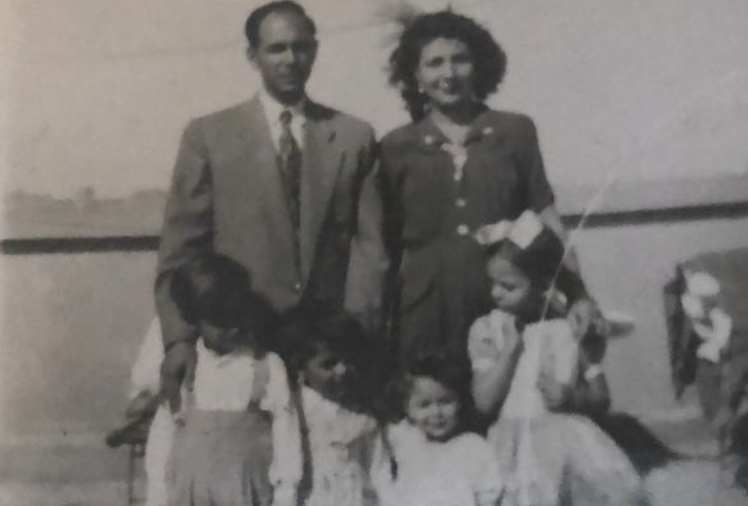
Author's father with his parents, Baghdad, 1951, before fleeing to Israel.
I light candles for the things my family never spoke about.
The 30th of November is Yom HaPlitim, the Day of Refugees, marking the expulsion of nearly one million Jews from Arab lands. My Iraqi father and all my grandparents are counted in that number. Yet, growing up in Sydney, I never knew they were refugees. I never knew they lived in tent camps when they arrived in Israel — the only country they were allowed to flee to in 1951, and the only country that would take them.
When I once asked my father about arriving at the ma’abarah (the refugee absorption tent camp) at age 5 with a single suitcase, he insisted he had never been in one. Almost angry at me for asking.
As a child, I watched my grandmother light seven tea lights on a foil-lined plate. They were a form of protection. I didn’t know what she was guarding against. Only now, as I light my own candles in times of darkness, do I understand.
My family was part of a 2,600-year-old Babylonian Jewish community. In the 1920s, Baghdad was a cosmopolitan center revived after Ottoman neglect. Even San Francisco was once called “Baghdad-by-the-Bay,” a nod to the shimmering, mythic city my grandparents knew. Jews were at its heart.
In 1917, a third of Baghdad was Jewish. Musicians and singers like Salima Pasha and the Al-Kuwaity brothers shaped the Iraqi maqam. One in six writers were Jewish. Muslims, Christians, Assyrians, Mandeans, and Jews drank tchai and kahwa by the Tigris River, swapping news over moving tawli pieces — all under King Faisal I’s proclamation, “There is only one country called Iraq… and there is no difference between a Muslim, Christian, or Jew.”
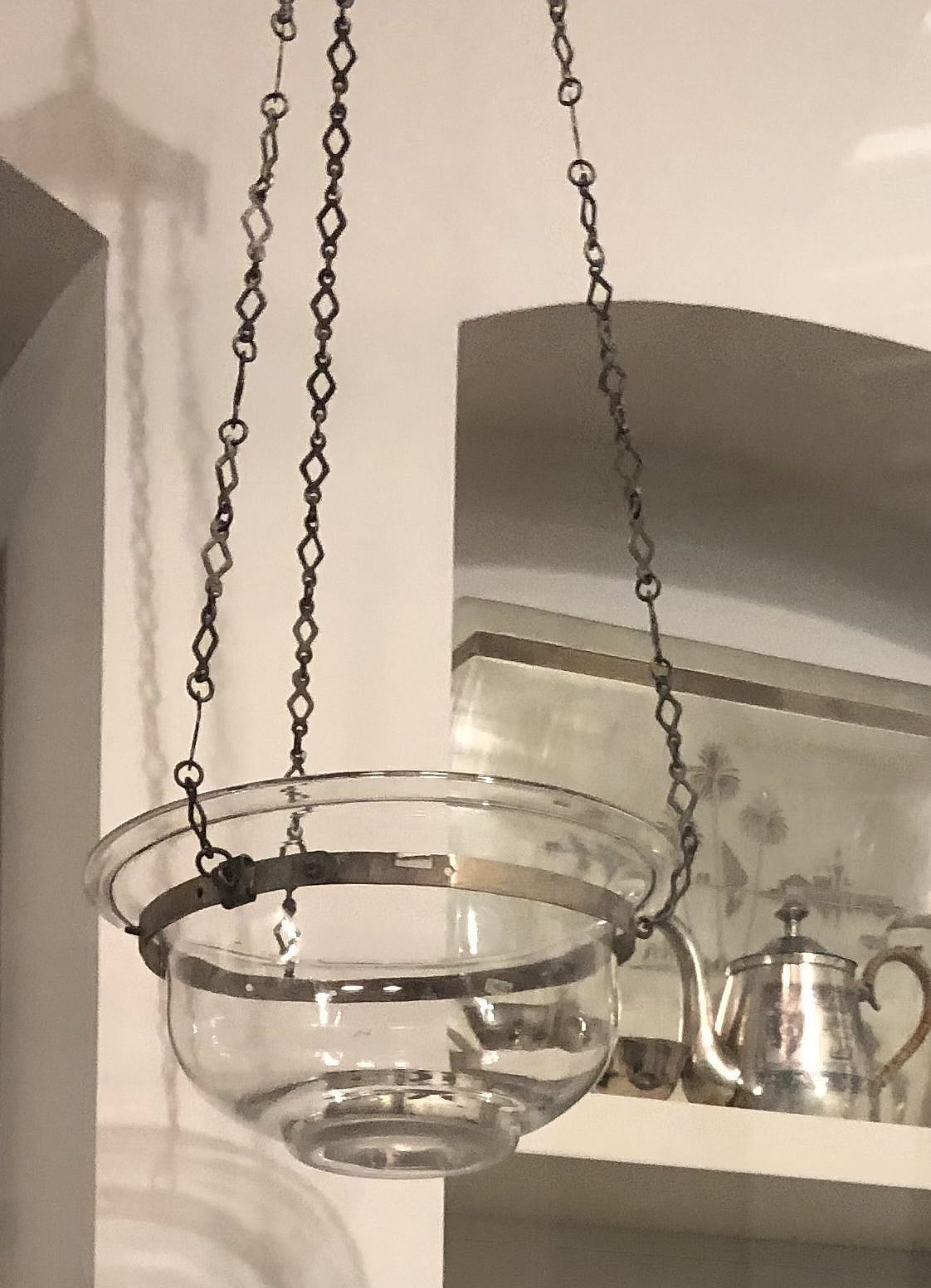
In this Iraq, my grandmother lit homespun wicks in a qerāyee, a glass bowl filled with water and sesame oil, hanging from the ceiling on delicate silver chains. With a wistful smile, she would describe Iraq as her Garden of Eden — the place where she swapped bread with her Muslim neighbor.
So why did they leave?
Shadows surround her light.
In the 1930s, German propaganda seeped into Iraq. German teachers taught at Iraqi public schools. Dr. Fritz Grobba, the German ambassador, cultivated Arab nationalism and anti-Jewish sentiment: Mein Kampf was translated into Arabic, Radio Berlin propaganda was pumped over the Iraqi air waves. Teaching Hebrew was forbidden except for Bible and prayer. In 1941, Grobba secretly returned to support the pro-Nazi coup of Rashid Ali al-Gaylani, joined by the mufti of Jerusalem, Haj Amin al-Husseini.
The pro-Nazi coup sent Jews hiding behind their shutters. My grandfather recalled to me the relief when the British pushed the rebels back. But on the day the regent deposed by the coup, Abdul al-Ilah, returned to take his rightful place, and the British troops were lined up across the Tigris, it was June 1, 1941, and the festival of Shavuot. As Jews strolled the city dressed in white, the calls began: “Idhbah al-Yahud!” — Murder the Jews!
The Farhud — a two-day pogrom on Shavuot. One hundred and eighty identified Jews were killed. Many more unnamed were buried in a mass grave, and hundreds were raped and injured. Homes and businesses were destroyed. My grandfather never told me that his cousin played dead beside his murdered mother in order to survive; I found it later in his memoir.
* * *
“It was like October 7,” my sister’s Baghdadi grandmother-in-law told me. The comparison is unbearable — and undeniable.
On October 7, my neighbor’s daughter-in-law was among the 1,200 murdered. A friend’s son was one of the 251 hostages taken into Gaza. Rockets fell — some 3,000 in the first hours. I lit candles for the dead, the missing, the terrified.
After October 7, I heard the calls shouted in Paris, Sydney, and New York — echoes of what my grandparents once heard in Baghdad. Since that day, I have lost count the number of ear-splitting sirens, as more than 30,000 rockets and projectiles were launched from Gaza, Lebanon, Yemen, and other Iranian-backed fronts into Israel.
And then Iran itself unleashed more than 300 missiles and drones in a single night in April 2024. The largest attempted destruction of Jews since the Holocaust (and then Iran did it again in October).
“But nothing happened,” an Austrian friend says to me.
I grit my teeth and light another candle, with everything I cannot say.
Where is Jewish anger?
When I was an angsty teen, my grandmother taught me that anger was forbidden. “Be happy,” she commanded me, adding an extra spoon of sugar to my cardamom tea. My father insisted I never look back, never complain. But under anger is grief. Under grief is memory.
* * *
By the late 1940s, Jewish life in Iraq was untenable. Jews were fired from civil jobs, barred from universities, harassed, arrested — the charge always: “Zionist spy.” No one was immune. In 1948, Shafiq Ades, one of Iraq’s wealthiest men, was hanged outside his home in Basra after a show trial accusing him of being a Zionist spy. He was hanged twice for the cheering crowds, my grandfather said. His real crime? Being a Jew.
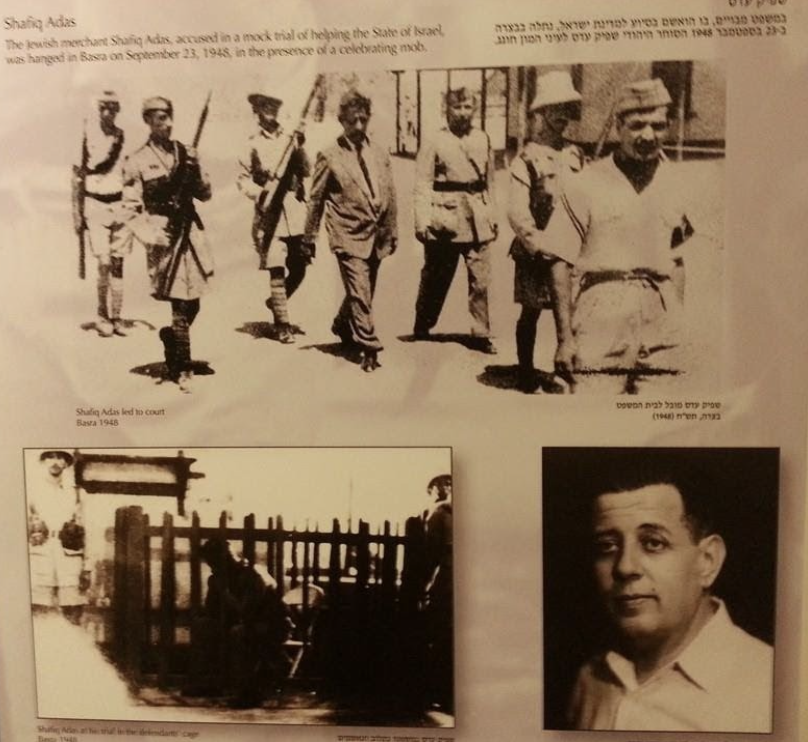
Thousands, like my great-aunt and uncle fled across the desert to Israel through Iran. If they were caught, they were flung in jail.
* * *
May 21, 2025, two young Jews are mowed down outside the Jewish Museum, Washington DC, by a gunman who shouts, “Free, free Palestine!” I light for the engaged couple’s extinguished future. The match burns my fingertips.
Where are Jews safe?
* * *
In 1950, Iraq passed the Denaturalization Law: Jews could leave the country only if they renounced citizenship and the right to return. Soon after, their property could be seized. My grandparents left with five children, one suitcase, and 50 dinars. Their glass qerāyee bowl did not fit.
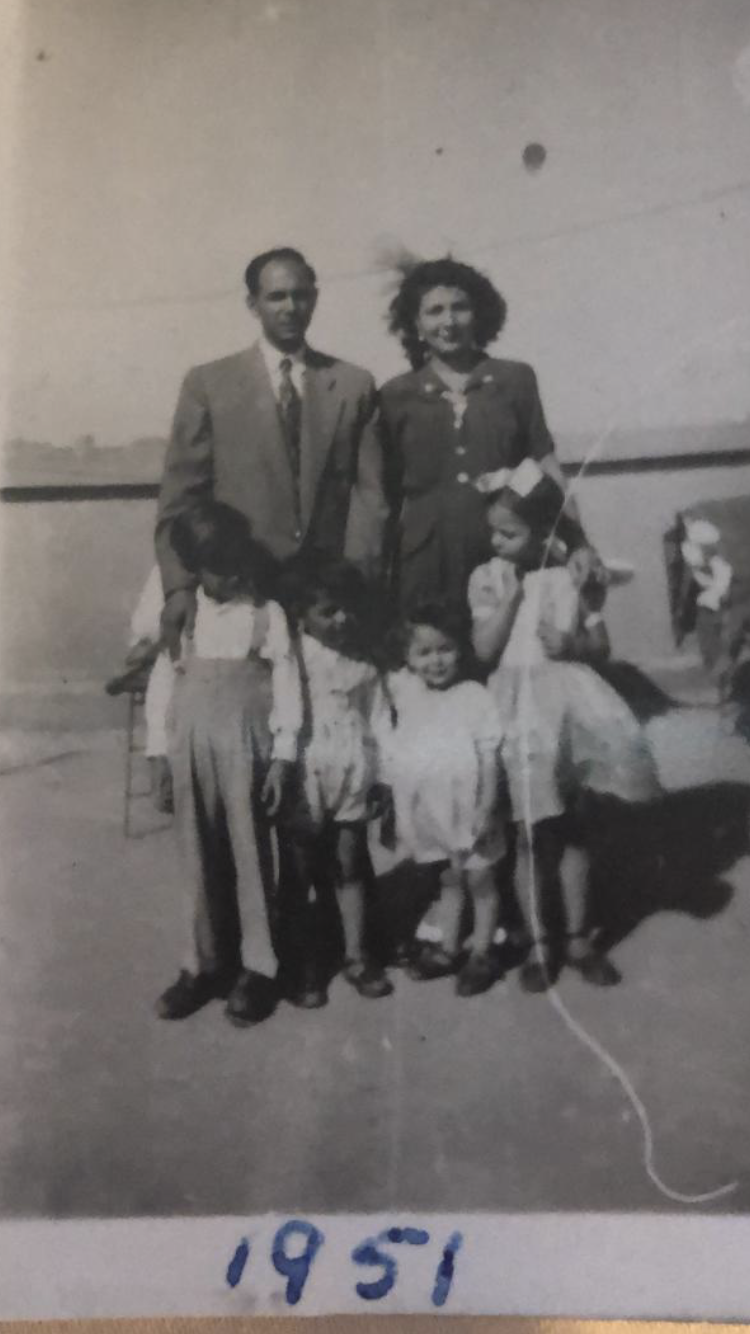
“Would you ever return to Baghdad?” I asked my grandfather as we watched bomb smoke spiral over his city on TV during the Gulf War. He shook his head. “No.”
When I light my candles, I often pray for miracles. After all, my grandmother believed in angels.
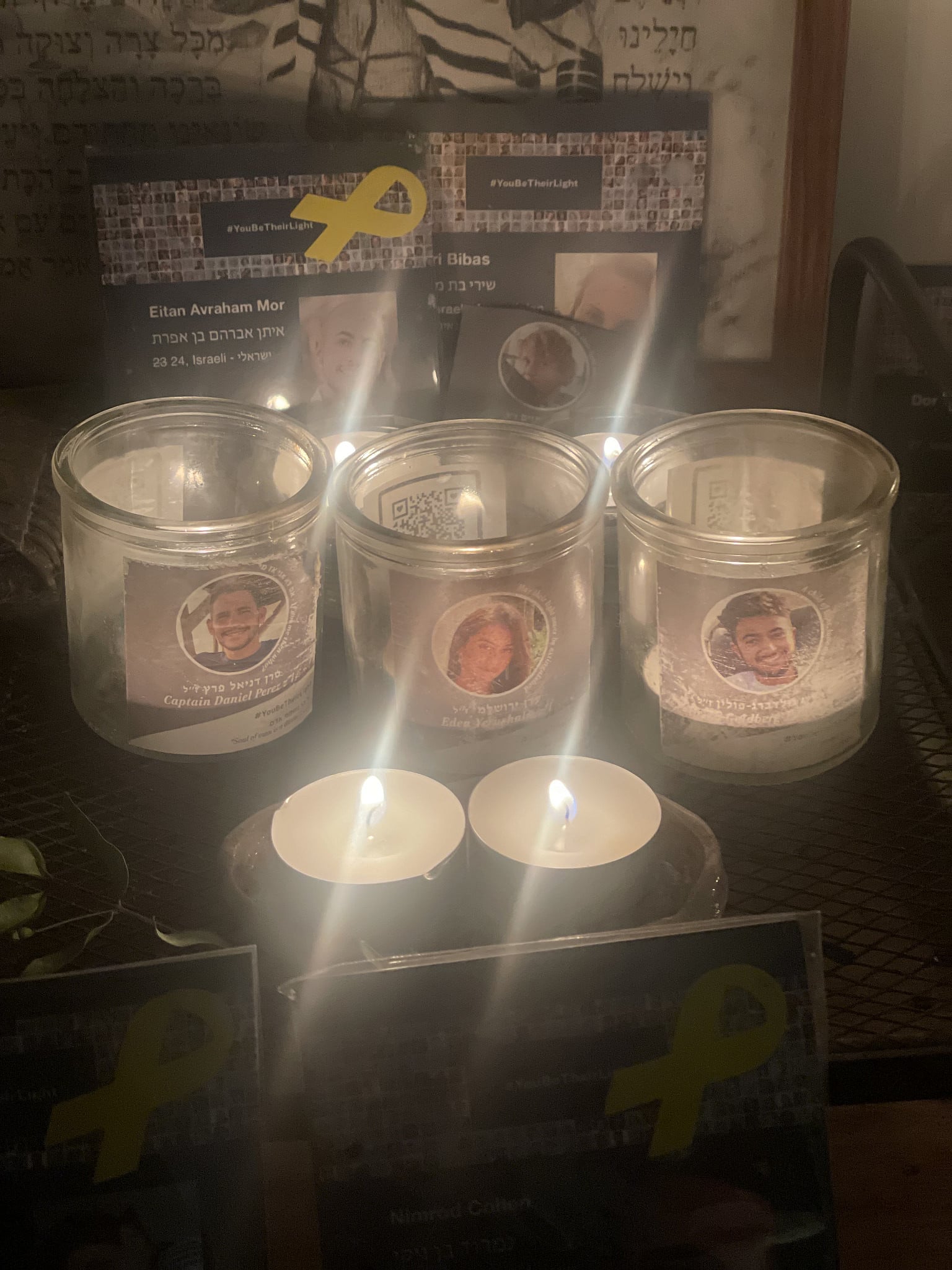
October 10, 2025 — a ceasefire. My heart overflows with bittersweet relief — the hostages return, including the body of Daniel Perez, our dear friends’ son. We are breathing better now, and yet, still, two hostage bodies remain — Ran Gvili, 24, an elite counterterrorism police officer, who, despite a broken shoulder from a motorcycle accident, went to fight on October 7, and Sudthisak Rinthalak, 43 — a Thai agricultural worker, who was among the foreign nationals taken captive. I pray for them to be returned to their families for the dignified burials they deserve.
And I light my candles. The flick of the match sparks something I cannot express. I don’t know how to stop.
Today, when I post my seven candles online, Iraqis and others from across the Middle East write to me privately. They tell me they consider me Iraqi. They miss their Jews. They long not to be an Iranian proxy. They dream of joining the Abraham Accords. Their messages are courageous — in Iraq, contact with Israelis can be punishable by death. They fill me with hope.
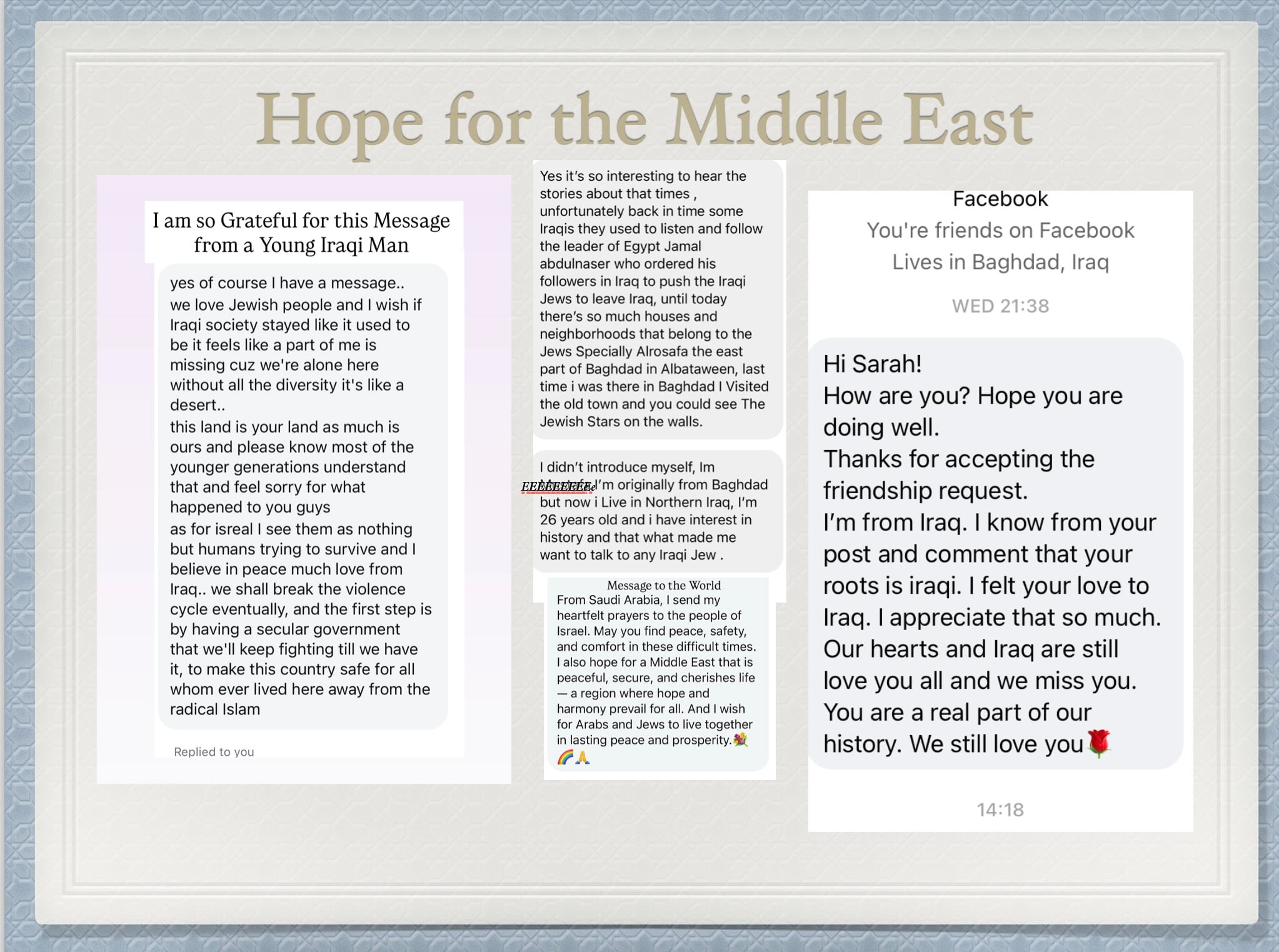
Perhaps one is the grandson of my grandfather’s barber — a Muslim man who did not care if he was accused of associating with Zionists and insisted on giving my grandfather a final haircut before he fled. An act my grandfather carefully recorded in his memoir. My grandfather did not write in anger, but from deep hurt, recording his life. Trying to understand: how did such Jew-hatred happen in his beloved Iraq?
Today, three Jews live in Iraq. The ancient community of Babylonian Jews has vanished.
Today, more than half of Israel are descendants of Jews who fled Arab lands, including myself and my children.
This Yom HaPlitim, I light my candles not only for the Jewish refugees from Arab lands, but for the silenced across the Middle East. For the Iraqi neighbors who saved Jews during the Farhud. For the Israeli Arabs and Bedouins who saved Jews on October 7. I light for the future — the end of radical Islam. I light for humanity, normalization, and prosperity between Arabs and Jews. A new Middle East.
For me, this day is not to dwell on Jewish anger; rather, I celebrate Jewish resilience and hope — my grandmother’s light.
—
This post first appeared on Sarah’s Substack, Picking Lemons – Subscribe here.
Follow Sarah and her work on Middle Eastern Jews on Instagram – here.
Related Topics