


Where Missiles Fall, Science Sprouts: The Story of a Promising Discovery
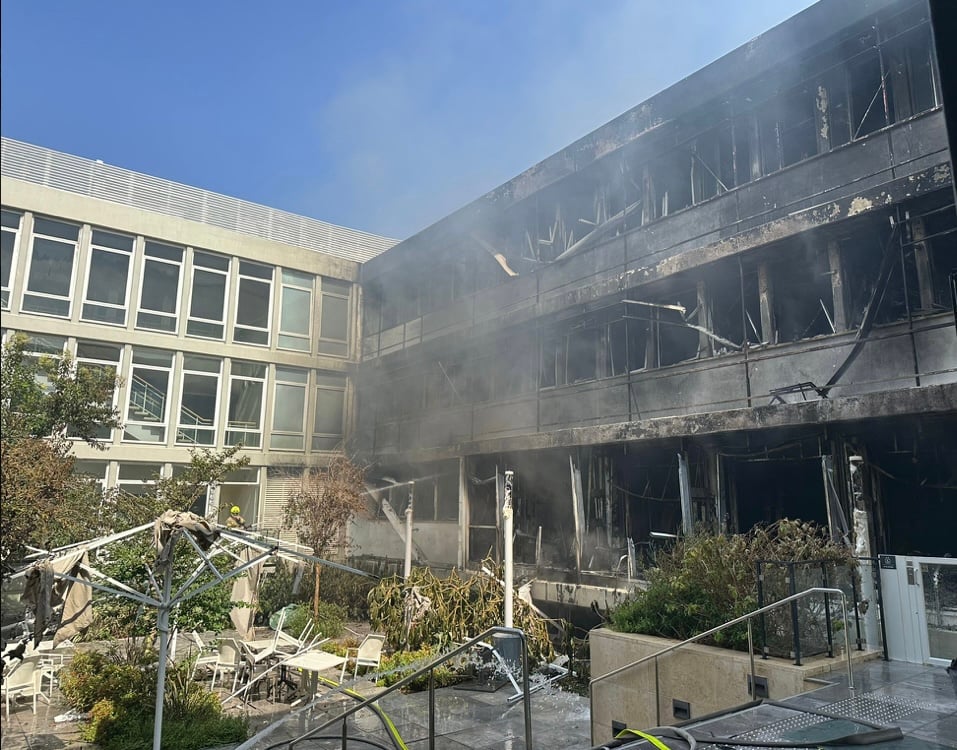
At a time when the “12-day war” between Iran and Israel last June dominated the headlines, something remarkable happened in Rehovot: amidst the wreckage of a laboratory destroyed by an Iranian ballistic missile, a group of scientists continued working to give us all a more hopeful future. As recently reported by The Times of Israel, a team led by Israeli professor Ido Amit and comprised of scientists from Germany, Switzerland, and New Zealand, in cooperation with others, decided not to be defeated by an attack that wiped out years of work overnight.
The laboratory was devastated after the Iranian attack: broken tubes, unusable equipment, irretrievable samples. More than 70% of the materials were lost. But the researchers’ reaction was not one of resignation, but rather an almost obstinate energy to carry on. Several of them were not Israeli and chose to remain in a country at war, traumatized, polarized, and under large-scale attack. With a heavy heart, they surveyed the devastation wrought on their laboratory, reunited in the following weeks, and set about rebuilding. This is not a metaphor: they literally picked up what was left and, with what survived, started again.
What is remarkable is that in the midst of this chaos, they not only resumed their research but took it to such a level that it ended up being published in Cell, one of the world’s most prestigious scientific journals. And they did so just five months after the attack.
What they discovered was quite impressive. As reported, they identified a way to “re-educate” the immune system so that it can once again detect and fight tumors that normally deceive it. In certain cancers, some cells of the immune system -macrophages-side with the tumor, help it grow, and block treatments. The team at the Weizmann Institute designed molecules, called MiTEs, that block these “corrupt” macrophages and, at the same time, activate natural killer cells and T lymphocytes, the true cancer fighters. Simply put, they identified how to turn off the tumor’s accomplices and activate those that should be fighting it.
The results in animal models were astonishing: a marked reduction in tumors and, in many cases, complete remission. And when they tested this approach on samples from real patients, the signs were also very promising. If all goes well, this could become one of the most important developments in immunotherapy.
To think that this hopeful advance was nearly wiped out by a deliberate attack from a regime that targeted a scientific and medical research center gives you goosebumps. Not a barrack, not a military base: a laboratory where people dedicate their lives to trying to cure diseases like cancer. That act speaks volumes about the kind of evil the Iranian regime exports and how it understands its place in the world. The destruction of a research laboratory is also an attempt to destroy knowledge, the future, life itself.
In contrast, the Israeli team’s feat serves as a reminder of another way of understanding power: the power of science and the vocation of service. There is something profoundly symbolic in the fact that, while some were launching missiles in one part of the Middle East, others were designing molecules in another corner that could save millions of lives.
And therein lies the paradox of this story: Israel, a small country in territory but immense in medical and technological innovation, contributes to the scientific development of all humanity; and Iran, under a theocratic regime that prioritizes aggression over life, attempts to erase that contribution with violence. The moral distance between these two societal projects is evident.
If this episode teaches us anything, it is that knowledge is stronger than destruction, but also more fragile than we believe. It depends on specific individuals, on their tenacity, on their capacity to start again even when everything is in ruins. And in this case, it depended on researchers who decided their work was worth more than fear. So, kol-ha-kavod to the exemplary team at the Weizmann Institute of Science’s Center for Immunotherapy Research: Professor Ido Amit, PhD candidate Michelle von Locquenghien, Dr. Pascale Zwicky, and Dr. Ken Xie.
While the Israeli Air Force and Mossad defended the nation in the area of national security, this handful of scientists responded to the Ayatollah regime with innovation, resilience, talent, and exceptional courage. And in so doing, they gifted us with a splendid, vital triumph over evil.