Kindness is a habit, not an event.
Where the Shechinah Rests
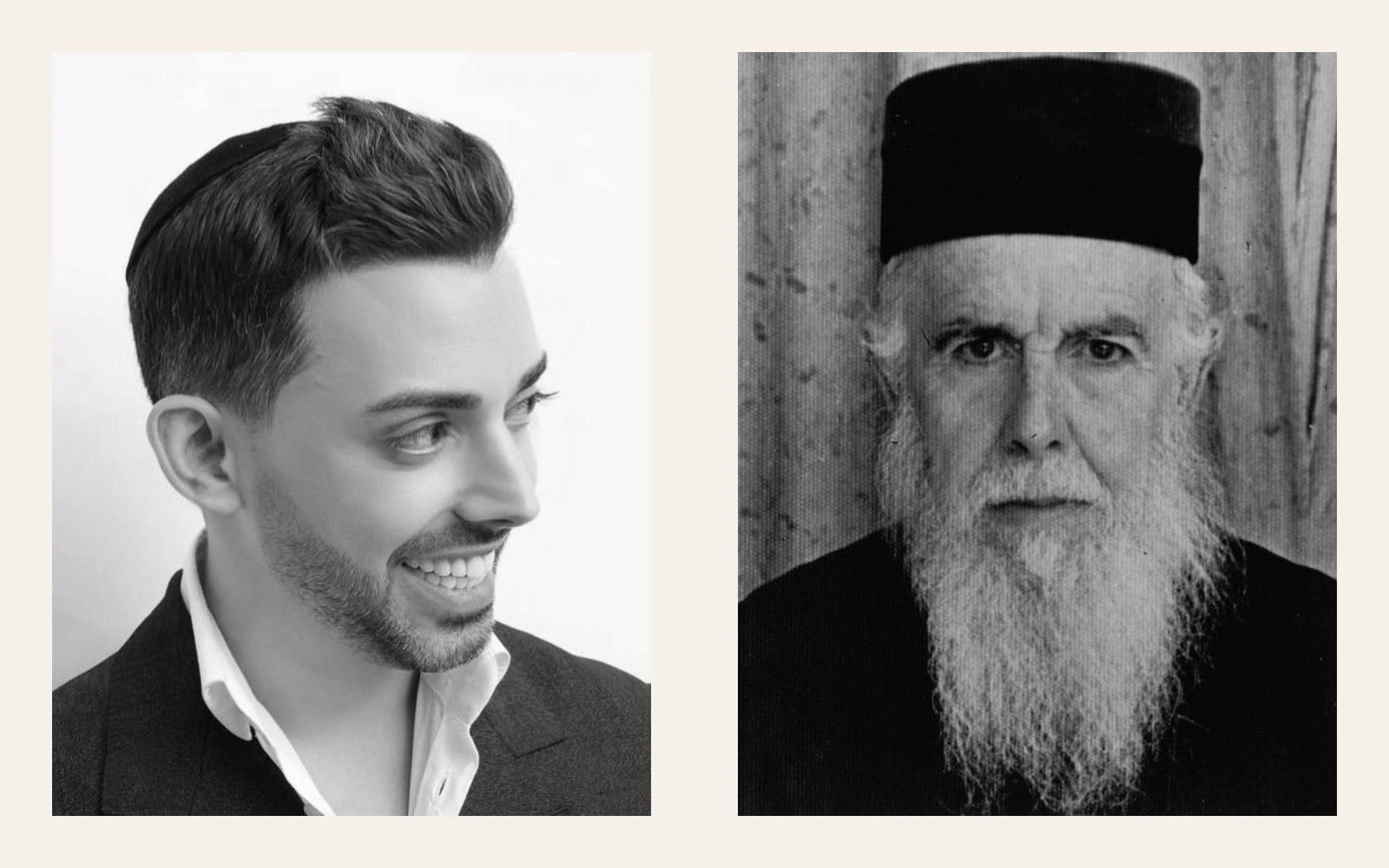
Rafi Toledano, also known as Raphael Toledano, and his great-grandfather, Rabbi Raphael Baruch Toledano, Zt”l, Chief Rabbi of Meknes. Portrait of Rabbi Toledano: public domain (CC0), via Wikimedia Commons.
There is a moment almost every family knows.
A doctor walks into the room, sits down and says the word cancer. Everything goes quiet.
In that moment, the hardest part is not the treatment ahead. It is the fear of facing it alone.
A boy who hid his pain
My great-grandfather, Rabbi Raphael Baruch Toledano, Zt”l (“may the memory of the righteous be a blessing”), Chief Rabbi of Meknes, Morocco, knew sickness from a young age.
When he was about nine years old, he fell gravely ill. He was in terrible pain and could not stop groaning. But every time his father looked into his room, he went silent.
A friend who came to visit asked him why. He explained that when his father looked at him, he gathered all his strength so his father would not have to see him suffer.
To help him recover, a name was added to his: רְפָאֵל (Raphael, “Hashem heals”). It is the name I carry today.
The Bikur Cholim he built
He never forgot what it meant to lie in a sickbed. As Chief Rabbi, no effort was too great for him when it came to saving the life of a sick person or helping the poor.
Among the institutions of Chesed (kindness) he founded in Meknes was בִּקּוּר חוֹלִים (Bikur Cholim, “visiting the sick”). It gave free medical care to the poor of the city.
At the bedside
The Gemara in Nedarim (39b) teaches that whoever visits a sick person takes away one-sixtieth of his suffering. On the next page (40a), the Gemara tells us that the Shechinah (the Divine Presence) rests above the head of a sick person’s bed.
Think about what that means. When you sit beside someone who is sick, you are not just standing next to them. You are standing in the place where Hashem is.
Bikur Cholim in our time
No one should face cancer alone.
That is why, through Rafi Toledano | Philanthropies, we support the American Cancer Society’s work in cancer research, patient care and support for families. We have also made an annual commitment to the Making Strides Against Breast Cancer walk in Central Park.
My great-grandfather made sure that no one in Meknes went without a doctor because they were poor. Research for a cure, treatment for the patient and a hand to hold along the way: to me, that is Bikur Cholim today.
Dvar Torah
Rabbi Yitzchak Friedland, Shlit”a (“may he live a long and good life”), a Rabbi I learn with every day, shared with me a teaching from the Chofetz Chaim, Zt”l, in his Sefer Ahavat Chesed (Part 3, Chapter 3), where he explains the Mitzvah of Bikur Cholim.
The Chofetz Chaim writes that people are not careful enough with this Mitzvah, especially when the sick person is poor. A poor person who falls ill often does not have the right food to help him recover. Sometimes he cannot afford a doctor or medicine. He may have no one to guide him in how to get better. And in the winter, the cold reaches him too.
Then he writes: וְגַם דַּאֲגוֹתָיו הָעֲצוּמוֹת הַמִּצְטָרְפוֹת לָזֶה (“and on top of all this, his tremendous worries”). The sick man lies in bed for days, and no one opens his door to look in on him. כָּל אֵלּוּ הַדְּבָרִים מַחֲלִישִׁים אֶת כֹּחוֹת נַפְשׁוֹ וּמְחַזְּקִים אֶת מַחֲלָתוֹ (“All these things weaken the strength of his spirit and strengthen his illness”). It can even become the cause of his death.
The Chofetz Chaim is teaching us that Bikur Cholim is not only about food, a doctor, medicine and a warm room. It is also about a person’s spirit. When no one comes, the loneliness itself makes him sicker. When someone does come, it gives him strength.
That is why Bikur Cholim for the poor is the Mitzvah at its fullest. It is exactly what my great-grandfather built in Meknes: free medical care for those who had nothing, so that no sick person would lie alone behind a closed door.
A prayer
Ribbono Shel Olam, send a Refuah Sheleimah (complete healing) to everyone fighting illness today. Let no one lie alone behind a closed door.
The name I carry says it best: Raphael, Hashem heals.
Is there someone in your life behind a closed door this week? Open it. Call, visit, sit with them for ten minutes. You will be standing where the Shechinah rests.
B’ezrat Hashem, may we only share good news.
Related Topics
Related Posts