Where the sky caressed the earth
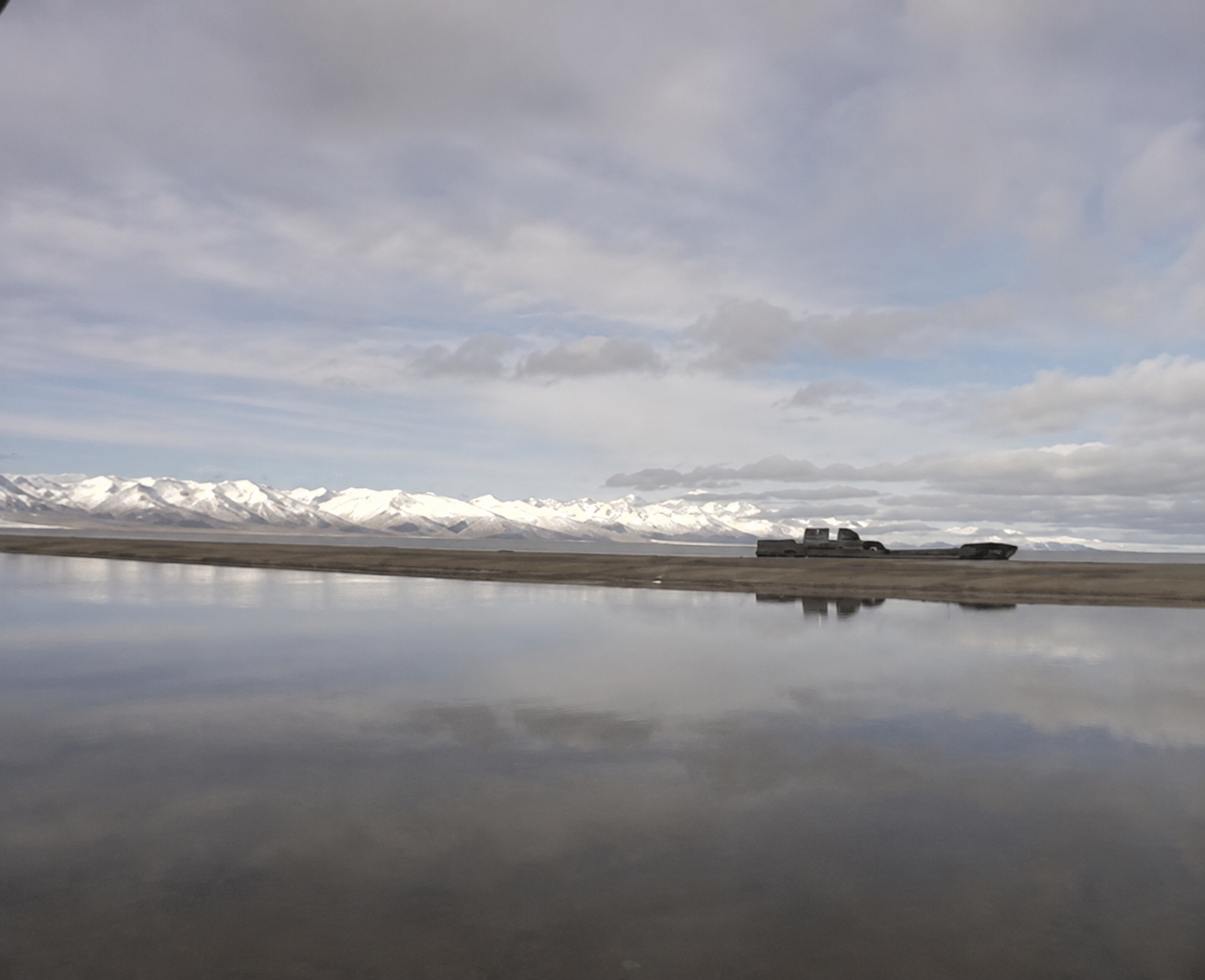
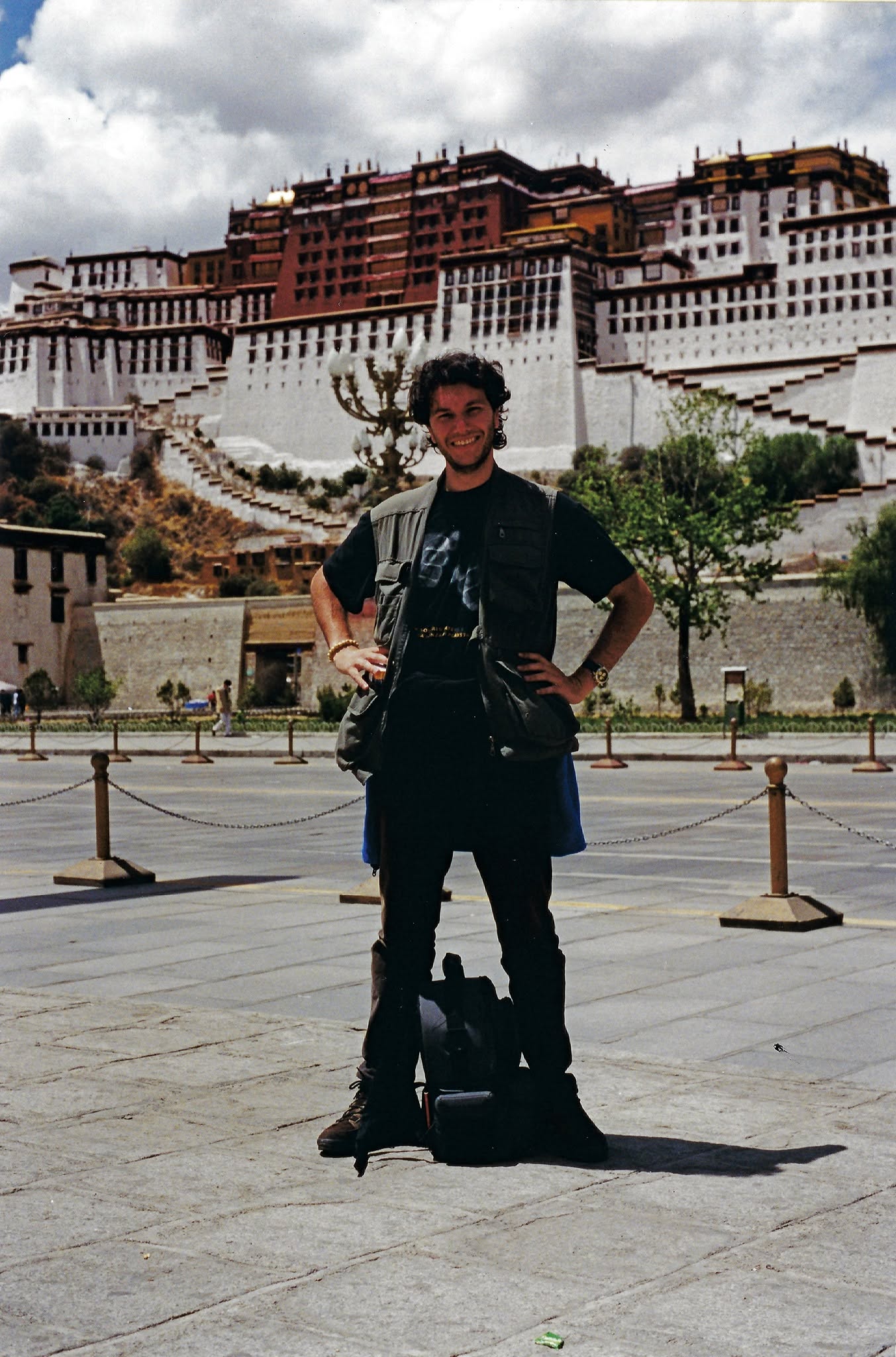
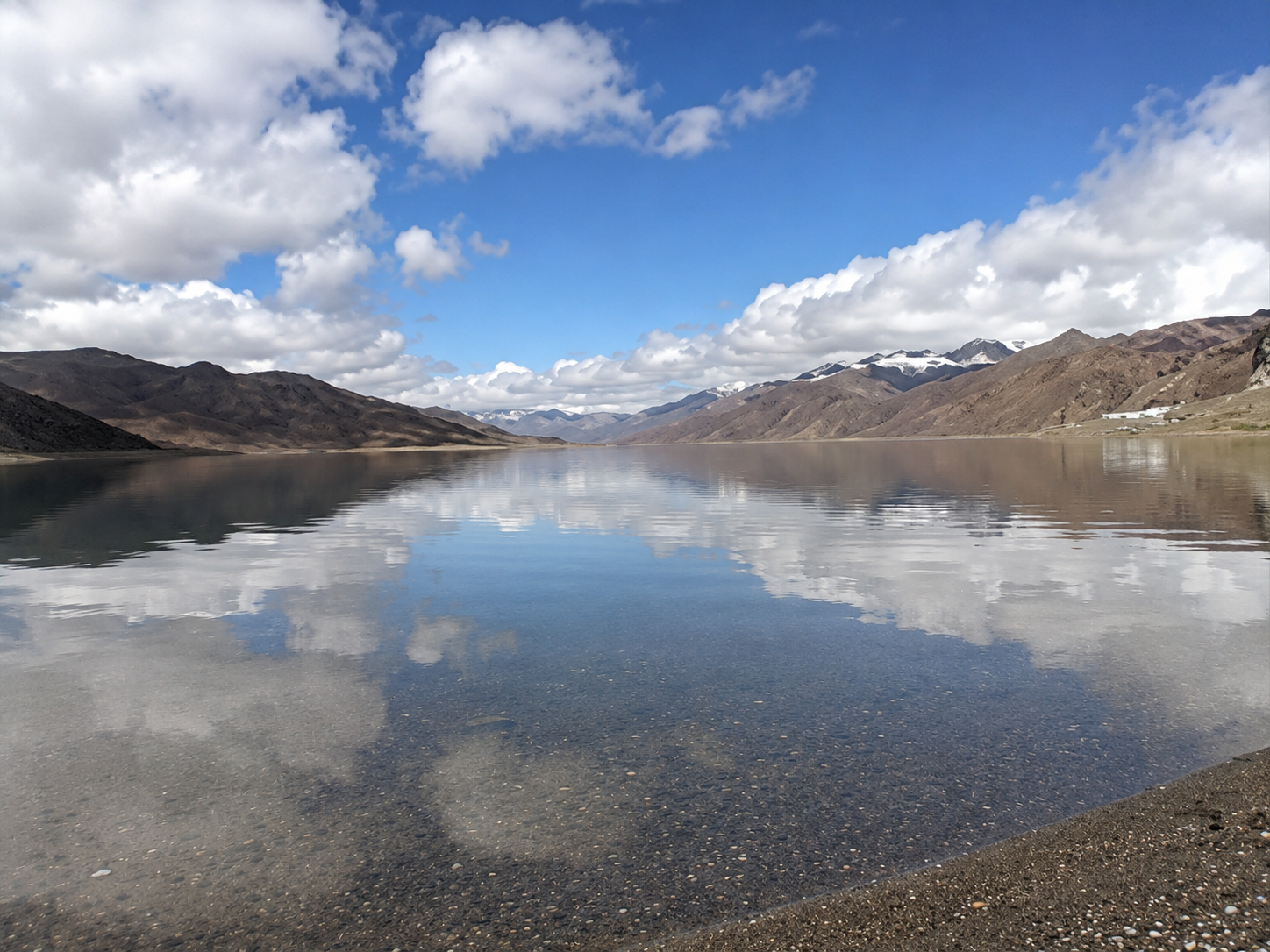
I have been lucky enough to travel to many places, and in some of them the sky seemed distant, almost unreachable. But there is one place I still remember, even decades later, as the opposite experience: Tibet.
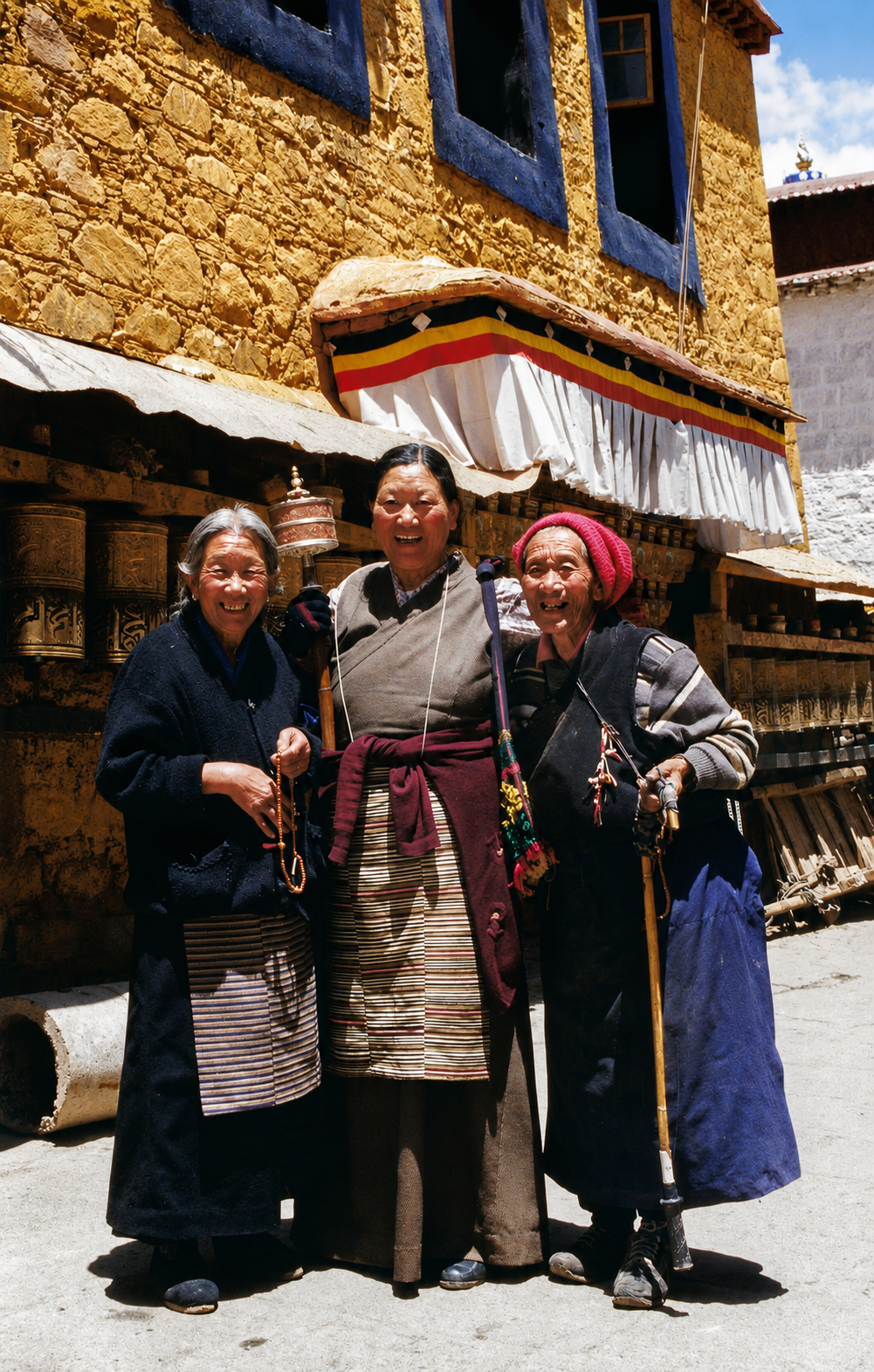
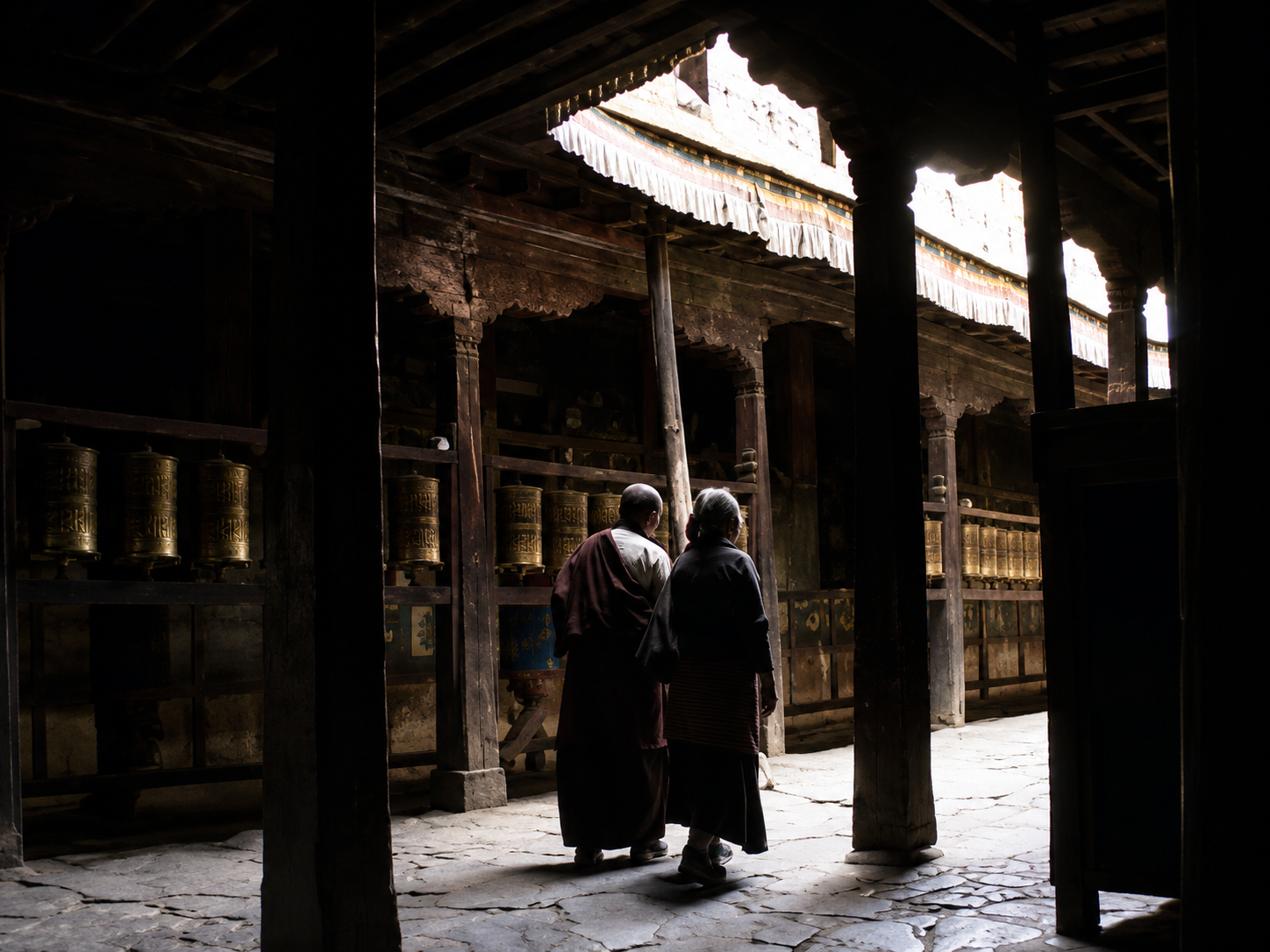
I remember walking there with the strange feeling that the sky had come closer to the ground, as if heaven had lowered itself just enough for human beings to notice. The air was thin. The landscape was enormous. The mountains did not feel like scenery, but like witnesses. And everywhere, in the wind, there were small prayer flags waving above roads, homes, monasteries, stones, and empty spaces.
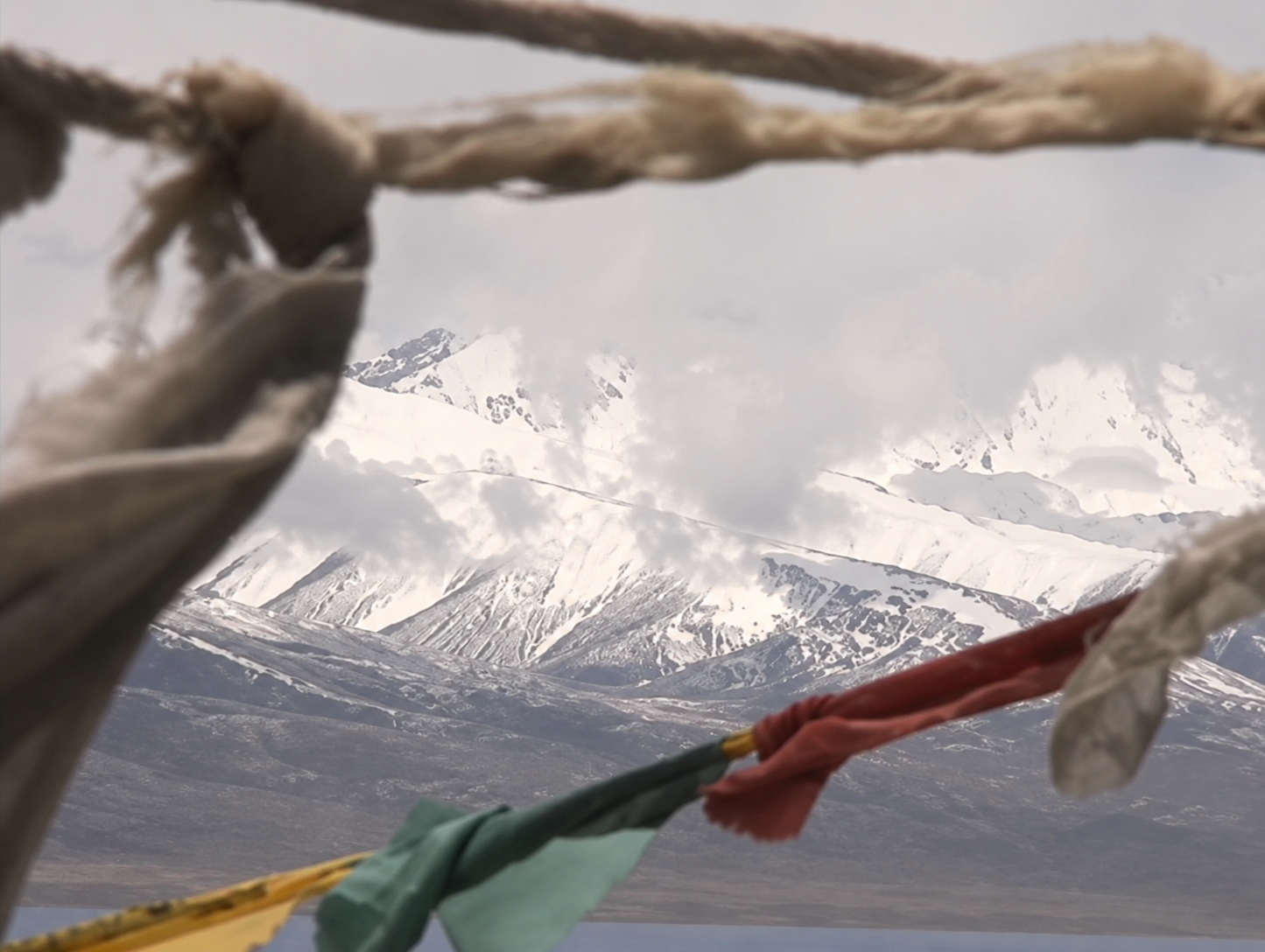
I had seen religious symbols before. I had seen churches, synagogues, mosques, icons, candles, books, rituals, processions. But in Tibet, something felt different to me. The prayers were not kept inside a building. They were not locked inside words spoken by a priest or a rabbi. They were written on small pieces of cloth and given to the wind. The wind carried them. Or at least this was the belief and also how it felt.
For the first time, I understood physically what until then I had mostly understood intellectually: that spirituality is not only an idea. It can live in the body, in the land, in the air, in the mountain, in the steps we take, in the way a flag moves when touched by something invisible.
Tibet remains, for me, probably the only place on earth where I felt so directly the connection between spirituality and land. Not as a theory. Not as poetry. As a fact of experience. And perhaps this is also why, years later, I began to understand Judaism differently.
I have always struggled inside Judaism between its particularism and its universalism. On one side, Judaism is the story of a people. A small people. A family, really. With its names, memories, traumas, foods, languages, laws, arguments, melodies, jokes, cemeteries, exiles, and returns. Judaism is Abraham and Sarah, Egypt and Sinai, Jerusalem and Babylon, Spain and Poland, Corfu and Italy, Israel and America. It is the story of a people that somehow survived history by remembering who it was. But on the other side, Judaism is not only about Jews.
From its first pages, the Torah speaks about the creation of the world, not the creation of a tribe. Adam and Eve are not Jews. Noah is not a Jew. The first human being is created alone, the Mishnah teaches, so that no person can say to another, “my father is greater than your father”. “All of them (humans) are his (Adam’s) offspring, and not one of them is similar to another. Therefore, since all humanity descends from one person, each and every person is obligated to say: The world was created for me, as one person can be the source of all humanity, and recognize the significance of his actions.” (Mishnah Sanhedrin 4:5)
Before there is a Jewish people, there is humanity. Before there is Sinai, there is creation. Before there is covenant with one people, there is the image of G-d in every person. That universal voice was always the one that attracted me most. The particular voice was harder for me.
Customs, traditions, rules, obligations — for a long time I experienced and rejected many of them as limitations. I saw them as a subtraction from all the other possibilities of the world. Why should I do this and not that? Why should I eat this way, pray this way, remember this day, belong to this people, carry this story? Why should identity ask something of me? I wanted the universal. I wanted the open sky. I wanted humanity without borders.
But one teacher, more than others, once gave me a lesson I still carry with me. He helped me see that recognizing the connection between spirituality and physicality is not a subtraction from the human experience. It is an addition to it.
Before any system of thoughts — religious, spiritual, or philosophical — there is this basic truth: we are not only minds. We are bodies. We do not live in abstract ideas. We live in homes, in languages, in families, in meals, in landscapes, in gestures, in time. We love through physical acts. We remember through physical objects. We mourn at graves. We celebrate around tables. We kiss our children with lips, not concepts. A spirituality that never touches physical life may remain beautiful, but it risks becoming weightless.
Judaism, at its best, refuses to separate heaven from earth. It takes the universal and the particular and asks us to place them in the same spot. Not an easy task, to say the least. It takes memory and asks us to eat it as matzah. It takes freedom and asks us to tell it to our children at a table. It takes rest and places it inside one day of the week. It takes the oneness of creation and asks us to say it everyday with our mouth, cover our eyes, and listen. We repeat this everyday: oneness is universal.
“Shema Yisrael, HaShem Eloheinu, HaShem Echad.” “Hear, O Israel: HaShem is our God, HaShem is One” (Deuteronomy 6:4). שְׁמַע יִשְׂרָאֵל יְהוָה אֱלֹהֵינוּ יְהוָה אֶחָד
For many people, especially those looking at Judaism from the outside, this sentence may sound like a declaration of religious exclusivity: there is one God watching you, judging you, and you better obey. But that is not the way I learned and hold this sentence in my heart.
“Echad” — One — is not only a number. It is not only arithmetic against polytheism. It is a statement about reality itself. Creation is one. Everything we know and everything we do not know is connected. The visible and the invisible are not enemies. The spiritual and the physical are not separate countries. The breath, the mountain, the child, the stranger, the animal, the land, the sea, the body, the memory, the word — all of it belongs to one creation. We are all inside the same mystery. Reference link.
The second teaching I keep close to my heart is probably one of the most misunderstood teachings in Judaism: the idea of the “chosen people.”
For many people who do not study Judaism, and for many Jews who approach it through a political lens, “chosen” echoes superiority. It sounds like arrogance. It sounds as if Jews believe they are better than others. But the Torah itself says almost the opposite.
“It is not because you are the most numerous of peoples that G-d grew attached to you and chose you — indeed, you are the smallest of peoples” (Deuteronomy 7:7). And later, even more sharply: “Know, then, that it is not for any virtue of yours that HaShem your G-d is giving you this good land to possess; for you are a stiff-necked people” (Deuteronomy 9:6).
The ‘chosen people’ is not a theology of ethnic vanity. It is a theology of humility.
G-d does not choose the most powerful empire to reveal the moral force of His teachings. He does not choose the Pharaoh. He does not choose the masters. He chooses the slaves. He chooses the humiliated, the weak, the people with no army, no land, no sovereignty, no visible future. He chooses those who know what it means to be crushed by history. Why?
Perhaps to teach that the extraordinary thing was never the people. The extraordinary thing were the teachings.
The Jewish people are people like all other people: capable of courage and cowardice, faith and betrayal, gratitude and complaint, wisdom and foolishness. The Torah is brutally honest about this. The same people who witness liberation can build a golden calf. The same people who receive the covenant can fail their side of the deal again and again. To be chosen, in this sense, is not to be told: you are better. It is to be told: be humble, because you have been given responsibility of your future.
This is why the covenant matters so deeply. In many ancient stories of creation, human beings exist to serve the gods, to feed them, flatter them, or do their labor. Genesis of the Israelites resembles more a social revolution rather than a dogmatic hierarchy. It offers something radically different. Human beings are created in the image of G-d. They are addressed. They are commanded. They are given responsibility. They can answer. They can fail. They can return. And with Israel, G-d does something even more astonishing by entering a covenant.
A covenant is not slavery. It is not mythology in which humans exist merely as servants of divine appetite. A covenant is a relationship with obligations. It means that human beings are morally serious enough to be partners in responsibility. This is where Judaism’s particularism and universalism meet.
Judaism does not ask the whole world to become Jewish. It does not need everyone to eat the same food, pray with the same words, or live by the same customs. Its universalism is not imperial. It does not erase difference in the name of truth. Human diversity is already implied in Genesis, in Adam’s offspring. “and not one of them is similar to another.” – Mishnah Sanhedrin 5
Instead, Judaism reflects universal values through a unique relationship with G-d. The Jewish people carry a particular covenant, but the moral horizon of that covenant is universal: all human beings are created in the image of G-d; all families of the earth are meant to be blessed; the stranger must be loved because we were strangers; justice and righteousness are not tribal decorations, but divine demands.
The particular-universal tension makes the search for balance a constant ask, a constant search for harmony and peace among spiritual and physical. I am pulled toward the open sky and toward the small inherited customs of my people. I am pulled toward the universal teaching and toward the particular body that carries it through history. But perhaps also the Tibetan experience helped me in my journey to understanding something I had resisted in Judaism for many years. The prayer flag is particular: a small piece of cloth, with specific colors, symbols, language, and tradition. But the wind that carries it is universal. Maybe Jewish customs are like that too.
A mezuzah is particular. Shabbat candles are particular. The Shema is particular. Matzah is particular. A sukkah is particular. A Hebrew word whispered by generations before us is particular. But when lived with humility, these things do not have to close the world. They can open it.
They can teach the body what the mind alone cannot hold forever: that spirit needs form, memory needs action, and universal love becomes more real when it is practiced through concrete responsibility.
I still love the universal more instinctively. I still resist anything that feels imposed. I still ask questions. I still argue. I probably always will. And I am probably a terrible follower, especially through the lens of repetition. But I have learned to add. To add a custom. To add a blessing. To add a moment of listening. To add a small act that reminds me that the physical and the spiritual are not enemies.
Maybe this is what faith has become for me: not the narrowing of possibility, but the deepening of experience. Not less world. More world. Not less humanity. More responsibility toward humanity.
Maybe, in the end, this is what Judaism has been trying to teach me all along: that the Oneness is not far away in the sky, separate from the ground we walk on. The Oneness is in the sky, in the ground, in the wind, in the people, in the covenant, in the stranger, in the family, in the body, in the memory, in the land, and in the responsibility we accept when we finally understand that everything is connected.
Shema Yisrael. Listen, Israel. Listen, humanity. We are all standing under the same sky.