


CEO of Jewish Federation of British Columbia
While the Gates Are Open
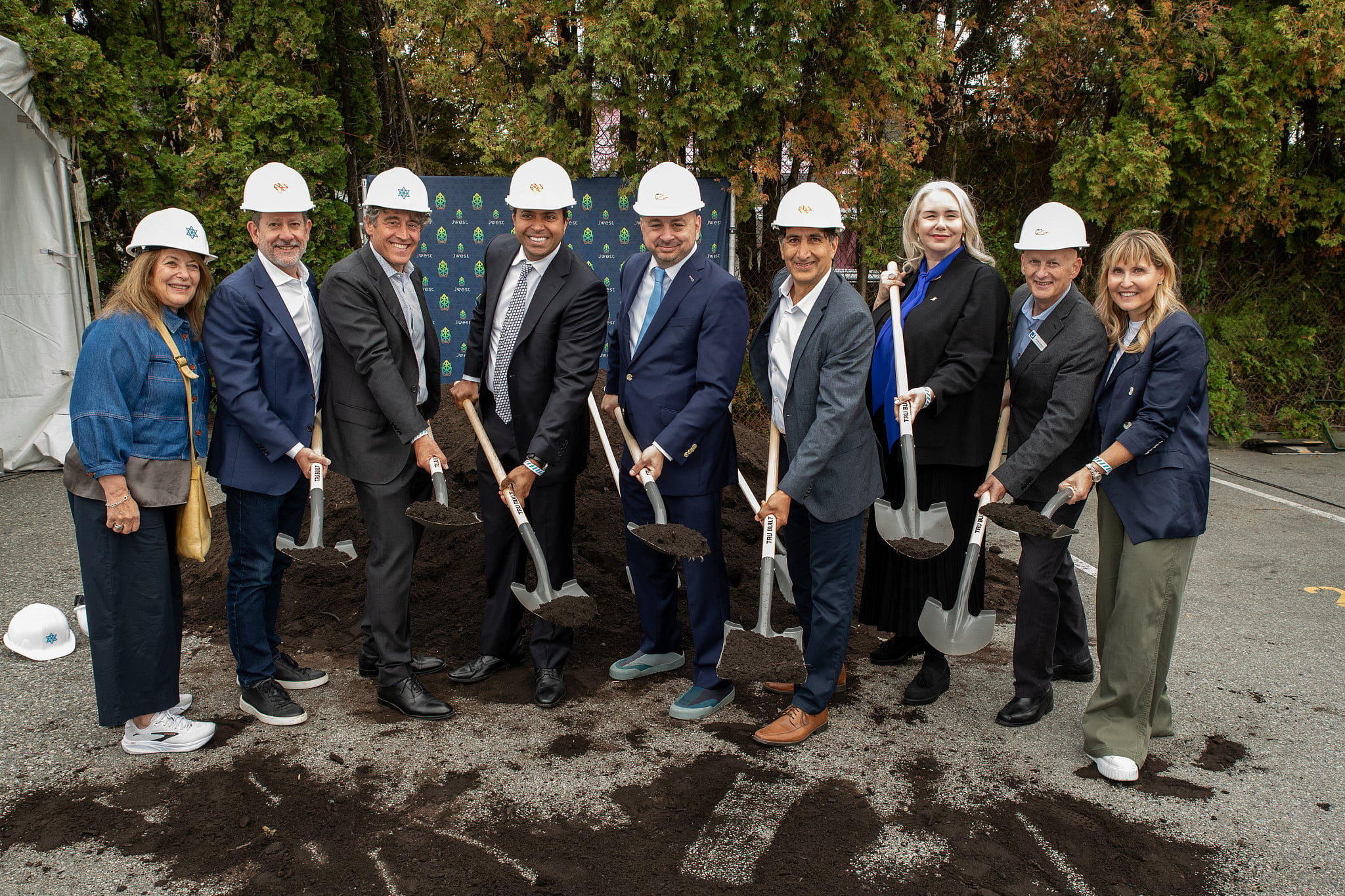
Photo Credit Rhonda Dent
Sitting in a theatre in Victoria’s Oak Bay neighbourhood, listening to Rabbi Meir Kaplan sound the shofar, I found myself thinking about a sentence I had spoken only days earlier at the JWest groundbreaking:
“Our tradition teaches that each generation plants for those who come after.”
At the time, I was standing in a parking lot surrounded by hundreds of people preparing to break ground on a project intended to serve generations we may never meet. A few days later, between Rosh Hashanah and Yom Kippur, listening to the shofar’s ancient call echo through a theatre in Victoria, I realized that the same idea seemed to be following me everywhere.
The Days of Awe ask us to confront our mortality. But Judaism’s response to mortality has never been permanence. It has always been transmission. One generation plants. Another harvests. Then plants again.
The rabbis tell the story of an old man planting a carob tree. When asked why he would plant something whose fruit he would never live to enjoy, he replied: “Just as my ancestors planted for me, I plant for those who come after me.” That may be the most concise summary of Jewish civilization ever written.
Standing at the JWest groundbreaking, I looked out into the crowd and saw my three sons, ages ten, ten, and eight. Suddenly, the project in front of me no longer looked like buildings, classrooms, childcare, housing, or community space. It looked like an act of trust: a generation building for another generation, a promise made tangible. The future stopped being an abstraction.
I was not building for strangers. I was building for them. And one day, when their generation is called upon to lead, they too will be asked to build for those who come after them.
That is how the Jewish story continues. One generation receives. One generation contributes. One generation passes responsibility forward.
As the groundbreaking drew to a close, two King David High School students stood before the crowd and sounded the shofar. I did not think much of it in the moment. Only later did I realize how perfectly it captured the day: the next generation already standing before us, already carrying the story forward.
The more I reflected on that idea throughout the week, the more I saw it everywhere. I saw it in the recognition our community received from Tel Hai University. What moved me was not the recognition itself. It was what it represented.
Somewhere, decades ago, people made investments whose outcomes they could not possibly foresee. They believed in a vision for Israel’s North. They invested in people they would never meet. They planted. Years later, others are harvesting.
The recognition was not really about achievement. It was about continuity. A reminder that much of the most important work we do is completed by people we will never know.
The Czech dissident and statesman Václav Havel once wrote that hope is not the conviction that something will turn out well, but the certainty that something makes sense, regardless of how it turns out. That feels deeply Jewish to me.
The people who invested in Tel Hai could not know what the future would hold, just as those who founded the Jewish Federation of Victoria and Vancouver Island in 1986 could not know what their efforts would become.
Faith, in Judaism, is rarely passive. Faith plants. Faith builds. Faith shows up.
Perhaps that is why Victoria felt so meaningful during these Days of Awe. Home to one of Canada’s oldest synagogues and one of its fastest growing Jewish communities, it stands as living proof that communities are not discovered. They are built, slowly and patiently, across decades.
The twelve-minute flight from Vancouver is short. The relationships that connect the two communities have taken generations. And behind those relationships lies a question that surfaced repeatedly over the years: How can we help? How can we strengthen Jewish life? How can we build something that lasts?
Later that evening, Stan Shortt spoke about Federation’s beginnings and the vision that gave rise to it four decades ago. Listening to him, I was reminded that Jewish history is rarely shaped by dramatic moments. More often, it is shaped by ordinary people who choose to build something larger than themselves.
Then Jonathan Leipsic posed a question that lingered long after the program ended: What will we leave behind?
It may be the defining question of the Days of Awe. Not what did we accumulate. Not what did we achieve. But what did we build? What future are we creating? What will our children and grandchildren inherit?
During my conversation with Ben Mulroney later that week, I shared a story I have always loved.
A father places his two sons in separate rooms. One room is filled with toys. The other is filled with manure. When he checks on the pessimist, the boy complains about all the ways the toys might break and all the things that might go wrong. Then he visits the optimist. To his surprise, he finds him happily digging through the manure. “What are you doing?” the father asks. The boy looks up and replies: “With all this manure, there’s got to be a pony in here somewhere.”
There are days in Jewish communal life when that story feels less like a joke and more like a strategy. The challenges are real. The obstacles are real. The uncertainties are real. And yet Judaism has always been an optimistic civilization. Not because we ignore reality. Because we refuse to surrender to it.
This week felt like one of those rare moments when we found a few ponies: a groundbreaking that turned vision into reality, recognition for commitments made decades ago, and communities choosing to walk forward together.
People showing up. People building. People believing.
And then I found myself thinking again about shofars.
At the beginning of the week, two King David students sounded the shofar at the JWest groundbreaking. A few days later, Rabbi Meir Kaplan opened an evening gathering in Victoria with that same ancient call.
Different people. Different settings. Different generations. The same sound. A sound that has echoed through Jewish history for centuries. A sound that links grandparents and grandchildren, founders and successors, teachers and students.
As I listened in Victoria, I realized that perhaps this is what Judaism has always been trying to teach us. We are temporary. The story is not. Our task is not to own it. Our task is to carry it faithfully for a while and then hand it forward.
As Antoine de Saint-Exupéry observed, “As for the future, your task is not to foresee it, but to enable it.”
Perhaps that is the deepest lesson of these sacred days. We cannot know what the next year will bring. We cannot know what our children and grandchildren will face. We cannot know what history will ask of them. But we can help prepare them.
We can build communities worthy of inheriting. We can strengthen institutions that will outlast us. We can model responsibility, resilience, and hope. And we can leave behind something better than what we received.
As I listened to the shofar in Victoria, I found myself thinking again about my sons.
One day, if we have done our work well, they and their generation will inherit the responsibilities we carry today.
The question is not whether they will face challenges. They will. The question is whether they will inherit the tools, the institutions, the values, and the confidence needed to meet those challenges.
That is why we build. That is why we invest. That is why we show up. Not because we will complete the work. But because the work must continue.
The Days of Awe remind us that our lives are finite. Yet the Jewish story has never been about any one life. It is about the sacred chain that links one generation to the next. A chain of obligation. A chain of hope. A chain of people who believed deeply enough in the future to plant trees whose shade they would never sit beneath.
And this week, from a groundbreaking in a parking lot to a theatre filled with the sound of the shofar, I witnessed that chain being handed forward. After all the digging, we found a few ponies. More importantly, we found something even rarer. We found reasons to believe.
So while the gates remain open, let us keep building. Let us keep planting. Let us keep believing. For those who came before us. For those standing beside us. And for those who will one day come after.