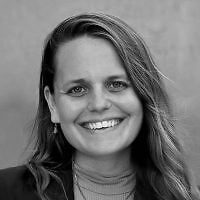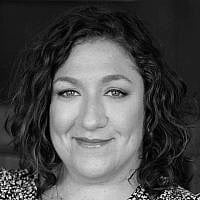
Whispering Israel in New York City
Not long after October 7, an American-Israeli friend came to New York. As we walked through the streets of Manhattan, she spoke freely, saying words like Israel, Tel Aviv, Jewish. Each time she said it, I shushed her.
“What?!” she asked, confused.
She didn’t understand what I meant. She didn’t realize that here, in New York City which has the largest Jewish community outside of Israel, those words have become charged. Words that once felt natural now feel dangerous.
This is my reality as a Jewish woman, as a native New Yorker, as someone with an Israeli passport, and as the cofounder of a business called Makers of Israel.
Running this business has been some of the most important, and the most complicated work I’ve ever done. I feel a deep calling to amplify Israeli voices, to support Israeli small businesses, to showcase the creativity, resilience, and humanity that so often get lost in the headlines. And yet, I find myself calculating when, where, and with whom I can speak its name aloud.
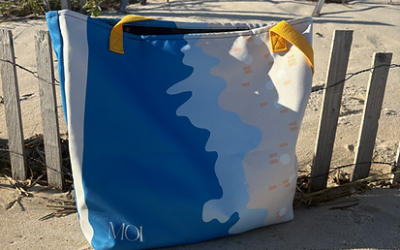
At a recent U.S. event, we printed tote bags with our logo. The design was playful and modern, with Makers of Israel tucked small within the graphics. But instead of proudly slinging it over my shoulder on the streets where I grew up, I shoved it inside my closet. Not because I’m ashamed, but because I know how quickly strangers can decide who I am, what I believe, or whether I’m safe.
I never imagined I would co-found something so meaningful, only to shorten its name to MOI on our latest tote bag—hoping the word behind the “I” might slip by unnoticed. I don’t want to hide. I don’t want to shrink. But I also don’t want to be a target. So when we send packages from New York, the label doesn’t say Makers of Israel. It says Makers Labs, our legal company name. Because right now, attaching my home address to the word Israel feels like too heavy a risk to take.
And it’s not just me. Recently, we spoke with a Modern Orthodox man in Riverdale who wanted to buy one of our Israeli Community Boxes. He asked if we could swap out the t-shirts printed with Hebrew words and the names of kibbutzim attacked on October 7, fearing what they might invite. He worried about standing out—even though he walks through the world every day wearing a kippah.
At another event, a customer bought one of our mezuzahs. Instead of choosing a bold design, she requested a neutral color so it would blend into her front door and trim. A ritual object meant to be a visible symbol of Jewish identity was instead chosen to disappear.
This is what it means to be Jewish right now. To calculate visibility. To measure risk. To decide, moment by moment, how much of ourselves to reveal—and what might happen if we do.
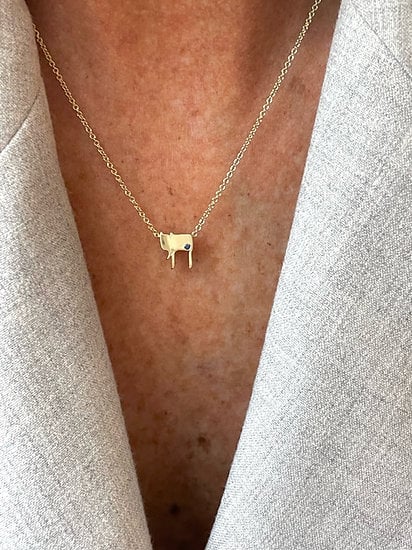
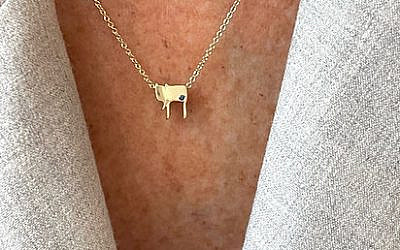
I wear a small gold chai necklace, handcrafted by one of our makers, Ronit Malka. To most people, it looks like a simple charm. But to me, it’s a lifeline. It’s a reminder to live life fully, It ties me to my people, my family, my heritage, and to the land of Israel. I wear it not out of fear, but out of pride. It’s my quiet act of resistance, my reminder to celebrate life even when it feels fragile.
How did we get here? How did Jews around the world become scapegoats for the decisions of a government many of us don’t even support? How did Israel’s internal politics turn into justification for Jewish communities abroad to walk in fear, to whisper in coffee shops, to camouflage mezuzahs on their own doorframes?
I want to live openly. I want to celebrate. And I want to keep building Makers of Israel into a marketplace that proudly supports Israeli makers, dreamers, artists, and entrepreneurs.
Sometimes that means whispering. Sometimes it means holding back.
But none of that means I’m shrinking. It means I’m navigating. It means I’m being mindful of my whereabouts.
Silence cannot be the future of Jewish life in New York—or anywhere else. We are still here. We will keep creating.
And no matter how much we are pushed to hide, we will not disappear.