Who Are Today’s American Jewish College Students?
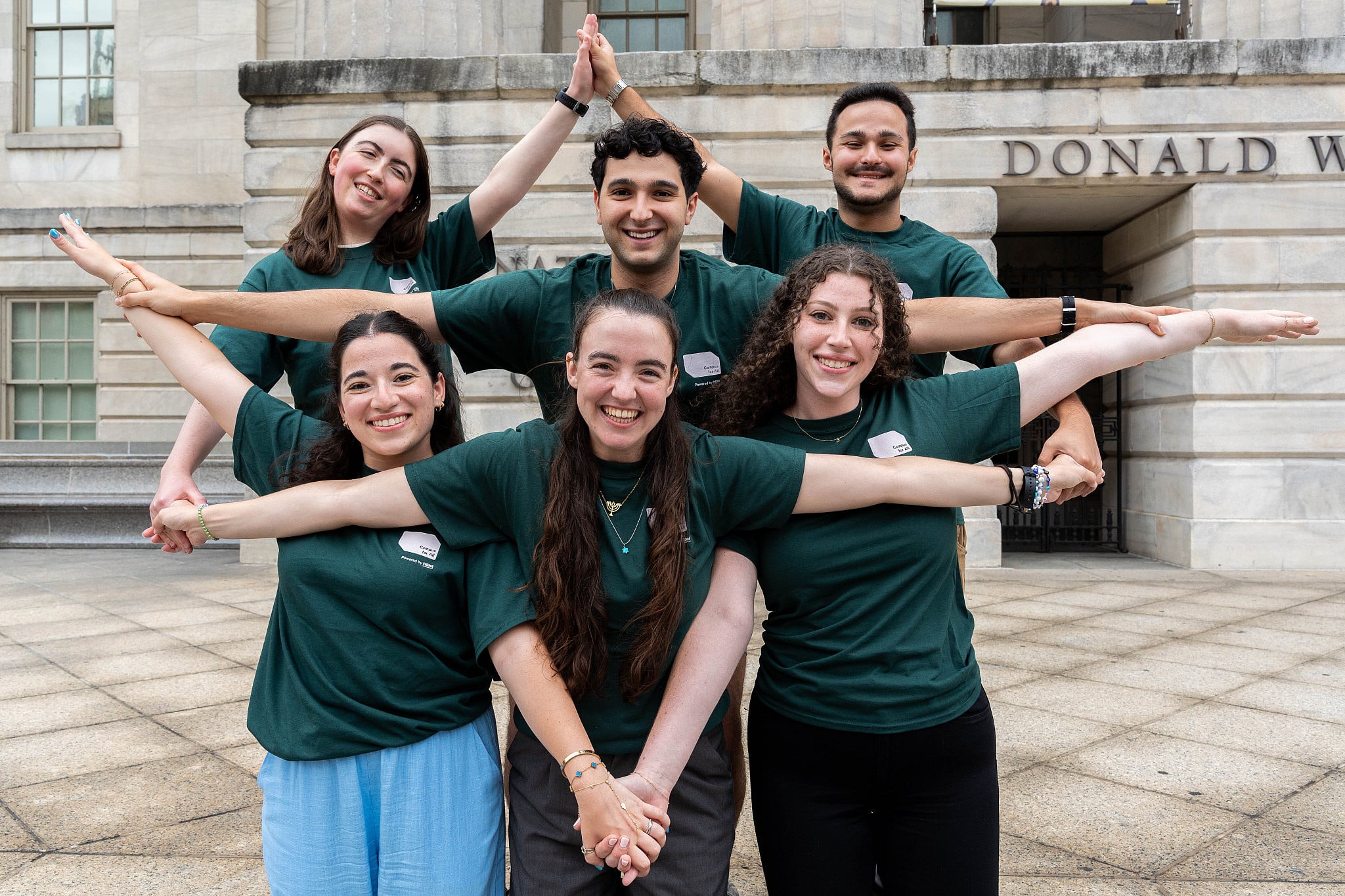
As we all try to understand what the “new normal” looks like on college campuses in this post-war moment, we first need to recognize who today’s Jewish college students actually are. We cannot make sense of the campus climate or the path forward without understanding the generation that is living it every day.
The simplest truth is that they are not a monolith. There is no single portrait that captures them all. But there are defining through-line patterns shaped by the world they inherited and the crises that have defined their young lives, which now alter how they learn, organize, question, build community, and understand Israel and the Jewish people.
Most of today’s Jewish college students were born during or just after the Second Intifada. They entered the world at a moment of profound Israeli vulnerability, yet they grew up seeing only a strong, innovative, globally respected Israel; a nation rarely perceived as weak until October 7, the first moment in their lives when Israel appeared profoundly endangered. Those of us from earlier generations remember an Israel shaped by trauma—the assassination of former Israeli Prime Minister Yitzhak Rabin by his own people, and the Second Intifada with suicide bombings in cafés and on buses. We knew a country that felt constantly at risk.This generation grew up with a very different image: a “Start-Up Nation” defined by innovation, global influence, and a rapidly growing economy. That contrast matters. It means the massacre on October 7 wasn’t merely a tragedy; it upended their assumptions about Jewish security and strength. That difference matters. It means October 7 wasn’t just shocking; it rearranged their mental map of Jewish safety, power, and possibility.
These students were born after the 9/11 attacks, into a security-conscious America where metal detectors, lockdown drills, and public vigilance have simply been the background noise of childhood. They came of age under the shadow of school shootings, where active shooter drills were as normal as fire drills. Just last month, the Brown University community experienced a tragic mass shooting during finals — a devastating reminder to students that campus safety concerns are tangible threats to their well-being.
This is also the first generation raised entirely online. They never knew a world without social media, where information, misinformation, nuance, and outrage all arrive in the same feed. Their online lives are double-edged: they have enormous power to raise their voices through platforms like Hillel’s Content Creators Forum, yet they are also relentlessly exposed to hostility, harassment, and disinformation. Our antisemitic incident data makes that painfully clear.
And yet, their online fluency has also shaped something extraordinary:
They have a huge interest in understanding both sides of a story, in getting the facts, and in situating themselves in complicated narratives. The popularity of platforms like Campus4All.org, which educates students about antisemitism, reflects that hunger. They want data and primary sources – context, not slogans. They do not accept easy answers.
Many in this generation also lost major milestones to the pandemic: graduations, proms, the simple ease of adolescence. They spent critical developmental years behind screens, isolated from peers, and many are still practicing how to rebuild in-person community. This is one reason they yearn so deeply for joy and for gathering, why Shabbat dinners are packed, why singing, cooking, dancing, and celebrating Israel together feel so essential. They are trying to reclaim something they were denied.
They are also the last generation to meet Holocaust survivors in person. For many, hearing a survivor speak was a powerful childhood memory. For those who come after them, the Shoah will be history, not living testimony. This shift affects how identity is shaped, how urgency is transmitted, and how Jewish memory is carried forward.
At the same time, they are attending college during a surge of visible antisemitism. Many grew up in years of relative calm and prosperity for American Jews, only to arrive on campus and find themselves shouted down, doxxed, isolated, and — in some cases — physically endangered. The dissonance is enormous. The old sense of communal confidence has given way to something more complex: pride mixed with vigilance, belonging mixed with fear.
The landscape of American Jews today is diverse racially, politically, religiously, and culturally. There are Jews of color, interfaith Jews, LGBTQ+ Jews, first-generation students, recent immigrants. Their Jewishness is expansive and creative, blending heritage, culture, and proud self-expression.
And maybe most defining of all: Belonging is not assumed. It must be chosen. They don’t inherit community; they build it moment by moment, post by post, Shabbat by Shabbat. After so much isolation, they want Jewish joy, Jewish meaning, Jewish purpose. And they want it together.
They are the most connected generation and the most isolated. The most informed and the most overwhelmed. They are living in a world where truth is negotiable, belonging is fragile, and identity is public.
And they are watching the world look at them differently than it looked at their older siblings. Since October 7, they’ve seen antisemitism surge to levels unseen in their lifetimes. They’ve seen protests turn violent, classrooms turn silent, and friends turn away. Yet they’ve also seen extraordinary solidarity — students organizing vigils, filling Shabbat tables, building Jewish community with defiant joy, and showing up for each other with remarkable clarity and grace.
Because of all this, not despite it, they are the most resilient generation we have seen on campus.
They are more intentional about “doing Jewish.” While antisemitism has pushed some out of secular or progressive spaces, it has also galvanized purpose. These students are not withdrawing; they are leading—at Hillel, in Jewish advocacy, and in deep Jewish learning.
So who are today’s Jewish college students? They are the generation that will carry forward the memory of both the Holocaust and October 7. They are skeptical but hopeful, exhausted but undeterred. They are digital natives sustaining ancient community in a modern world.
They are not defined by fear but by a stubborn insistence on joy, on connection, on life. They are not just living through Jewish history, they are molding it for generations to come.