
Who cares if they say it’s genocide?
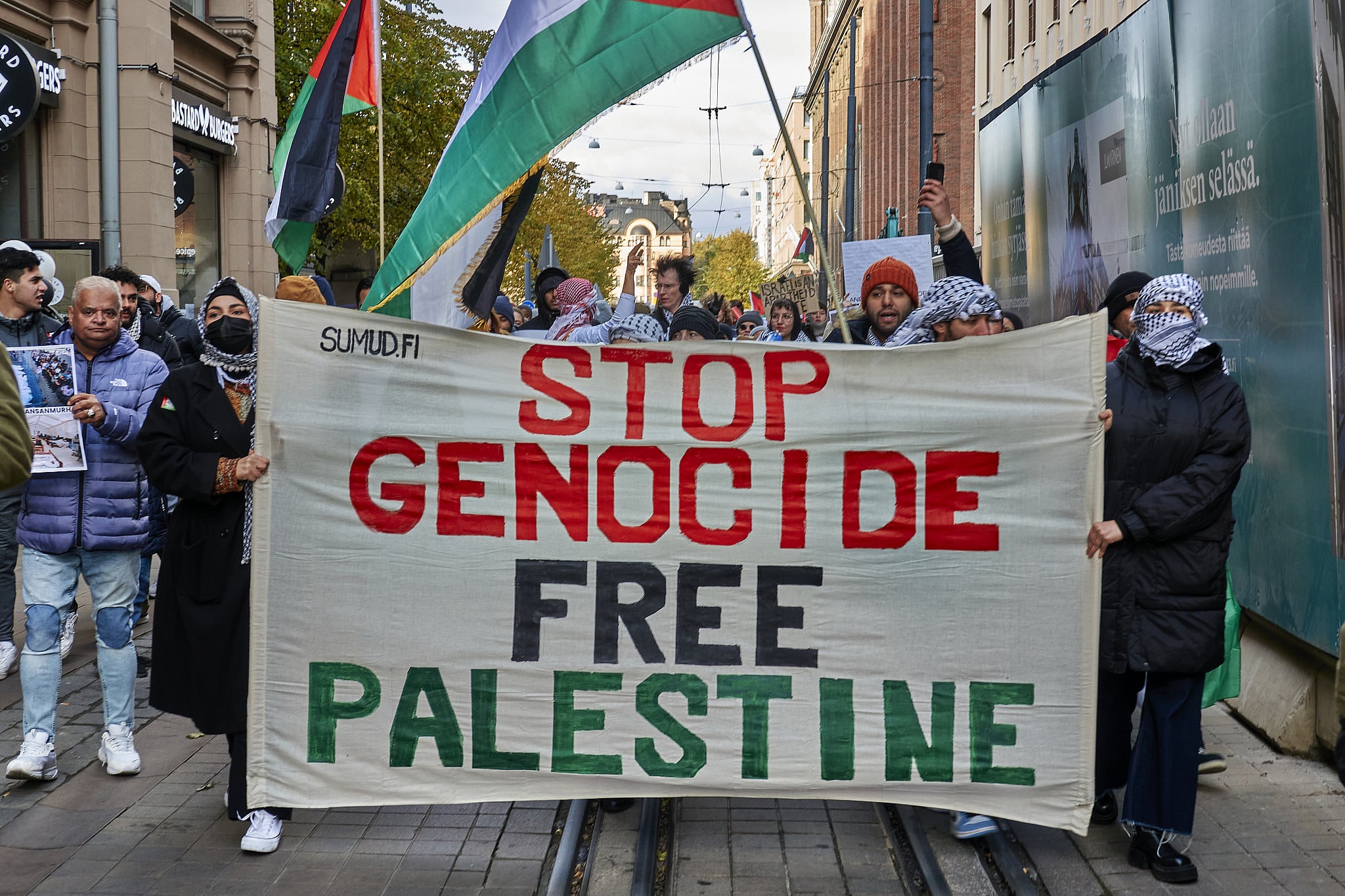
Who cares if they say it’s genocide?
That’s the question many Israelis have been asking, sometimes scoffing, sometimes shouting. The accusation was made days after October 7. Since then it has become so frequent, so loudly and broadly hurled at us, that we’ve learned to brush it off as reflexively as we brush off the United Nations. Genocide? Please. We’re fighting a terrorist organization that massacred our civilians, torched our towns, and dragged hostages across the border. This is a war of necessity. A war of self-defense. If the world can’t see that, then the world has lost its mind.
And yet, somewhere along the way, in rejecting the terrible accusation, we stopped asking a far more important question: not whether this is genocide, but whether this is right.
I do not believe Israel is committing genocide. That word has a specific legal definition. It requires an intent to destroy, in whole or in part, a national, ethnic, racial, or religious group. Despite the disgraceful (even genocidal) rhetoric of some of our ministers, I do not believe that intent defines the war. I do not believe the IDF, or the state, is pursuing the physical extermination of the Gazan or Palestinian people.
But it’s time to admit that the genocide debate has created a trap. It has collapsed a complex war into a false binary: either we are heroically fighting terrorism or we are committing the world’s worst crime. And because we know we are not doing the latter, we reassure ourselves we must be doing the former. We have made disproving intent of genocide into our moral compass. So long as we are not “that,” we tell ourselves, we are still good. Still right. Still justified.
Genocide, however, cannot be the only threshold of immorality. If we’ve learned to measure our conduct only by the absence of genocidal intent, then we’ve surely lost our way.
This war may not be genocidal. But it has been catastrophic. Tens of thousands of innocent people are dead. Neighborhoods flattened. Children starving. Disease spreading. The vast majority of the Gazan population has been displaced again and again. And, after 21 months of fighting, Hamas is still in power and still holding over 50 hostages.
We tell ourselves this is all necessary. That Hamas embeds itself in civilian areas. That they use human shields. That war is ugly. That “victory” is just around the corner. All of this may be true. But none of it is a blank check.
And so we return to the question: if not genocide, then what is this? What explains the scale of the devastation? What drives its relentless continuation?
There are many possible answers.
Some are strategic. The IDF was not designed for this kind of war. It excels in short, high-intensity operations, not in months-long urban counterinsurgency against an embedded enemy in a densely populated civilian environment. In this environment, where Hamas is in tunnels beneath schools and hospitals, where fighters vanish into civilian crowds, and where each strike risks killing the innocent along with the guilty, operations intended to be precise and surgical often become prolonged and indiscriminate. Intelligence gaps widen. Precision degrades. Restraint frays.
Some are political. The war provides cover for a deeply unpopular government clinging to power. So long as it continues, elections can be deferred. Investigations can be delayed. Accountability can be avoided. Public anger can be redirected outward rather than inward. For a leadership facing a legitimacy crisis, war offers a kind of stability. Ending it would mean facing the reckoning that awaits on the other side.
Some, indeed, are psychological. October 7 was not just a trauma. It was a shattering of our national sense of security, of who we thought we were. It collapsed the idea that we were protected behind our borders, our fences, our technology. In the wake of that rupture, a deep trauma, a profound sense of vulnerability, settled into the Israeli soul. Our grief hardened into anger. The desire for deterrence, at times, blurred into a desire for retribution. We stopped asking what was necessary and began asking only what was deserved.
None of these constitute genocide; but they do not absolve us of responsibility.
So who cares if they say it’s genocide?
We should. Not because it’s true, but because ignoring the question has allowed us to ignore the reality of what this war has become. And if we keep looking away, we may lose sight of ourselves completely.