
Jewish historian
Featured Post
Who decides Jewish identity? Not the mayor of New York
Zohran Mamdani’s Nakba Day remarks reflect a deeper and far older idea: that Jews are acceptable only as a religion, never as a sovereign people
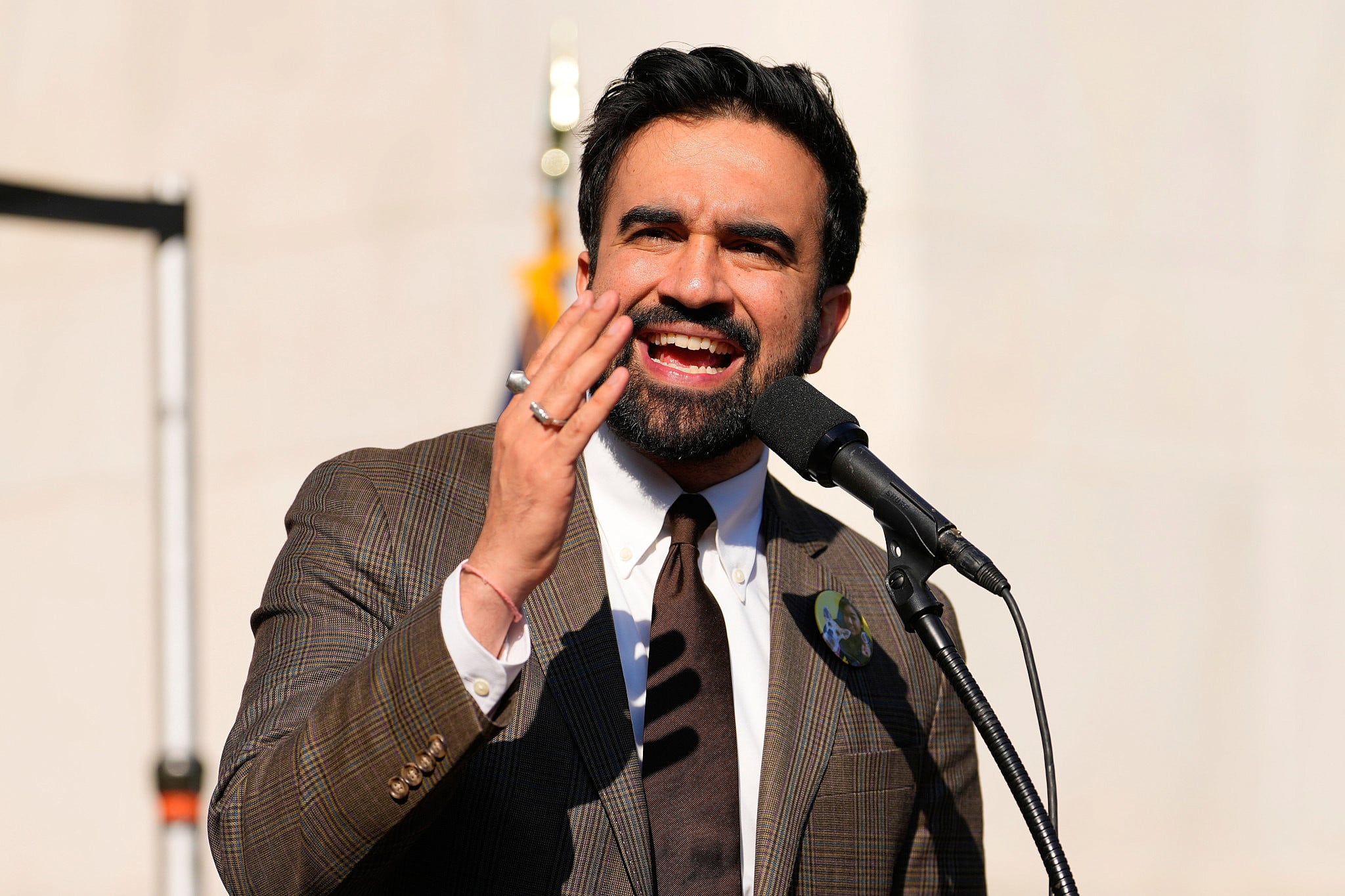
New York City Mayor Zohran Mamdani speaks during a May Day rally at Washington Square Park in New York, Friday, May 1, 2026. (AP Photo/Yuki Iwamura)
Mayor Mamdani’s late Friday afternoon pronouncement honoring Nakba Day and terming that “catastrophe”–Israel’s existence–“ongoing”– comes as no surprise. He has made no secret of that position; he championed it as a candidate.
What is concerning are two longstanding and deeply troubling ideas embedded in this rhetoric. First is the claim – by him or anyone else – to define for Jews what constitutes legitimate Jewish identity. Religious? Fine. National? Political? Sovereign? Unacceptable. Recall his behavior regarding a synagogue hosting a Nefesh B’Nefesh event: the mayor of New York weighing in on the programming of a synagogue.
Presuming to define acceptable Jewish identity is nothing new. It is the foundational position of Muslim rulers since the 7th century Pact of Omar/ Umar, as soon as Islam had become a conquering empire encompassing vast numbers of non-Muslims and policy had to be set toward those who would not convert to Islam but were deemed monotheistic: Jews, Christians, Zoroastrians.
Members of these groups – defined by religion – were tolerated while living under discriminatory laws: paying special or elevated taxes; barred from land ownership and many professions (as Jews also were under Christian rule); and above all, politically neutered. They were expected to remain loyal to the regime while never aspiring to political power, accepting their lower status as “dhimmis”: non-Muslim religious communities granted protected but subordinate status under Muslim rule.
This is the context from which the term “People of the Book” – أهل الكتاب, Ahl al-Kitāb – emerges. As long as Jews were – or are – defined only as a religion, and not as a people, an ethnos, or certainly not a polity, their existence was officially tolerated and legitimate.
This is also where the ahistorical fantasy of idyllic Muslim-Jewish coexistence in – take your pick – Andalusia, Iraq, or elsewhere originates. That argument goes that all was harmonious until the Jews “became” a people with national aspirations. Until Zionism.
And now this view is being echoed by the mayor of New York.
That is the second problem.
As a Muslim, he is as entitled to his religious beliefs as anyone else.
As mayor of New York, however, he is not entitled to use his office to advance those beliefs – whether expressed overtly as religion or cloaked in politicized rhetoric that merges anti-colonial theory with the old logic of dhimmi status – when it comes to Jews. Public officials do not speak in a private capacity when invoking the authority of their office. There is no meaningful separation between a politician’s personal beliefs and the effect of pronouncing those beliefs from a public platform.
There can be no question about the chilling effect such statements have on Jews. That is true regardless of what Jews in New York or elsewhere think about Israel or its current policies – matters that are entirely their business and entirely none of the business of the mayor of New York.
The noxious idea that the only acceptable Jew is the depoliticized dhimmi – always a minority, never a sovereign majority in a state of their own, never speaking and creating culture, art, and science in their ancestral language, never living by their own calendar, never grappling, as all sovereign states must, with the burdens and responsibilities of power – cannot be permitted to emanate from the office of any elected official.
This worldview has gained dangerous and, too often, violent currency. The connection between these ideas – expressed both dogmatically and through intentionally harassing and threatening behavior – and the rise in hate crimes against Jews in New York and elsewhere is crystal clear.
Mamdani cannot credibly denounce “antisemitism”– meaning, Jew-hatred– while simultaneously using his powerful platform to promote what is currently its most powerful ideological rationale.
Related Topics