
Who gets to live in the Promised Land?
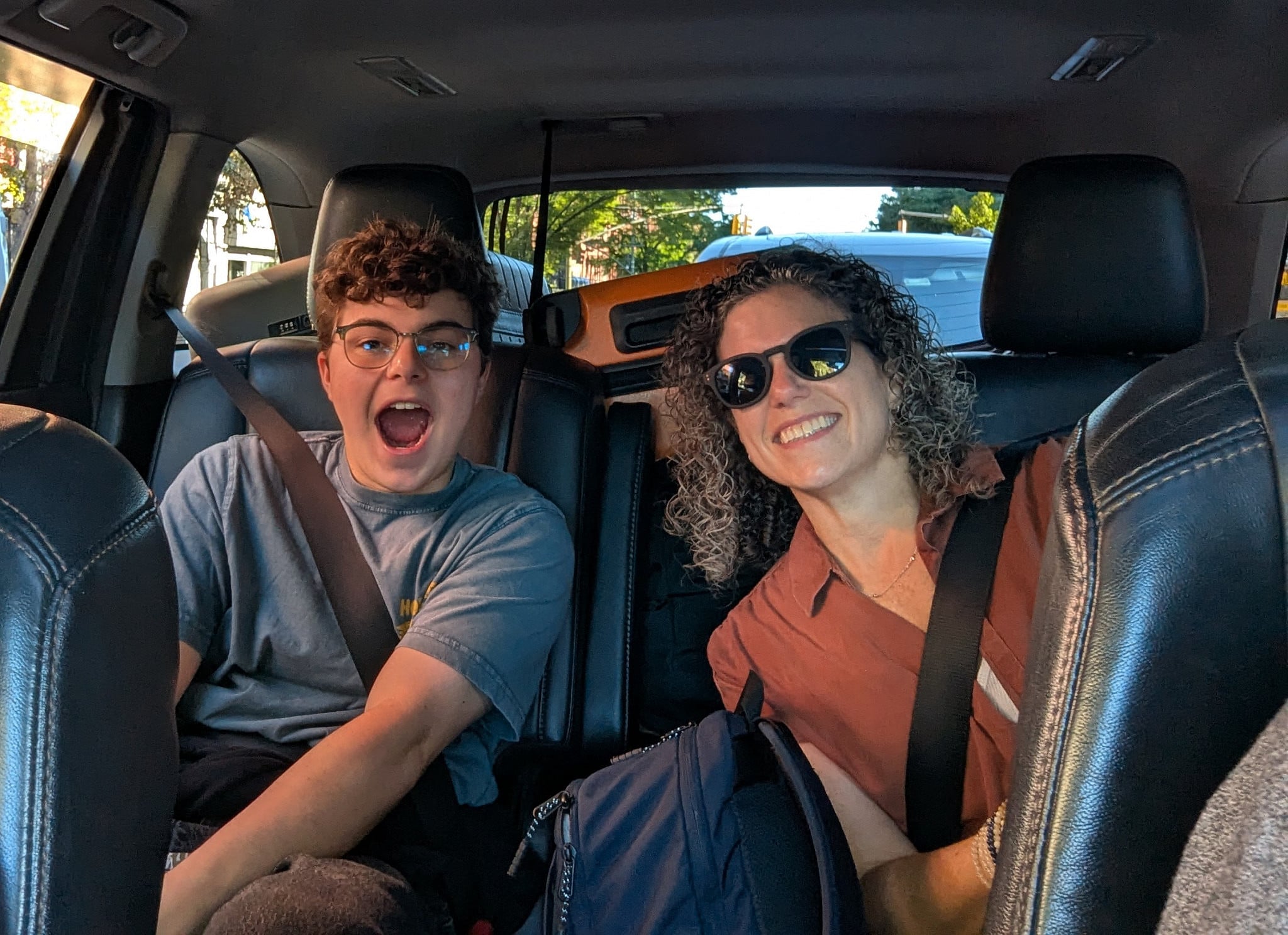
This summer, I had a new experience: Dropping my son off at college. For some of you, this may be a familiar story, maybe even your own story this year. For my wife and me, it was a big deal—and pretty emotional.
It was all the things: Shopping for furniture and toiletries, helping him set up his dorm room, having that extra-significant final dinner together, getting in a taxi and driving off without him. The realization that, for the next few weeks and maybe from now on, all of our connections will have to be intentional.
It is, of course, a huge life change for him, but it is also the start of a new phase of life for us.
And maybe it feels especially significant because I’m turning 59 this month. And so, if I’m being completely honest, perhaps there was something else mixed in with all of that emotion: a small recognition of my own mortality.
Not in the sense that I think I’m about to die. But simply in the realization that time moves in one direction. My son is beginning something new, and I am moving further along in my own journey. There are things that he will experience that I will never experience with him. There are parts of his future that I will never see.
Fortunately, Jews have a great model for a transition like this: Moses. In this week’s Torah portion, Ha’Azinu, after forty years of guiding B’nai Yisrael, the children of Israel, to the edge of the Promised Land, Moses is told (Deut. 32:52):
You may view the land from a distance, but you shall not enter it.
I know—you may question my analogy between the Promised Land and a liberal arts college in the United States. But stay with me.
The Promised Land was never a meant to be perfect, like the Garden of Eden. Instead, it was a fertile land, flowing with milk and honey, where their work would flourish. It wasn’t the place where Moses was supposed to retire as he approached the end of his life–it was the place for a younger generation to begin a new adventure.
The Torah describes it as a punishment that Moses couldn’t enter the Promised Land, after all the work he did to create a better future for his descendants–a better one than he and his generation had in Egypt. And that’s the way it can feel to us, when we acknowledge that our children will have futures that we won’t see.
But that’s just the way it has to work for those of us in the parent generation. We spend our lives trying to make a better world for those who will come after us, and then we don’t actually get to live in it.
And, perhaps, it’s precisely because we know too much about the past. We remember the way things used to be, and we carry them as assumptions about how things ought to be. We don’t have the same ability as our children to imagine what might be.
As parents, we are like Moses, in the wilderness and on the way to a Promised Land that we can’t enter. We guide our children right to its edges. We tell them the stories about their ancestors that have inspired us. We share the wisdom we have learned along the way, hoping it will help build a flourishing life for themselves. We accompany our children, right up to the dorm room. But, we can’t stay in that dorm room with them.
Mazel tov to all you parents of college students–and let’s enjoy the rest of our time in the wilderness.