


Who Is Afraid of the Palestinian State?
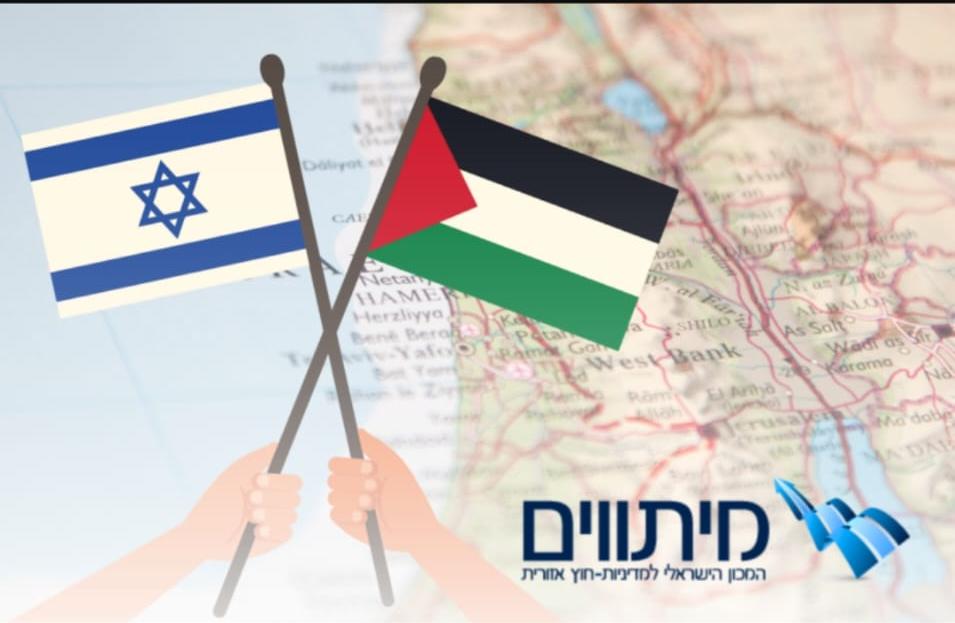
Who would have thought that the simple call for Israeli and American recognition of a Palestinian state would cause such a stir in Israeli politics? Yet that is precisely what happened when Mansour Abbas dared to utter the two words that, apparently, have become almost unspeakable in Israel in 2026: “Palestinian state.”
Even among Palestinian citizens of Israel, enthusiasm for establishing a Palestinian state alongside Israel has, unfortunately, waned. Many are preoccupied with the threats they face at home: rampant crime, a lack of personal security, racism, and discrimination. For some, these immediate concerns have made it harder to raise their heads and worry about their brothers and sisters across the Green Line. Others have long since lost faith in the two-state solution and now advocate a single state for all its citizens, from the Jordan River to the Mediterranean Sea.
But unlike much of the Jewish political leadership—which, with the notable exceptions of Yair Golan and a handful of Democratim politicians, seems terrified of straying from the carefully constructed message box drawn by Netanyahu and his advisers—Arab political leaders have often been more willing to challenge their constituencies, including when their positions are unpopular. Ayman Odeh, Ahmad Tibi, and others have demonstrated that leadership sometimes means trying to shape public opinion rather than merely following it.
That is what makes Abbas’s intervention significant.
And yet, to the disappointment of many, one of the first to reject his call was Gadi Eisenkot, chairman of the Yashar Party, who quickly ruled out the possibility of establishing a Palestinian state under a government he might lead. Perhaps this reflects political caution – driven by the fear that Netanyahu’s machine will once again succeed in branding anyone who speaks about Palestinian statehood as a “leftist.”
But there is a fundamental problem with rejecting the idea: what is the alternative?
What, exactly, is the Israeli center’s strategy for achieving a safe future for Israelis and Palestinians? Continued occupation, euphemistically described as “conflict management”—the very policy that helped bring us to October 7 and that continues to exact an intolerable human, moral, and strategic price? Permanent Israeli control over the Palestinians? Population transfer: Which parts of the Israeli right no longer hesitate to advocate openly for?
And what is the plan for restoring Israel’s international standing and repairing its relations with its allies? Another round of right-wing hasbara (the Hebrew term for propaganda), while the underlying reality continues to deteriorate?
The striking thing about Abbas is that he is challenging the Israeli political system even when that is not necessarily his intention. He is attempting to build a new civic agenda within Israel while postponing the conversation on fundamental questions of national policy—above all, the question of Palestinian statehood.
This is precisely the issue that much of Israel’s political establishment prefers to ignore: however, the Palestinian question has not disappeared, and neither has the two-state solution. For decades, it was the only political framework that could plausibly reconcile Israel’s existence as a Jewish homeland and democratic state with the Palestinian people’s right to self-determination.
Netanyahu has succeeded in doing something remarkable: he has not merely shaped Israeli policy; he has shaped the boundaries of Israeli political discourse. The opposition increasingly seems afraid even to articulate alternatives, lest it be accused of being “left-wing.”
But this was not always Eisenkot’s position.
In January 2022, in an interview with Ben Caspit in Maariv, the former IDF Chief of Staff Eisenkot warned that Israel needed to change the existing reality because it was heading toward “a one-state solution, which is the destruction of the Zionist dream.”
Eisenkot understood then what seems to have been forgotten today: rejecting the status quo requires an alternative.
He knew not only what Israel should not do but also what it should do.
Today, however, he appears far more cautious about articulating such ideas. The fear is understandable. Netanyahu and his political allies have spent years turning “leftist” into a political curse word, regardless of whether the policy in question is actually left-wing or simply pragmatic, Zionist, and rooted in Israel’s long-term national interest.
But the price of this fear is enormous.
When politicians become so frightened of being called “leftists” that they abandon substantive alternatives, Israeli politics becomes shallower, not safer. The result is a political system in which serious leaders compete over who can sound tougher rather than over who has a credible strategy for Israel’s future.
Gadi Eisenkot is a brave man. His military career and his decision to enter politics demonstrated that. He should bring that same courage to statesmanship.
He should not allow Netanyahu to determine what is permissible for him to say.
And he should remember what he himself understood in 2022: if the current reality is leading toward one state and the destruction of the Zionist vision, then the responsible alternative is not to deny the problem—it is to lead Israel toward a different reality.
That begins by having the courage to say, once again, the words that have apparently become forbidden:
A Palestinian state.