Who Needs American Jewry? We All Do.
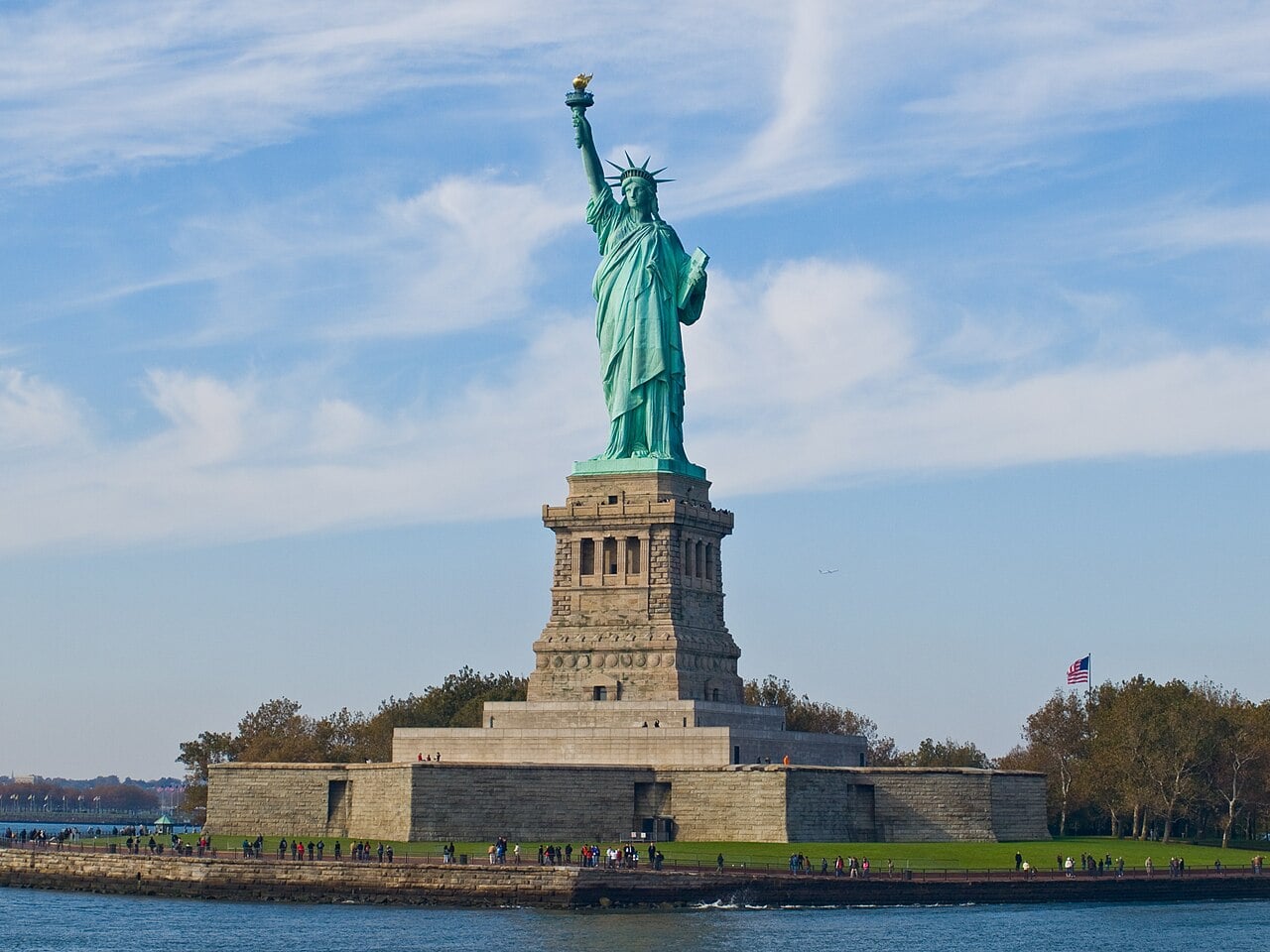
As we are on the eve of celebrating America’s 250th anniversary, it is worth considering statements which have been heard with increasing frequency in the American Orthodox community:
“With the growing antisemitism in America and the existential threats that our brothers and sisters face in Israel, why are we still living here?”
”We should all be living in Israel, where Jewish life is vibrant and flourishing, where Jewish identity is simply part of the air we breathe.”
“Being a Jew in America does not contribute in any meaningful way to Judaism or the Jewish People.”
A leading Modern Orthodox institution recently featured a conversation with six rabbis on exactly this question: What value is there in Diaspora Jewry? The overwhelming consensus was that, indeed, it is hard to find an intrinsic meaning in our lives as Jews in America.
During these conversations, it is always conceded that American Jewry has, and may continue to, serve an instrumental value for the future of the Jewish people. America was a haven for Jewish refugees and immigrants in the 19th and 20th centuries. Lay leaders have been critical to ensuring US support for Israel, and American philanthropy has provided it with much-needed financial oxygen. But ultimately, or so the argument goes, there is nothing to really be gained for us as Jews, or for generations to come, to be living anywhere other than in the State of Israel.
A part of me truly sympathizes with these sentiments. I have had similar feelings myself, particularly over these last three years. But as I sit here visiting Jerusalem, loving every second of breathing the air of Torah and of Am Yisrael, looking forward to the day my family and I might make aliyah, I cannot accept this perspective. Diaspora Jewry has been, and will remain, crucial to the religious and intellectual growth and the cultural richness of the Jewish people. Indeed, it is both morally and spiritually dangerous for the entirety of the Jewish People to be living only among our own, only within a Jewish majority, only within a Jewish state.
Lurianic Kabbalah — the 16th century school of Jewish mysticism named for Isaac Luria —teaches that when God created the world, the vessels containing divine light broke, scattering nitzotzot (sparks of holiness) throughout the world. It is the Jew’s task to discover, elevate, and return them to their divine source. There is a purpose to our being in exile. There is holiness that can be found only outside of the land of Israel.
What are those sparks? A monumental one is the Babylonian Talmud (the Bavli), the corpus that defines Rabbinic Judaism. Perhaps the most distinctive feature of the Talmud – and the way it differs from the Talmud of the Land of Israel – is the weight that it gives to svara: rational, human argument. The Bavli understands that our role is not just as receivers and transmitters of tradition, but as contributors, creators, and shapers of its form and content.
The fact that the Bavli developed outside of the land of Israel, according to the great 19th century Orthodox scholar the Netziv, was no accident. The Sages in the land of Israel concerned themselves more with transmitting their received traditions and with bottom-line conclusions. It was the Babylonian Sages’ distance from the land and the original source material that forced them to rely on their own reasoning, at times even prioritizing it over texts. The result: the Talmud Bavli and the Oral Law as we know it.
The list of sparks goes on: Rambam’s rationalism – originating in Greek philosophy and transmitted to medieval Europe through Al-Farabi and other Muslim scholars – served as a counterweight to theology that risked becoming too embodied and too mystical. The ban on polygamy and the medieval rise in women’s status in halakha. Yiddish. Ladino. The richness of foods, traditions, and practices now woven into our cherished Jewish culture, all absorbed and transformed through lives lived in countries not our own.
Living as part of a Jewish majority is a tremendous blessing. But living as a minority in a non-Jewish world carries its own, unique blessings. It compels us to recognize that we live in a world with other peoples and that we have a duty to them as well as to Jews. It forces engagement with modernity’s values — humanism, feminism, universalism, democracy, human rights, autonomy — sparks of holiness that need to find their proper place within Torah and tradition.
As president of YCT Rabbinical School, I can also say that the Diaspora experience has profoundly shaped what it means to train and be a rabbi. My reason for being in Israel as I write this is to lead Rikmah, our initiative bringing the American model of the rabbinate to enrich the training of Israeli rabbis and rabbaniyot. Rikmah —rabbanut kehilatit makshivah, a communal and listening rabbinate — embodies two qualities that come directly from our lived experience outside Israel. Living as a minority forces rabbis to actively construct Jewish identity and community, something often lacking in Israel yet deeply valued when it appears. And it is from the faith leaders of other traditions that we have learned to center the pastoral role, which for so many is one of the greatest gifts they can receive from a rabbi – to be truly listened to, to be seen, to be supported.
Rikmah also means tapestry — because we bring these Israeli rabbis to America to help them appreciate Yahadut America, our vibrancy, our religious leaders, our innovations, to see that we are all connected, each community contributing essential threads to the rich tapestry of our tradition, culture, and people.
So, on this July 4th, while Israel and aliyah remain a central value in my life, I celebrate what it means to be an American — proud of the nitzotzot of holiness that we, the Jewish people, have found and elevated in this land of democracy and human rights, bringing them into our lives and our tradition.