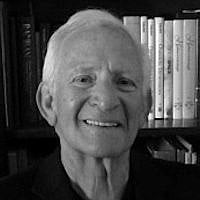
Historian, Librarian, Educator, and Artist
Who Will Sustain the Jewish Humanities?

For many Jewish students, questions of identity, responsibility, and moral purpose unfolded inside secular university spaces like this one. (Photo: Bonnie K. Goodman)
A Former Student Answers Gil Troy’s Question
By Bonnie K. Goodman, BA, MLIS
In 1995, the singer Jewel released a song that asked a deceptively simple question: Who will save your soul? The song did not promise redemption or reward. It offered a warning that choosing depth over display, meaning over money, might come at a cost, and that a culture fluent in moral language is not necessarily structured to sustain those who take that language seriously.
That question stayed with me.
Which is why I read Gil Troy’s recent Wall Street Journal essay, “How’s Your Soul?”, with both recognition and the urge to answer, not polemically, but personally, and from within the Jewish intellectual world he himself inhabits.
I was Gil Troy’s student at McGill University, where I took fifteen credits with him in American history. His teaching mattered. He taught history as a moral discipline, not a technical one, bound up with responsibility, character, and values. He rejected cynicism and openly mocked the reduction of education to credentialing. The humanities, in his classroom, were not ornamental. They were a calling.
Although these were American history courses, they were taught to a heavily Jewish student body at a moment when questions of identity, liberalism, and moral purpose were anything but abstract. Many of us were hearing these arguments not only as citizens in training, but as Jews thinking through what it meant to belong to a people with its own history, obligations, and national claims. This was also the period when Troy first articulated his public Zionist argument, writing what became Why I Am a Zionist and beginning to lecture widely on Israel and Jewish identity. The moral seriousness he brought into the American history classroom was inseparable from the Jewish questions he was simultaneously raising beyond it.
One seminar in particular returns vividly now. We read The Closing of the American Mind by Allan Bloom, a book already controversial when Troy taught it and often dismissed as elitist, nostalgic, or culturally pessimistic. But in that classroom, Bloom was not caricatured. He was taken seriously. We debated whether universities had abandoned their role as guardians of moral and intellectual formation. We argued about relativism, canon, truth, and the difference between education and training.
Bloom diagnosed what he saw as an earlier crisis in the humanities. He did not blame ideological extremism or student activism. Instead, he argued that universities had hollowed out meaning by retreating from the great moral and philosophical questions, reducing education to either psychological therapy or instrumental preparation. Students, in his view, were not rejecting the humanities out of greed or careerism. They were never shown why those disciplines demanded serious devotion. Ironically, Bloom worried that universities were already becoming too vocational, even as they claimed to be liberating.
Troy’s recent essay describes a different failure. He now argues that students are fleeing the humanities because they have become coercive and politicized, turned into platforms for ideological conformity. Read on its own, this sounds like a generic culture war claim. Read in the context of Troy’s broader body of work, it is something more specific.
For years now, Troy has been writing about the rise of anti-Israel and anti-Zionist ideology on university campuses. In his most recent book, To Resist the Academic Intifada, he addresses students directly, arguing that entire academic fields, particularly history, area studies, political science, and cultural studies, have been reshaped by pro-Palestinian frameworks that marginalize Zionist perspectives and pressure Jewish students into silence. For many Jews on campus, what Troy addresses is not an abstract debate about theory but a lived experience of exclusion and intimidation.
Seen in this light, Troy’s critique of “wokeness” in the humanities is not generic. It is a Zionist response to an academic environment that has become increasingly hostile to Jewish national self-understanding.
And yet, even here, the story is incomplete.
Long before today’s campus battles, those who devoted themselves to Jewish history, Jewish education, and Jewish intellectual life were already navigating a world that praised moral seriousness while offering little institutional or economic support. Anti-Israel ideology has intensified the crisis, but it did not create the underlying precarity that made so many Jewish humanistic careers fragile in the first place.
I absorbed Troy’s message deeply. I majored in American history and art history, then pursued graduate work in library and information studies, followed by graduate study in Judaic studies at neighboring Concordia University and Jewish education at the Hebrew University of Jerusalem’s Melton Centre. Jewish education was never framed as a professional pipeline in the conventional sense. It was framed as a mission, an act of transmission and responsibility sustained by passion, improvisation, and sacrifice.
Over the years, I built a body of work that looked, from the outside, like success. I edited historical commentary, launched and sustained long-running public history projects, and wrote essays that circulated widely. I was cited by established scholars and reached large audiences. I contributed to Jewish and American historical discourse not episodically, but consistently, over decades. And yet, at each professional threshold, I encountered the same response: impressive work, insufficient category. The problem was never devotion or output. It was that the work I did was treated as morally valuable but structurally optional.
This dynamic did not remain abstract or confined to theory. While teaching in an Israeli school, I encountered it in concrete institutional form. A principal questioned the legitimacy of my academic background and, on that basis, withheld both my pay and the processing of my Ministry of Education teaching file. My degrees from McGill University in history, art history, library science, and Jewish studies were treated not as credentials, but as suspect. The issue was not performance or commitment, but classification. Years of study in the humanities were rendered administratively invisible, their value affirmed rhetorically but denied procedurally. In a system that depends on educators to transmit language, culture, and memory, the authority to teach was made contingent on bureaucratic recognition rather than intellectual preparation.
I went on to work as an editor at the History News Network, founded by my other mentor, Rick Shenkman, where current events were examined through historical lenses. I created and edited a widely read series on historians and public scholarship. I began writing “On This Day in History,” a project that has run, on and off, for nearly two decades and became the basis for a book.
Writing American Jewish history, contributing to Jewish public discourse, and working in Jewish intellectual spaces brought purpose and recognition. It did not bring stability. Jewish history is honored rhetorically, commemorated institutionally, and invoked constantly in moments of crisis. Yet the labor of sustaining it—writing, editing, teaching, and curating memory—remains precarious. Jewish educators and historians are often expected to carry institutions intellectually and emotionally while absorbing the economic risk personally.
Without a doctorate, academic positions were elusive. Without a journalism credential, journalism work was precarious. Without a formal teaching degree or certificate, education roles were unstable. Again and again, I was told the same thing: impressive background, wrong category. Passion was praised. Sustainability was withheld.
This is where Troy’s question, How’s your soul?, demands a fuller answer.
My soul is fine. It has been strengthened by history, Jewish learning, and the humanities Troy defended so forcefully. What has been endangered is not meaning, but sustainability.
If we truly care about Jewish continuity, Jewish education, and Jewish intellectual life, we must stop treating material survival as a moral failing. We must stop mistaking sacrifice for virtue and devotion for sustainability. And we must acknowledge that institutions bear responsibility for the lives they shape, not only the values they preach.
Gil Troy once taught me, and many others, to take ideas seriously, to resist cynicism, and to believe that education should shape character, not just careers. That influence has never left me. His recent essay carries the same eloquence and moral clarity that marked his teaching when I was his student.
So I offer this response in that same spirit. When you ask students, “How’s your soul?”, my answer, formed in part because of your classes, is that it is intact. What I wish we had also been taught, with equal seriousness, is how fragile a life devoted to ideas can become without institutional and economic support.
If the Jewish humanities are to remain a moral calling rather than a luxury for the already secure, then the conversation must extend beyond inner life to include structure, labor, and responsibility.
The soul, after all, does not live apart from the body or from the world that asks what it costs to keep it.
Related Topics
Related Posts