
Who’s the colonialist?
In a recent article (“The Parents Who Helped Shape Zohran Mamdani’s Politics,” June 26, 2025) the New York Times describes Mamdani’s father as “a major figure in the field of post-colonialism,” with a focus on Africa, and then writes: “The term ‘colonialism’ has become a political battleground in recent years, particularly when it is applied to the relationship between Israel and the Palestinian people.”
“Critics of Israel” – which include Zohran Mamdani and both his parents – “use the term ‘colonizer’ to accuse Jewish people who live there of stealing land where Palestinians had long lived.”
Let us examine this claim. Colonialism, what is it? There are telltale signs. I recently graduated a PhD student, an African woman from Ghana. Her first and middle names are Anglo-Saxon. Her native language is English. She is a pious evangelical Christian. Her language, culture, and religion reveal the effects of colonialism. Ghana was colonized by the British.
Do today’s Palestinians manifest the plain features of colonization: language, culture, religion? Yes – but not colonialism by Jews and the State of Israel. The colonization of the non-Jewish inhabitants of what is now Israel-Palestine took place around 1,300 years ago in the aftermath of the Arabian conquest of the Middle East, North Africa, and parts of southern Europe. That is when Arabic language, Islam, and the cultural concomitants of both were introduced and spread. Arab culture was not prevalent in what is now Palestine until the Muslim conquests that began in the seventh century of our era. Arabic language and Islam predominate among Palestinian Arabs to this day. Those who are Christian adopted or were introduced to Christianity only in the first millennium of our era.
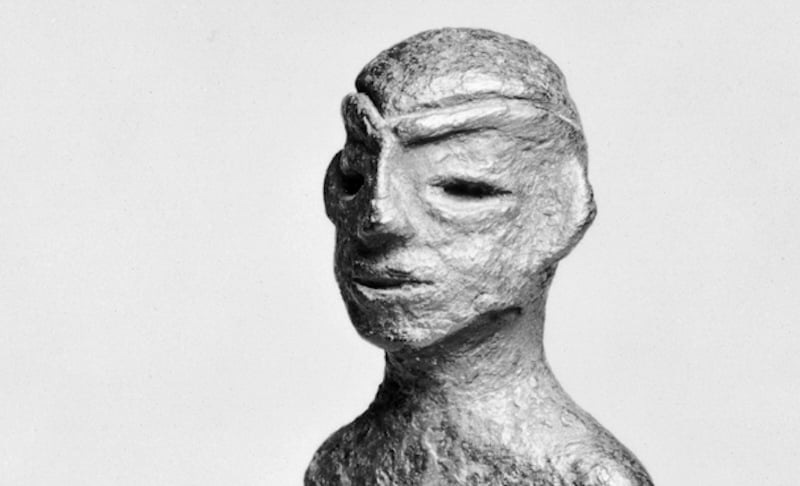
The culture that flourished in the land of Israel-Palestine in most ancient historical times, in the second and first millennia BCE, was Canaanite. The Israelites, and later the Jews, are, in fact, the linguistic and cultural heirs of the Canaanites. Most archeologists and historians today regard the biblical people of Israel as a coalescence of somewhat diverse peoples who lived in the land of Canaan and, around the turn of the first millennium BCE, formed a polity. The Hebrew language, in which most of the Jewish Bible and virtually all epigraphs found in the land of Israel in the first millennium BCE are written, is a direct offshoot of Canaanite, a Canaanite dialect.
The poetics of biblical poetry and, to some extent, prose, originate in second-millennium BCE Canaanite literature, which is very well attested at Ugarit, today called Ras Shamra, an ancient maritime city on the northern coast of Syria. Phrases and literary formulae found in Ugaritic texts appear in biblical literature, even into the later periods. Passages in Ugaritic epic poetry are incorporated, with some adaptation, in the Hebrew Bible. Virtually all Jewish literature, from ancient to modern times, draws on biblical sources, which, as said, manifest the impact of native Canaanite culture.
Even Canaanite religion left its mark. The mythology of Canaan is referenced throughout biblical literature. For example, Mount Zaphon, the Canaanites’ Olympus, serves the poets in Psalms and Job. The sea-monster Leviathan, appearing in several biblical texts, harks back to early Canaanite myth. Rabbinic literature, which follows the Bible by centuries, refers to “fields of Baal,” meaning fertile land. Baal was the Canaanite god of rain and fertility. The name of the Canaanite goddess Anat is borne by many women in modern Israel.
In spite of having been exiled from Israel-Palestine, Jews, sometimes in greater numbers and sometimes in fewer, continually inhabited parts of the land. Hebrew was spoken, and texts, some of them classics, were written there. As a result of persecutions in Europe and in Muslim countries in the past two centuries, waves of Jews joined their compatriots in Israel, where there is an unbroken chain of Hebrew and Jewish culture, harking back to Canaanite times. Palestinians, whose culture is in large measure the product of early medieval Arab colonialism, live in the land without exhibiting the telltale signs in language, religion, and culture of Jewish colonization.
And before charging Israel with colonialism, consider this: in the past five decades, Israel has absorbed and famously airlifted more than 150,000 Jews from Ethiopia. What colonial power do you know that has brought in Black people from Africa in order to make them full-fledged citizens?
To adopt the rhetoric of colonialism without examining its historical fingerprints is not just intellectually lazy, it’s a distortion. When the New York Times gives traction to the charge that Israel is colonialist, it reverses the arrow of history and reinforces a narrative that erases both the continuity of Jewish presence and the legacy of medieval Arab imperial expansion. In doing so, it exchanges clarity for cliché and abandons its responsibility to inform for the easier task of echoing political fashion.
If colonialism is a matter of imposed culture and foreign intervention, the real colonialism in this land was not by Jews.