
Chair, Hadassah American Affairs Advocacy, Hadassah Writers' Circle
Whose Life Is It Anyway? Why We Are Still Fighting
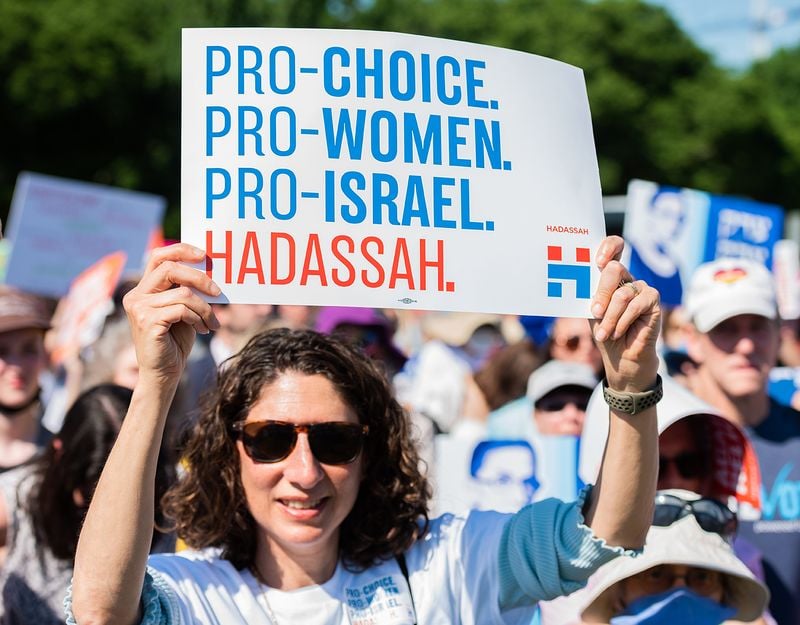
Women's Voting Rights Now. Image courtesy of Hadassah.
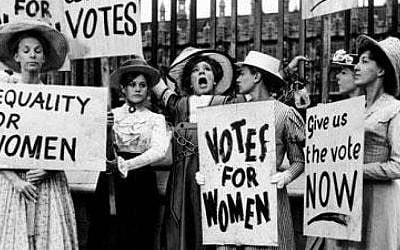
As I follow what is happening to women today, I recall one passionate high-school history lesson describing how hard women were forced to fight for the right to vote. It took decades of conflict before the 19th Amendment, prohibiting the federal and state governments from denying the right to vote on the basis of sex, became part of the Constitution. Sadly, it would take another 45 years for women of color to get that same right to vote.
Yet, when the states were given control over voting, they enacted numerous devices specifically designed to make it harder for “some groups” to vote. I remember thinking how backwards it was to try to stop legal citizens from casting their vote in local and federal elections. Sadly, this is not just a history lesson; it is a reality today.
In recent years, we have witnessed lethal blows to women’s rights and freedoms that continue to erode before our eyes. I did not understand placing limitations on women then, and I certainly don’t get it now.
It seems that too many of our elected and appointed leaders have been working overtime to set the clock back decades for women, portraying the ideal for women as “barefoot and pregnant” and trying to limit their options to get an education or a job.
Years ago, I remember discussing with my peers the enormous challenges women endured as they navigated hard choices about their own bodies, particularly when abortion was illegal. I believed then and do now that reproductive choices are highly personal and the freedom to choose is essential to every woman’s health and well-being. Why would we want our government to decide what should or should not happen in the privacy of our own lives?
Yet, that decision was taken from us when the US Supreme Court overturned Roe v. Wade in June, 2022, delegating to the states the power to decide what a woman could or could not do. Today, we are witnessing the most restrictive and punitive measures against women seeking an abortion in some states – regardless of life and death consequences to the mother – even disregarding incest or rape as a factor.
Several states have extended that criminality to health care workers who have literally sworn an oath to “do no harm” and to “keep patient secrets private.” Our health providers should be left to treat their patients –and not face possible litigation for literally doing their jobs.
Concerted efforts have attempted to block Internet access to medications used to terminate pregnancies. Even the Food and Drug Administration was pressured to declare previously “safe” drugs for pregnancy termination “unsafe” for no valid medical reason.
(Thankfully, the agency did not do it!)
Some states are even trying to enact laws that would allow investigations into miscarriages. Miscarriages are both physically and emotionally challenging enough without accusations of immoral or illegal behavior.
In the US, about 15 to 20 percent of viable pregnancies end in miscarriages. Who could imagine that miscarriages can potentially become grounds for a criminal investigation? We all know women who have suffered miscarriages. My first pregnancy ended in a mid-term miscarriage. My family and friends’ support helped me to move forward at a very challenging time. How much more difficult it would have been if any of us had to deal with legal or moral consequences!
And what about those women who receive horrific diagnoses regarding the viability of their unborn fetuses? Who has the right to be their judge or jury? Ardent anti-abortion voices don’t spout facts; they exaggerate how many late-term abortions occur. Simple research shows that in the US, most abortions occur within the first trimester, often by 12 or 13 weeks of gestation. Yet, the anti-abortion voices espouse supposed fetal legal rights as more important than a woman’s rights!
Judaism, while defining male and female roles differently, has always modeled an inherent respect for a woman’s life and made it clear that protecting her life comes first.
Dating back to the ancient commentaries in Mishnah Oholot 7:6, a woman is forbidden to choose the life of her fetus over her own. The Mishnah also protects women from having to continue a pregnancy conceived in incest or rape. So, I ask, who should have the legal right to control a woman’s choices in such private situations? And where is the pragmatic concern for an existing family with children if something happens to the mother?
Like voting, the right to reproductive choice is something women should always have – without question or exception. So why is gender equality so threatening to some people? According to a 2024 World Economic Forum Index report, the US generally ranks in the 40s out of 146 countries in overall gender equality.
According to a Centers for Disease Control report, the US ranks highest in maternal mortality among high-income nations. Abominable.
The American Revolution was fought against a government that imposed taxes without representation, impeding both civil rights and religious freedom. As a result, America was founded upon the principles of freedom and civil rights. Then why are we losing them today?
Some of our male-dominated leadership may believe that through mandating women to be “wives and mothers” first, society could regain a “better” sense of family. Throughout history, women have had to struggle with patriarchal mandates; yet during WWII, when it was deemed necessary for women to work in factories to produce munitions and supplies, women working was acceptable. So why not now?
Why are leaders so concerned about an unborn fetus when they rarely vote to fund daycare, quality education or parental leave? The federal funding cuts to Planned Parenthood have endangered teens and adult women receiving vital information about family planning and birth control, increasing the chances of unplanned pregnancies. Where should teens learn about sex and sexually transmitted diseases when, according to a 2022 New York Post poll, about 21 percent of parents said they would not teach their teens about these things? Can ignorance ever be a worthy goal?
As of May 2026, multiple states enforce near-total abortion bans, including Alabama, Arkansas, Idaho, Kentucky, Louisiana, Mississippi, Missouri, North Dakota, Oklahoma, South Dakota, Tennessee, Texas, West Virginia and Wyoming. These states generally prohibit abortion at all stages of pregnancy with very narrow exceptions.
In Hadassah, our Advocacy and Government Relations Teams are working in any state proposing laws further limiting a woman’s right to choose which is one way we all can “act.”
As we approach another election cycle, do some research about the candidates who want to “represent” you and what they will likely do once elected. Politicians are supposed to represent the needs and issues of their constituents, not the other way around.
We lament that women living within some cultures are not allowed to get an education, pursue a career or even display modest parts of their physical bodies without fear of being stoned, arrested or killed. We all empathize with them. Yet there is another woman you should be worrying about; she is in your mirror. She is also your daughter, partner, aunt, granddaughter or friend.
Who wins when women lose?
If I seem angry and frustrated, I am. It is hard to witness the progress we have made in our society only to see it torn down. Now is not the time to bemoan our fate; it is time to reclaim our rights by standing up and taking action. We need to be equal under the law for ourselves and on behalf of future generations.
Debby is a member of the Hadassah Writers’ Circle, a dynamic and diverse writing group for leaders and members to express their thoughts and feelings about all the things Hadassah does to make the world a better place. It’s where they celebrate their personal Hadassah journeys and share their Jewish values, family traditions and interpretations of Jewish texts. Hadassah members are proud of their Zionist mission and their role as keepers of the flame of Jewish values, traditions and beliefs as well as advocating for women’s empowerment and health equity for all. Since 2019, the Hadassah Writers’ Circle has published nearly 800 columns in The Times of Israel Blogs and other Jewish media outlets. Interested in writing? Please contact hwc@hadassah.org.
Related Topics