Learn. Grow. Self-Actualize.
Why a Golden Calf?
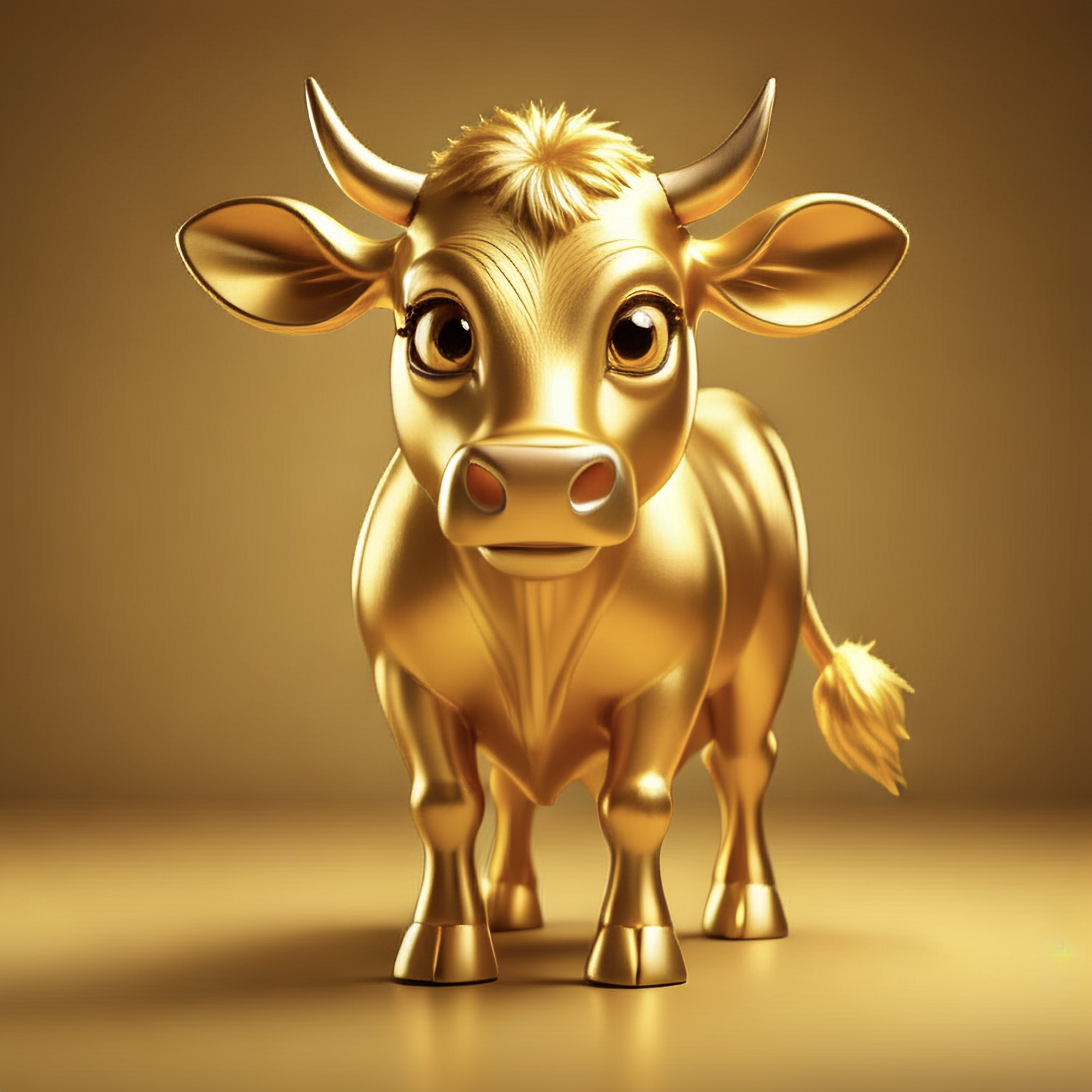
Created with Apple's Image Playground
Why did the Jewish nation choose to make a Golden Calf, of all animals, as an intermediary? To properly answer this question, we need to examine Yechezkel (1:10). In these admittedly esoteric verses, Yechezkel discusses Hashem’s chariot and the four faces of the chayot (a type of angel).
The first is a human face. It symbolizes connecting the physical world to the spiritual world, which is the unique power that Hashem granted to mankind. Angels are completely spiritual, and animals are completely physical. Only humanity has the power to use physicality in the service of spirituality.
The second is the face of a lion, which represents kingship. The lion is the king of the jungle and the most regal of all animals.
An ox is the third face mentioned in Yechezkel’s prophecy. The ox, and all similar bovines, symbolize physicality and material success. The fourth is the face of an eagle, which represents soaring above the physical world to get a bird’s-eye view of life, free of all lowly impediments to clear vision.
After the Jewish nation left Egypt and began their journey in the desert, they quickly grew weary. They complained to Moshe for meat to eat and water to drink. Rav Beryl Gershenfeld, based on the Maharal in Gur Aryeh on Shemot (29:1), explains that their primary focus was on the face of the ox. This face represented exactly what they were longing for so deeply. In their time (and even in many agrarian societies today), an ox was highly valued. It plowed fields, its hide was used to make clothing and leather implements, and it even served as food itself. Unlike other animals, nearly every part of an ox was used for a physical purpose.
The Jewish People saw the faces that surrounded Hashem’s chariot. In Shemot (15:2), Rashi hints to the fact that they observed them during the crossing of the Red Sea. Likewise, the Mechilta reveals that the simplest maidservant present at the Splitting of the Sea received a vision that even Yechezkel himself, the author of the above prophecy, did not.
When the Jewish People committed the sin of the Golden Calf, they were looking to replace Moshe, who they believed was dead. However, when determining which shape this new intermediary would take, their subconscious desires came into play. Deep down, they were not looking for kingship or a higher vision of life. They did not want to connect the physical to the spiritual. Rather, in that moment, they simply wished to be pampered. Therefore, they created an intermediary made from a physically valuable material in bovine form, expressing their underlying desires.
Nevertheless, even if the nation saw Hashem’s chariot and chose to make a bovine-like intermediary, why did it come out of the fire as a calf and not an ox or cow? Our Sages tell us that the Jewish People intended to create an adult bovine, just like the ox surrounding Hashem’s chariot. Nevertheless, things that appear big and lofty in the Heavens come down through what the mystical writings refer to as a shalshelet, a chain of emanations. Consequently, what actually materializes in our world ends up looking miniaturized. Therefore, a calf, a baby bovine, emerged.
When we read parashat Ki Tisa, it behooves us to ask ourselves if we are repeating the errors of our ancestors. Are we overly focused on the ox? We should merit to focus on all four faces and come closer to Hashem as a result.
–––
This piece was excerpted from my book, Legacy of Light: Revealing the Torah’s Eternal Relevance, and it’s an honor to share it with TOI. Readers interested in the book can find out more about it in my Open Library record or on Goodreads.
Related Topics
Related Posts