
Author and Global Affairs Commentator
Why Boy George’s Voice Matters
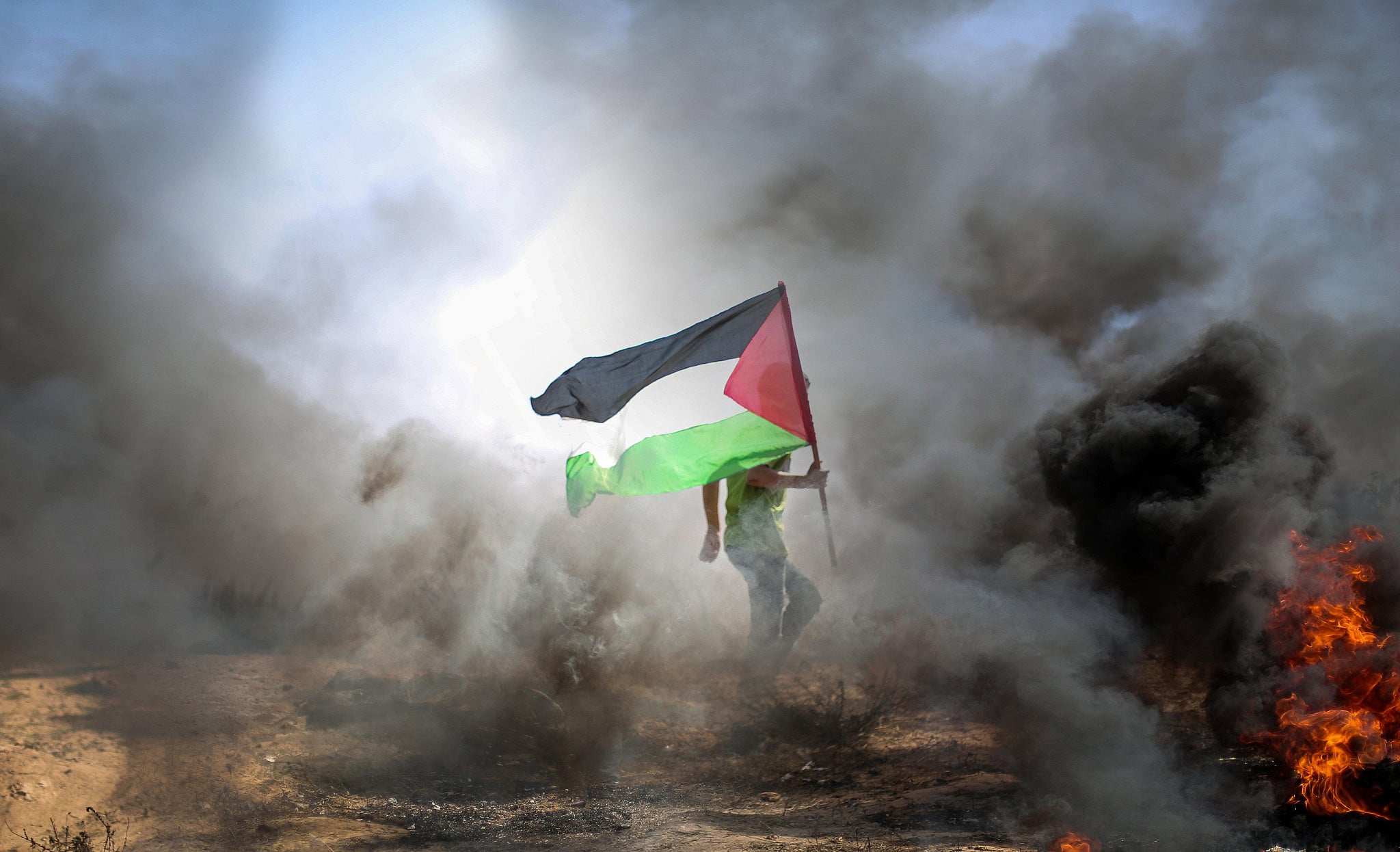
Why do endorsements of Israel from non-Jewish public figures often resonate more strongly than similar arguments made by Jewish voices?
Why do endorsements of Israel from non-Jewish public figures often resonate more strongly than similar arguments made by Jewish voices?
Celebrity opinions are rarely a sound basis for public policy. Actors, musicians, and athletes possess no special expertise on the Middle East simply because they command large audiences. In a more rational media environment, their political interventions would carry little more weight than those of any other citizen.
That, however, is not the world modern democracies inhabit.
Social media has transformed entertainers into influential political actors whose endorsements—and condemnations—can shape public opinion far beyond their areas of expertise. Since Hamas’s October 7 attack on Israel, much of that influence has flowed in one direction. Public figures have often found it fashionable to accuse Israel of genocide, equate Zionism with racism, or adopt increasingly absolutist narratives that leave little room for historical context or strategic complexity.
Against that backdrop, Boy George’s recent intervention stands out precisely because it runs against prevailing cultural currents.
Rather than echoing familiar slogans, the British musician argued that Israel’s military campaign should be understood as a response to an unprecedented terrorist assault, challenging claims that have become commonplace across parts of the entertainment industry and social media. He also criticized the tendency among some activists and political leaders to discuss the conflict while omitting the events of October 7 and the role played by Hamas.
One of the politicians implicitly challenged by Boy George’s remarks was New York City Mayor Zohran Mamdani, whose repeated denunciations of Israeli Prime Minister Benjamin Netanyahu have drawn attention for focusing almost exclusively on Israeli conduct while giving comparatively little attention to Hamas or the massacre that triggered the war. Whether one agrees with Boy George’s assessment or not, his intervention highlighted a broader debate over selective moral outrage and the standards by which conflicts are judged.
He was not alone. NBA player Kyle Kuzma similarly criticized Mamdani for venturing beyond the remit of municipal government into international affairs, suggesting that political theater increasingly substitutes for substantive leadership. The criticism attracted predictable backlash, but it also received considerable public support, illustrating that online discourse is often more divided than headline coverage suggests.
That matters because public opinion is frequently portrayed as more settled than it actually is.
The social-media ecosystem rewards outrage and amplifies organized campaigns, creating the impression that dissenting views scarcely exist. Yet the enthusiastic response to Boy George’s comments suggests there remains a sizeable audience willing to question prevailing orthodoxies about Israel and the war in Gaza.
His intervention also underscores an uncomfortable political reality.
Arguments in Israel’s defense are often judged differently depending on who makes them. When Jewish public figures defend Israel, critics can readily dismiss their views as expressions of communal loyalty or personal interest. Non-Jewish supporters are generally less vulnerable to that charge. Their arguments are more likely to be evaluated on their substance rather than presumed motivation.
Whether that distinction is fair is beside the point. In practice, it exists.
That helps explain why interventions from non-Jewish public figures can carry disproportionate influence. They complicate the increasingly common assumption that support for Israel is confined to Jews, conservatives, or ideological partisans. They demonstrate that sympathy for Israel’s security concerns—and skepticism toward accusations such as genocide—extends across wider constituencies than critics sometimes acknowledge.
Yet Boy George’s comments also invite another question: where have many of Israel’s most prominent Jewish supporters gone?
There remains a small group of entertainers who have consistently defended Israel in the aftermath of October 7, including Debra Messing, Jerry Seinfeld, Mayim Bialik and Michael Rapaport. But considering the size and influence of the Jewish presence within the entertainment industry, outspoken support has been comparatively limited.
Silence is understandable. The cultural incentives are unmistakable. Public figures who defend Israel today risk reputational damage, organized boycotts, online harassment and professional isolation. For many, discretion has become the safer commercial strategy.
Yet that calculation comes at a cost.
If one side of a contentious debate withdraws from public discussion, the resulting consensus may prove more apparent than real. Cultural narratives harden not necessarily because they are universally accepted, but because opposing voices become increasingly reluctant to speak.
Boy George’s intervention will not transform public opinion on the Middle East. Celebrity activism seldom changes history on its own. But it does demonstrate that independent judgment remains possible even in an era of intense ideological conformity.
That may ultimately be its greatest significance. In a political climate where many public figures appear reluctant to challenge fashionable assumptions, the willingness to dissent has become noteworthy in itself. Whatever one thinks of celebrity politics, voices that resist intellectual herd behavior can still broaden the public conversation—and, occasionally, remind audiences that difficult debates deserve more than slogans.
Related Topics