Why Did the Nazis Target Jewish Children?
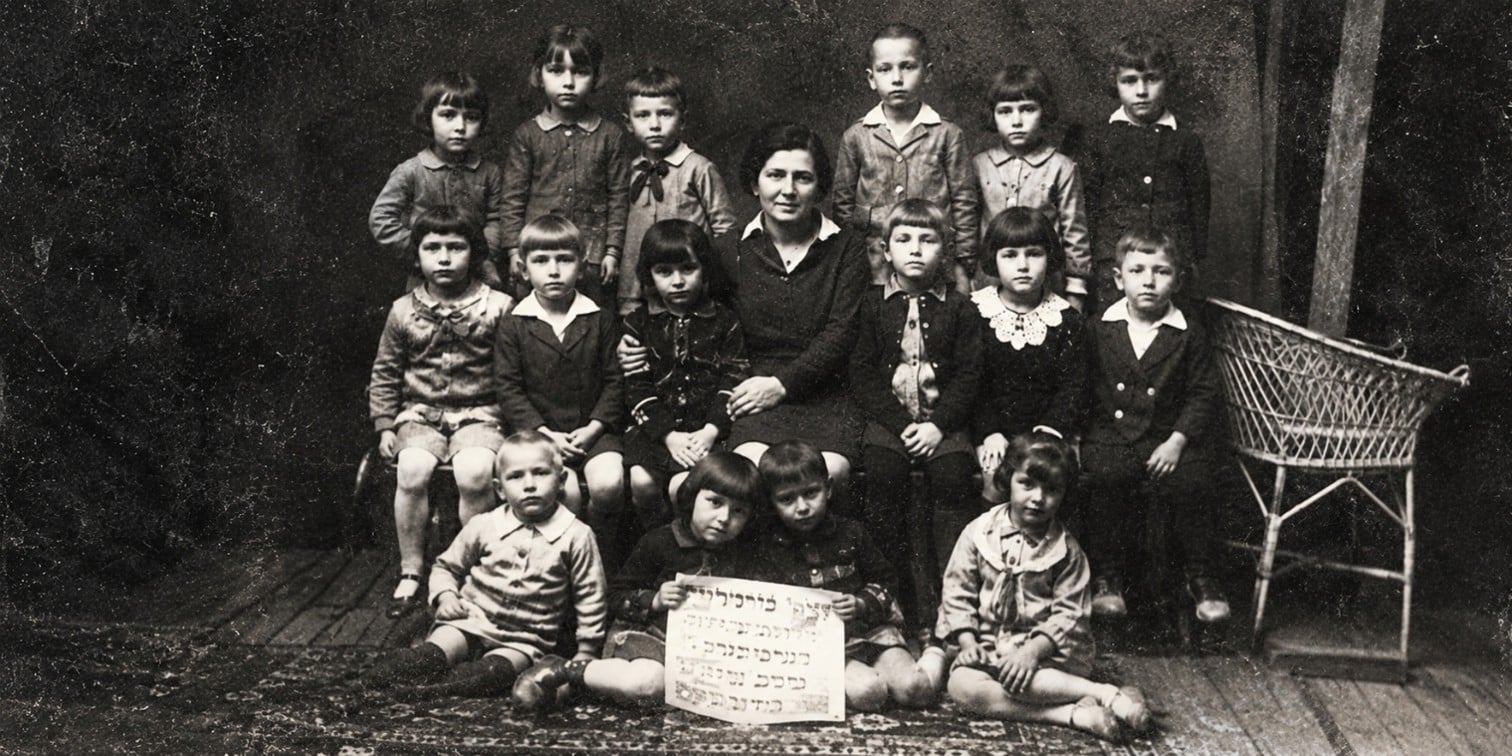
Across Europe, roughly one and a half million Jewish children were murdered in the Holocaust.
But I want to narrow the lens to Poland, because Poland was Edna’s world.
Before the war, nearly one million Jewish children lived there.
When it ended, only about 5,000 were still alive.
Half of one percent.
For every child who survived, approximately 199 did not.
The United States Holocaust Memorial Museum records that of almost one million Jewish children living in Poland in 1939, only about 5,000 survived. Most survived in hiding.
Sit with that number for a moment.
Half of one percent.
Why the children?
Children were among the most vulnerable from the beginning.
In ghettos, Jewish children died from starvation, disease and exposure. Nazi authorities regarded younger children as incapable of productive forced labor. As deportations intensified, children were frequently among the first selected for transport to killing centers or for execution.
But inability to work explains only part of it.
The deeper reason was ideological.
The Nazis were not simply attempting to kill individual Jews. The so-called Final Solution was a program intended to annihilate European Jewry.
That meant destroying its future.
A child represented another Jewish life. Another generation. The possibility that a people marked for destruction might nevertheless continue.
A 4-year-old could not threaten the German military.
A baby could not organize a resistance movement.
Yet under Nazi racial ideology, neither had to do anything to be condemned.
Their existence was enough.
At Auschwitz-Birkenau, Jewish children were overwhelmingly among those murdered upon arrival because they were generally considered incapable of forced labor. The USHMM notes that among approximately 216,000 Jewish children and young people deported to Auschwitz, only about 6,700 teenagers were selected for forced labor; nearly all the others were sent directly to the gas chambers.
The children were murdered because they represented tomorrow.
One of the 5,000
Half of one percent.
Edna was one of them.
But survival must be discussed carefully.
Surviving did not mean a child had been braver, cleverer or more deserving than the children who were murdered. Countless courageous children died.
Survival depended on an almost unimaginable convergence of circumstances: opportunity, instinct, assistance from others, false papers or identities, physical appearance, language, geography, luck and, sometimes, extraordinary courage.
Edna had some combination of all of them.
Hiding in plain sight
The USHMM notes that most of Poland’s surviving Jewish children lived through the war in hiding.
Edna hid too.
But she often hid in plain sight.
At 7, she slipped through openings in the Warsaw Ghetto wall to smuggle food to her starving family.
Before the great deportations of 1942, Edna and her older sister Miriam escaped to the Aryan side of Warsaw.
Edna Szurek became Stefcia.
She learned to live as a Catholic Polish girl, complete with a new identity and an invented past. Her survival depended upon making that identity believable.
At 9, she and Miriam were taken to Gestapo headquarters on Aleja Szucha. Somehow, the sisters got out.
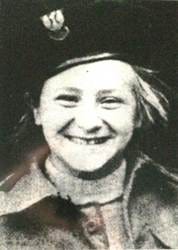
That same year, Edna served the Polish Home Army during the Warsaw Uprising under the nom de guerre Kajtek. She carried messages through a city at war. She was wounded. She was decorated for bravery on her 10th birthday. And she became a prisoner of war.
This was a Jewish child who had already survived the Warsaw Ghetto, escaped onto the Aryan side, lived under a false Catholic identity, encountered the Gestapo and entered the resistance.
She was not yet 10 years old.
Edna was not merely hiding from history. At 9 years old, she was participating in it.
The Jewish girl underneath
There is something about Edna’s story that has stayed with me throughout the years I spent researching her life.
The disguise had to become more than clothing.
It had to become instinct.
A wrong answer could expose her. A hesitation could expose her. A Jewish expression, custom, prayer or memory revealed at the wrong moment could expose her.
Edna could not simply say that she was Stefcia. She had to convince the people around her that Stefcia was real.
Years later, in 1946, she would stand before Pope Pius XII still living publicly under that Catholic identity.
To the authorities who encountered her, to many of the soldiers alongside whom she served, and even when she stood at the Vatican, she remained Stefcia, the identity that had helped keep a Jewish child alive.
Underneath was Edna Szurek.
A Jewish girl from Warsaw.
What we teach about children
When we teach the Holocaust, we understandably teach children about what was done to Jewish children.
We teach about ghettos. Deportations. Hiding. Separation from parents. Concentration camps. Killing centers.
And we must.
The murder of approximately one and a half million Jewish children remains one of the most difficult facts of the Holocaust to comprehend.
But there is another part of their history.
Jewish children also acted.
They smuggled food. They cared for younger siblings. They assumed false identities. They crossed forbidden boundaries. They served as couriers. They resisted. They made decisions that no child should ever have been required to make.
And a tiny number survived.
Their stories do not diminish the stories of the children who were murdered. They help us understand what survival itself demanded.
Survival does not make the Holocaust less horrific. It reveals how extraordinary survival had to be.
The difference one child makes
Numbers are indispensable to history.
Six million.
One and a half million children.
Nearly one million Jewish children in Poland.
Approximately 5,000 survivors.
But numbers can eventually become too large for the mind to absorb.
A child gives the number a face.
When I look at the photograph of 9-year-old Kajtek, I no longer see a statistic.
I see the little girl who crossed the ghetto wall looking for food.
The Jewish child who learned to answer to a Catholic name.
The resistance courier navigating a city in flames.
The wounded 10-year-old prisoner of war who somehow remained alive.
And behind her I see the children who did not.
The approximately 995,000 Jewish children of prewar Poland who were gone.
We cannot recover every name. We cannot reconstruct every childhood. But we can resist allowing them to disappear into arithmetic.
That is one reason individual Holocaust stories matter.
What Edna’s story adds
Anne Frank deserves to be remembered by every person who learns about the Holocaust.
But she should not be the only Jewish child they know by name.
The Holocaust contained many kinds of childhood: children in hiding, children in ghettos, children in forests, children in camps, children passing under assumed identities, children involved in resistance, children who were murdered, and the extraordinarily small number who survived.
Edna’s story represents one of those other childhoods.
Not a representative one. Her experience was exceptional.
That is precisely the point.
Her survival should astonish us because statistically it nearly did not happen.
Of almost one million Jewish children in prewar Poland, about 5,000 survived.
Edna was one.
One girl.
One face.
One life that Hitler’s Germany intended to erase and failed to erase.
She grew up. She had children. She had grandchildren. And her family continued.
That is what genocide seeks to prevent: the next generation.
And that is what survival made possible.
One life survived. And because it survived, other lives followed.
That is why I tell Edna’s story.
Not because what happened to her was typical.
Because it was almost impossible.
History records what was done to Jewish children.
Edna shows us what a Jewish child did.