


Why Do Leaders Divide Rather Than Unite?
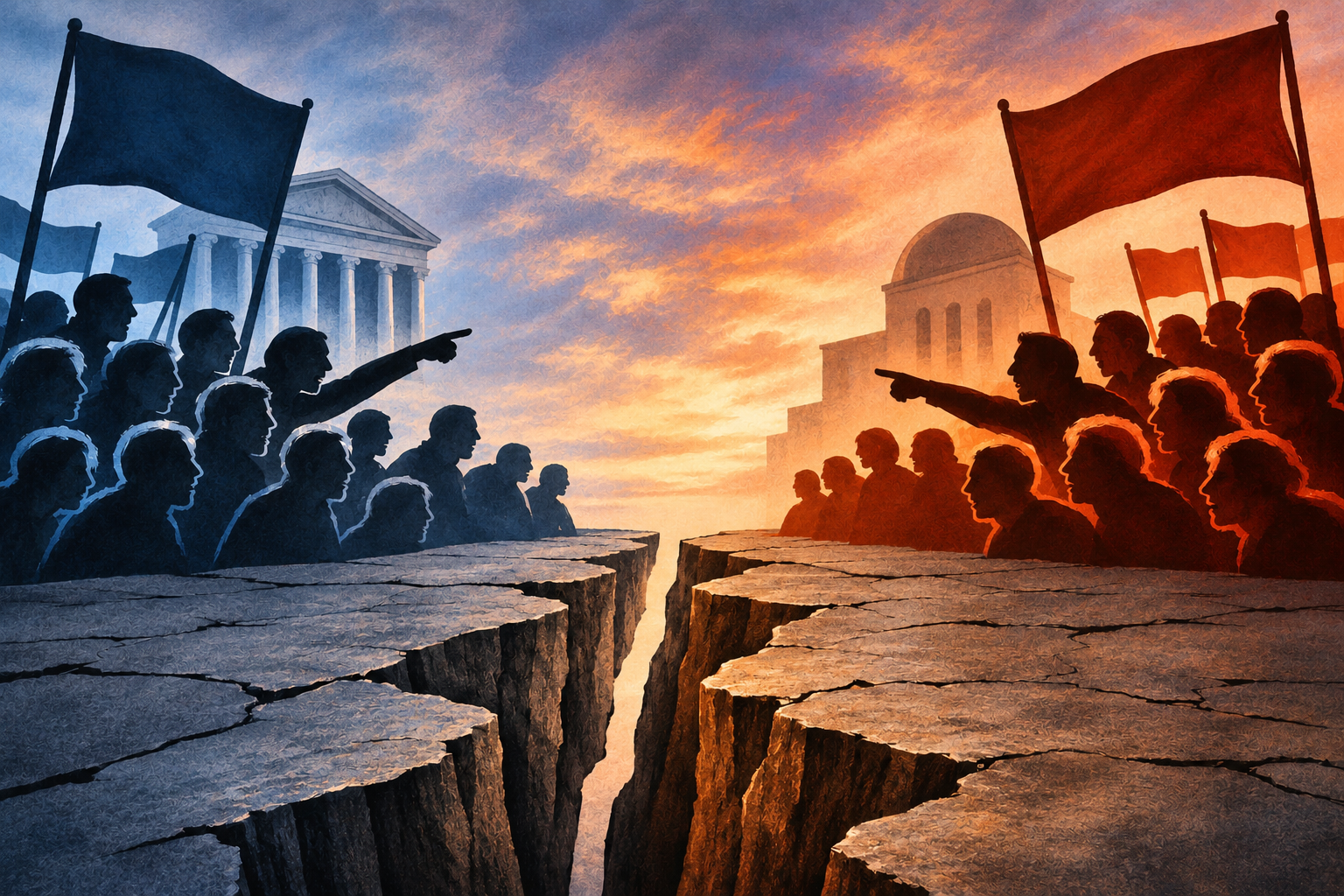
Politics and religion answer different human needs, but both create communities.
Politics organizes our collective life. Religion gives that life meaning and moral direction. Each could unite people across their differences. Yet leaders in both have turned those differences into instruments of division
Why?
Because division is faster than unity. Unity asks people to believe they can live and work together without surrendering who they are. That takes patience, trust, negotiation, and mutual recognition.
Division asks for nothing so slow. Fear, resentment, humiliation, and collective pride can produce loyalty overnight.
Division also offers what people crave. They seek certainty in an uncertain world. They want belonging, recognition, security, and moral clarity. The divisive leader offers all four. He names the community, explains its suffering, points to the culprit, and promises restoration. A complex problem becomes a simple story, and the story spares followers the harder questions about institutions, history, economics, and their own share of responsibility. Ambiguity is heavy. The leader offers to carry it.
Identity is not the problem. Every community has one: beliefs and practices, histories, languages, symbols, rival visions of society. Diversity enriches civilization. The trouble begins when leaders turn identity into opposition.
“This is who we are” is one sentence. “We can remain who we are only by opposing who they are” is another. The first establishes identity. The second manufactures an enemy, and leaders discover that an enemy binds tighter. The group is united within by its hostility toward those outside. The leader unites a people by dividing the human family.
Authority is a responsibility or an instrument of self-preservation, and leaders choose which. Political leaders hold institutions, laws, and resources. Religious leaders claim authority over moral interpretation, communal legitimacy, and sometimes the believer’s very access to God. A leader whose authority depends on conflict finds its resolution more threatening than its continuation. If the enemy disappears, he may need to invent another. So political movements keep discovering new enemies, and religious movements keep hunting heretics and the insufficiently faithful. When keeping leadership matters more than what leadership is for, division stops being a problem and becomes a resource. Power held as a possession must be defended. Power held as a responsibility must be answered for.
Religion speaks of ultimate truth, revelation, and obligation. Such convictions can breed humility, compassion, and justice. But when a leader identifies his interpretation with the will of God, disagreement stops being disagreement. It becomes disobedience. Secular politics does the same when ideology turns sacred. The leader no longer offers one view of the common good. He claims the only legitimate one. Compromise becomes betrayal, moderation weakness, pluralism moral confusion. Leadership turns dangerous when emotional allegiance replaces critical judgment.
The costliest mistake is to think unity requires agreement.
Uniformity eliminates difference. Unity builds a relationship in which differences can live.
A healthy political community does not need identical opinions. It needs citizens who recognize one another as legitimate participants in a common society. Religious coexistence does not need religions to drop their convictions. It needs the recognition that a person’s dignity does not depend on accepting our beliefs.
Still, not every conflict is manufactured, and not every call to unity is honest. People rightly unite against oppression. A society can also run smoothly for a privileged minority, an ethnic group, a faith, or a faction, and call that peace. So the test is not whether a leader divides, but for what. The ethical leader seeks justice, even when it means confronting enemies, and aims at a society where enmity no longer governs human relationships.
Leaders divide because division consolidates identity, mobilizes followers, simplifies reality, and preserves authority. When those gains replace the purpose of leadership, leadership has failed.
The ultimate measure of leadership is not how successfully it mobilizes followers, but what kind of human society it leaves behind.
Ask of any leader: is power a possession or a responsibility?