

Why firsthand testimony still matters 81 years after Auschwitz’s liberation
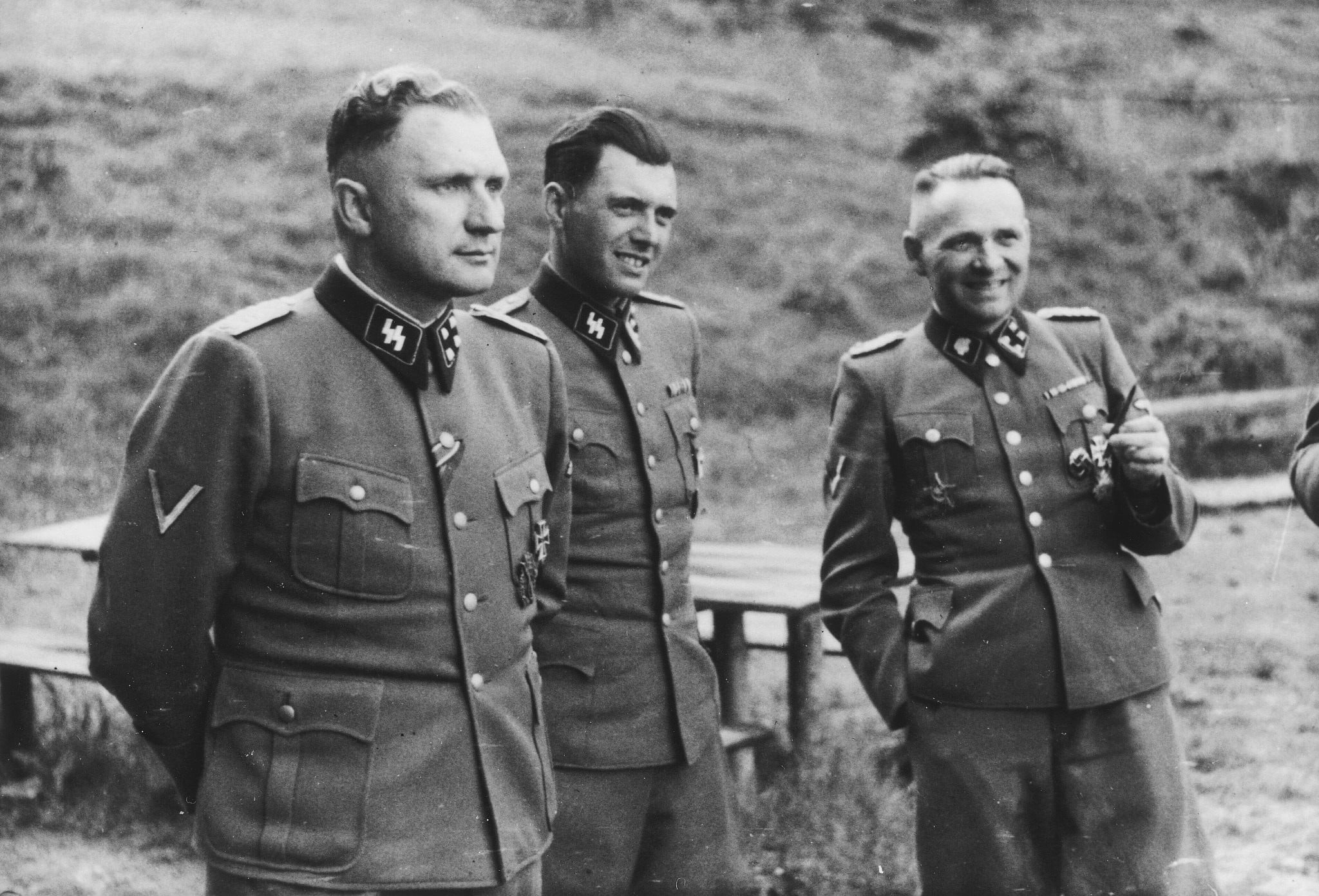
Eighty-one years after the liberation of Auschwitz, it is tempting to believe that we understand what happened there – that the facts are settled, the lessons learned, the warnings absorbed. But Auschwitz was not only a site of murder. It was a system, carefully constructed and socially enabled, that shows us what happens when civil society slowly abandons its moral guardrails.
I know this not as an abstraction, but as an inheritance.
My father was 16 when he and his twin sister Miriam arrived at Auschwitz. There he met a boy named Kalman, fourteen, also a twin. They were selected for Josef Mengele’s experiments and placed in what was known as the hospital camp. For six and a half months during the height of the Hungarian deportations in the summer of 1944, Kalman and Leopold were forced to work inside Mengele’s hospital camp guard shack, less than one hundred meters from Crematorium IV and the open burning pit.
From that position, they witnessed Auschwitz as a functioning world – not only its violence, but its routines. They saw how mass murder was normalized through schedules, euphemisms, paperwork and obedience. They learned that survival depended less on strength than on awareness: knowing when to be invisible, when to comply, when to say nothing at all.
This is what is often missing from how Auschwitz is remembered.
We speak, rightly, of numbers – six million murdered, over one million at Auschwitz alone. We speak of gas chambers and rail ramps and liberation. What we speak of less is how ordinary the system became to those who ran it, and how incremental its construction was. Auschwitz did not appear fully formed. It evolved – step by step – through propaganda, legal exclusion, professional compliance and the quiet acceptance of cruelty as normal.
Firsthand testimony matters because it restores that lost dimension. It allows us to understand Auschwitz not as a historical rupture, but as a human environment – one built and sustained by choices. Not only by fanatics, but by clerks, doctors, engineers, guards and neighbours who adapted themselves to an ever-narrowing definition of who deserved protection.
This is why Auschwitz remains a warning to civil societies today.
Hatred does not usually announce itself as hatred. It arrives disguised as grievance, as security, as moral certainty. It is laundered through language that dehumanizes while sounding administrative or ideological. Long before people are removed from society, they are removed from empathy.
We are not living in 1939. But we are living in a time when antisemitism is again treated as negotiable – sometimes dismissed, sometimes reframed, sometimes excused depending on the speaker or the slogan. We see the word “Nazi” turned against Jews. We see conspiracy theories recycled with modern accents. We see history flattened, distorted, or weaponized to serve present-day opinion or outrage.
The value of testimony is not that it tells us what happened then, but that it sharpens our vision and understanding now.
When Kalman and my father spoke about Auschwitz, it was not to demand sympathy. It was to explain how quickly the unthinkable became routine – and how easily ordinary people adjusted to it. They understood that the most dangerous moment for any society is not when cruelty erupts, but when it becomes acceptable, explainable, or ignorable.
As we mark the 81st anniversary of Auschwitz’s liberation, remembrance must be more than ritual. It must be a form of civic vigilance. To truly understand Auschwitz is to recognize the warning it still issues – not about the past alone, but about the fragility of the moral frameworks we rely on today.
The gates of Auschwitz were opened in January 1945. What we do with the knowledge of how they came to be built remains an open question.