Why I Will March With Israel as a Muslim
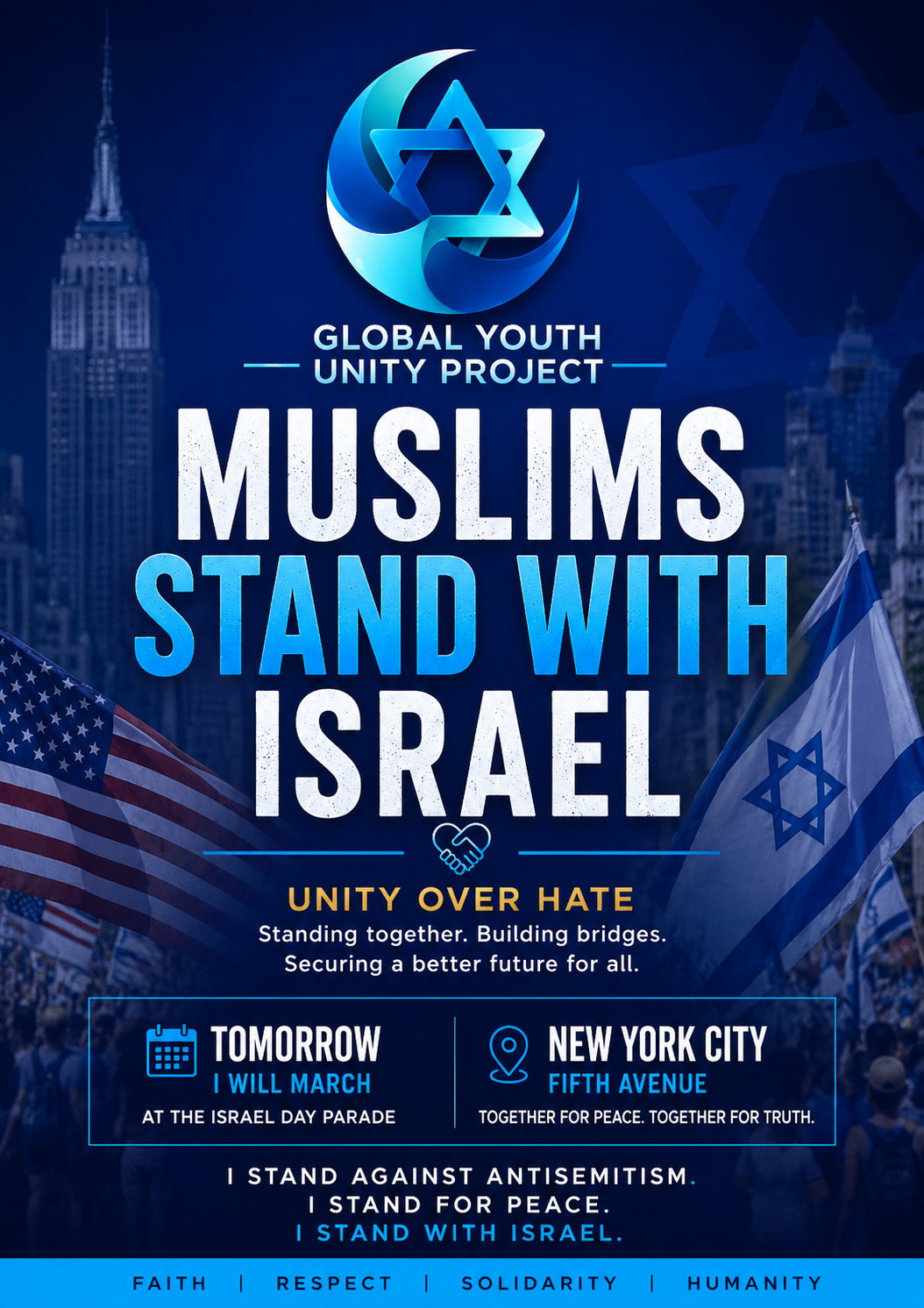
Tomorrow, I will walk down Fifth Avenue in New York City alongside thousands of people celebrating Israel.
I will do so as a Muslim.
For some, that statement alone will seem controversial. For others, it may appear confusing. In a world increasingly defined by tribalism, outrage, and ideological conformity, many people have been taught that Muslims and Jews are destined to stand on opposite sides of history.
I reject that idea completely.
My decision to join the Israel Day Parade is not despite being Muslim.
It is because I am Muslim.
My faith teaches me that justice matters. Truth matters. Human dignity matters. Standing against hatred matters.
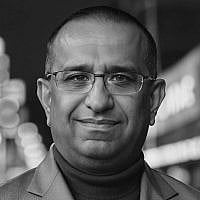
Those principles have guided me throughout my life as a human rights activist, a veteran, and now as the founder of the Global Youth Unity Project.
Over the past few years, I have watched with growing concern as antisemitism has exploded across the Western world. Jewish students have been intimidated on university campuses. Jewish businesses have been vandalized. Jewish families have been harassed in public spaces. Synagogues have required unprecedented security. In many places, Jews have been forced to wonder whether they still belong in societies they helped build.
As someone who comes from a minority background and whose own family suffered political persecution, I cannot remain silent when another community is targeted.
History teaches us a dangerous lesson: hatred rarely stops with one group.
When society normalizes hatred against Jews, it creates a culture where hatred against everyone eventually flourishes.
That is why this march matters.
It is not merely a celebration of Israel’s independence.
It is a public declaration that Jewish people have the same right to safety, self-determination, and national identity as every other people on Earth.
For me, supporting Israel does not require abandoning my Muslim identity. Quite the opposite.
I have visited Israel. I have walked the streets of Jerusalem, Tel Aviv, Haifa, and communities near the Gaza border. I have met Jews, Muslims, Christians, Druze, and Baháʼís. I have seen coexistence that many people outside the region refuse to acknowledge.
I have also visited places forever scarred by October 7.
I stood where innocent civilians were murdered.
I listened to survivors.
I witnessed the pain left behind by terrorism.
Those experiences changed me.
They reinforced my belief that there can never be moral ambiguity about terrorism.
No political cause justifies the slaughter of civilians.
No grievance justifies rape.
No ideology justifies kidnapping children.
As Muslims, we have a responsibility to say this clearly and without hesitation.
Silence creates space for extremists to claim they speak for us.
They do not.
The overwhelming majority of Muslims around the world want peace, opportunity, dignity, and a future free from violence. Yet too often, moderate voices remain silent while radicals dominate headlines.
Tomorrow’s march is my way of refusing that silence.
It is also a message to my Jewish brothers and sisters.
You are not alone.
Many Muslims stand with you.
Many Muslims reject antisemitism.
Many Muslims believe that our futures are linked, not divided.
The relationship between Muslims and Jews should not be defined by extremists. It should not be defined by social media activists who profit from outrage. And it should not be defined by those who seek power by keeping our communities apart.
It should be defined by the countless centuries in which Muslims and Jews lived, traded, learned, and prospered together.
The future will belong to those who build bridges, not those who burn them.
That is why I will march.
Not because it is politically convenient.
Not because everyone will agree.
But because some principles are worth standing for.
As a Muslim, I believe that standing against antisemitism is one of them.
And tomorrow, I will proudly take that stand.