
Why Israel and India Should Look Closely at the Chittagong Hill Tracts
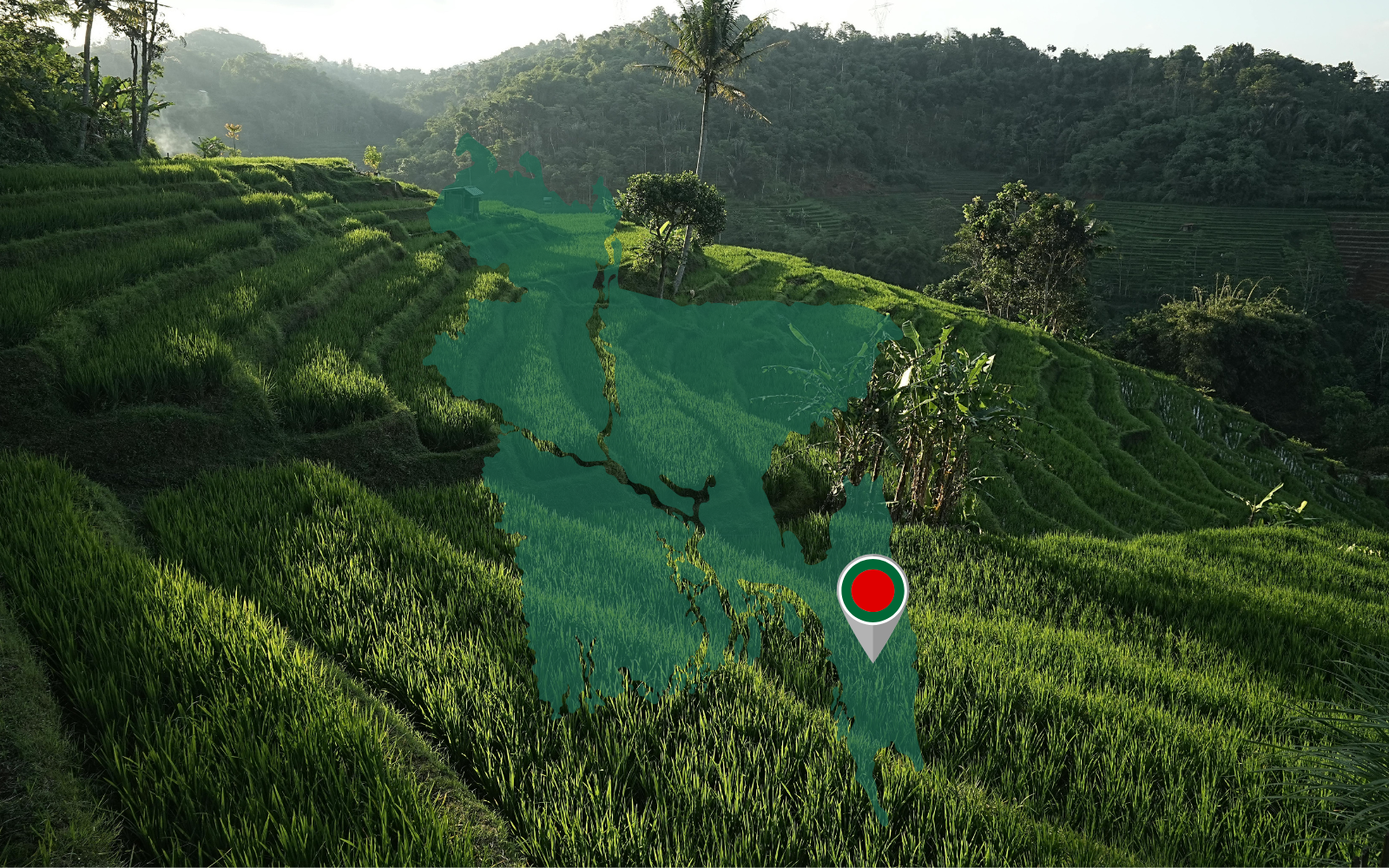
The Chittagong Hill Tracts, a strategically sensitive region bordering India’s northeast, where geography, armed activity, and regional security concerns intersect. Illustration created by the author using Canva-licensed design elements and permitted for free commercial use.
In South Asia, political alignment is not a secret. One side is clearly closer to India’s strategic interests. Another side traditionally aligns with Pakistan. This reality has existed for decades. Both sides have supporters, and this is widely understood.
The real problem is that for ordinary people, it is often very hard to know who is working for which interest. Groups rarely introduce themselves honestly. They speak the language of peace, justice, or resistance. But their real loyalties, funding sources, and long-term goals remain hidden.
This confusion becomes especially dangerous in fragile regions like the Chittagong Hill Tracts. The people there live with fear, uncertainty, and constant pressure from armed actors. They hear slogans about peace, but their daily reality does not improve. Instead, instability continues, and local voices are often silenced.
This is why the recent warning by Reuven Azar should be taken seriously. When Israel’s ambassador to India expressed concern about Hamas leaders engaging in Pakistan and Bangladesh, he was not threatening war. He was pointing to a familiar danger: extremist ideology spreading quietly into vulnerable regions before anyone reacts.
If Ambassador Azar is correct and Israel has long experience in identifying early warning signs, then the concerns raised by people in the Chittagong Hill Tracts also deserve attention. For years, local communities have said that some armed groups claiming to work for peace do not actually serve the people. Instead, these groups appear more interested in protecting their own power and controlling the narrative.
For ordinary villagers, it is extremely difficult to understand who is genuinely working for peace and who is working for something else. Armed groups often use Indigenous identity or political language as a cover. They present themselves as guardians of rights, but on the ground, they intimidate critics, block transparency, and benefit from prolonged instability. This gap between words and actions is where dangerous ideology finds space.
What makes the situation worse is the role of the Bangladesh state. Instead of addressing these contradictions, the government often appears indifferent. In some cases, it seems to tolerate or even indirectly enable such groups. When civilian oversight is weak and accountability is absent, armed propaganda spreads more easily, not because people believe it, but because no one challenges it.
This is where Israel and India should pay close attention. Extremist movements do not spread only through weapons. They spread through ideas, false peace narratives, and the capture of local causes. If groups in the Hill Tracts are quietly promoting radical or proxy-linked agendas while claiming to represent peace, exposing this early becomes a matter of regional security.
This issue also matters deeply for India because of its geography. The Chittagong Hill Tracts sit next to India’s northeast, often called the Seven Sisters. The terrain is difficult, borders are porous, and old insurgent routes still exist. Any extremist influence here does not remain local. It directly affects India’s internal stability.
Some local residents have also alleged that certain armed groups in the Hill Tracts have historical or indirect links to Pakistan-based networks. These claims are hard to verify independently. But intelligence systems do not ignore repeated local accusations, especially when they align with geographic risk and past patterns. Uncertainty does not mean safety. It means caution is necessary.
It is important to be very clear here. This concern is not about ordinary Muslims, Indigenous communities, or political dissent. It is about organized extremist ideology that uses local suffering for external agendas. Confusing people with ideology only protects those who benefit from chaos.
The ideology of Hamas offers nothing good for the Chittagong Hill Tracts. It does not bring dignity, autonomy, or development. It brings isolation, militarization, and endless conflict. It harms India’s northeast. It threatens Israel’s security. And most of all, it harms local Indigenous people by turning their land into a playground for proxy politics.
Exposure does not mean violence or repression. It means transparency, lawful investigation, financial scrutiny, and public honesty. Once extremist ideology becomes socially and financially rooted, removing it becomes far more costly. Israel has learned this lesson through painful experience. India faces a similar risk if warning signs are ignored.
This is not a call for war. It is a call for clarity. If armed groups claim to work for peace but actively silence local voices, block transparency, and benefit from fear, then the question is no longer political; it is ethical.
The people of the Chittagong Hill Tracts deserve to know who truly stands with them and who uses them. If early warnings are already visible from diplomats, intelligence assessments, and local communities, then silence is not neutrality. In fragile regions, it is often the most dangerous choice.
January 30, 2026
Tokyo, Japan
Tokyo, Japan
Related Topics
Related Posts