The views expressed herein are solely mine.
Why Patrick Bet-David Is The Leader Iran Needs
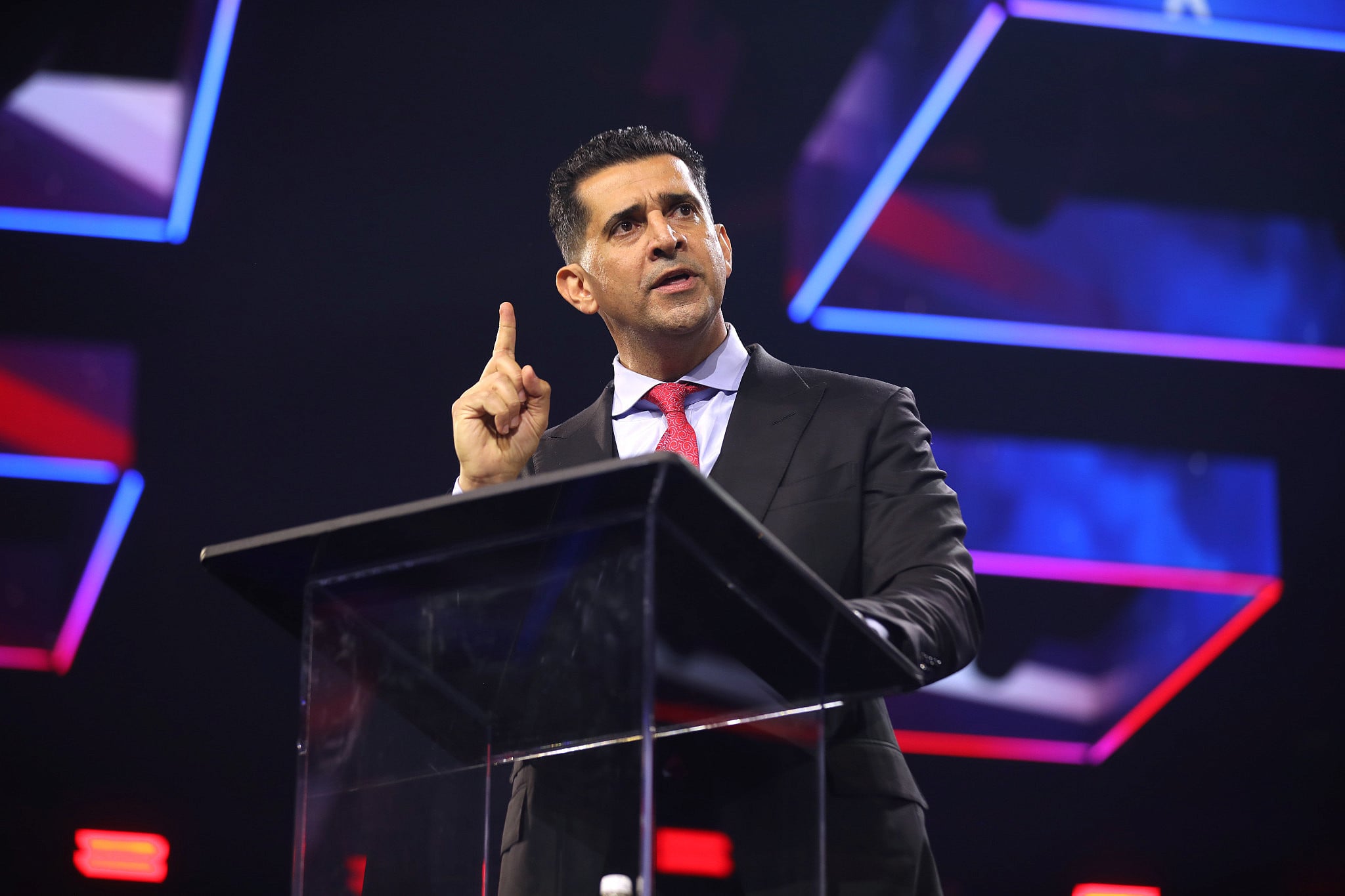
Patrick Bet-David speaks at AmericaFest 2023 at the Phoenix Convention Center in Phoenix, Arizona. Photo: Gage Skidmore / Flickr (2023).
The Iranian opposition does not suffer from a lack of hashtags or exiles with microphones. It suffers from a shortage of nerve. Leadership against a regime built on terror, prisons, and execution squads does not come from think tanks in Beverly Hills or panels in Davos. It comes from people who understand pressure, discipline, risk, and consequence. That is why Patrick Bet-David—not Reza Pahlavi—is the figure who actually fits the moment Iran is entering.
Bet-David is an Iranian-born, shaped by revolution and exile, and hardened in systems where failure carries cost. His background is not ornamental. He served in the U.S. military, where hierarchy, accountability, and decision-making under stress are not metaphors but daily realities. He built companies from scratch, led large teams, negotiated power, and understands how systems collapse and how they are rebuilt. But most importantly, he understands messaging as a weapon.
As we all know, revolutions are not only fought in the streets; they are won in narrative dominance, elite fracture, and psychological pressure. Bet-David operates fluently in all three arenas.
Contrast that with Reza Pahlavi, a man frozen in amber. Pahlavi has had multiple historic windows to return home (with the Mossad and CIA protection), to place his body where his words are, and to test whether his name still carries gravity inside Iran.
Each time, he hesitated—and each time, the moment slipped away.
As history shows, leadership under tyranny is never safe, never clean, and never lucrative. Hence, anyone waiting for guarantees before confronting the Islamic Republic is not leading; he is merely watching history from the sidelines, armed with nothing but a famous last name.
Unfortunately, Reza Pahlavi has become more comfortable courting donors, conferences, and Western validation than confronting the ground reality of a revolutionary struggle. Fear of getting hurt—physically or politically—has shaped his choices.
And that may be human, but it is disqualifying because Iran does not need symbolic royalty abroad. It needs operational leadership willing to absorb risk and project resolve.
Bet-David, by contrast, speaks the language of power without apology. He understands the Iranian psyche, the American system, and the global battlefield where Tehran actually fights—finance, influence, media, and intimidation. He does not romanticize the regime, and he does not beg Western elites for permission to speak plainly. That clarity matters.
Regime changes fail when leaders sanitize evil to remain “acceptable.” Iran’s next chapter will not be written by caution.
Today, the Islamic Republic survives because it believes its opponents are fragmented, soft, and addicted to comfort.
Thus, a leader who has lived discipline, built under pressure, and refuses to play exile politics terrifies such a regime far more than a nostalgic heir waiting for history to rescue him. Iran’s future will belong to those willing to confront tyranny head-on—not those still calculating the safest place to stand.
Related Topics
Related Posts