NYC Attorney, Activist, and Graphic Designer
Why people can’t see antizionism for what it is
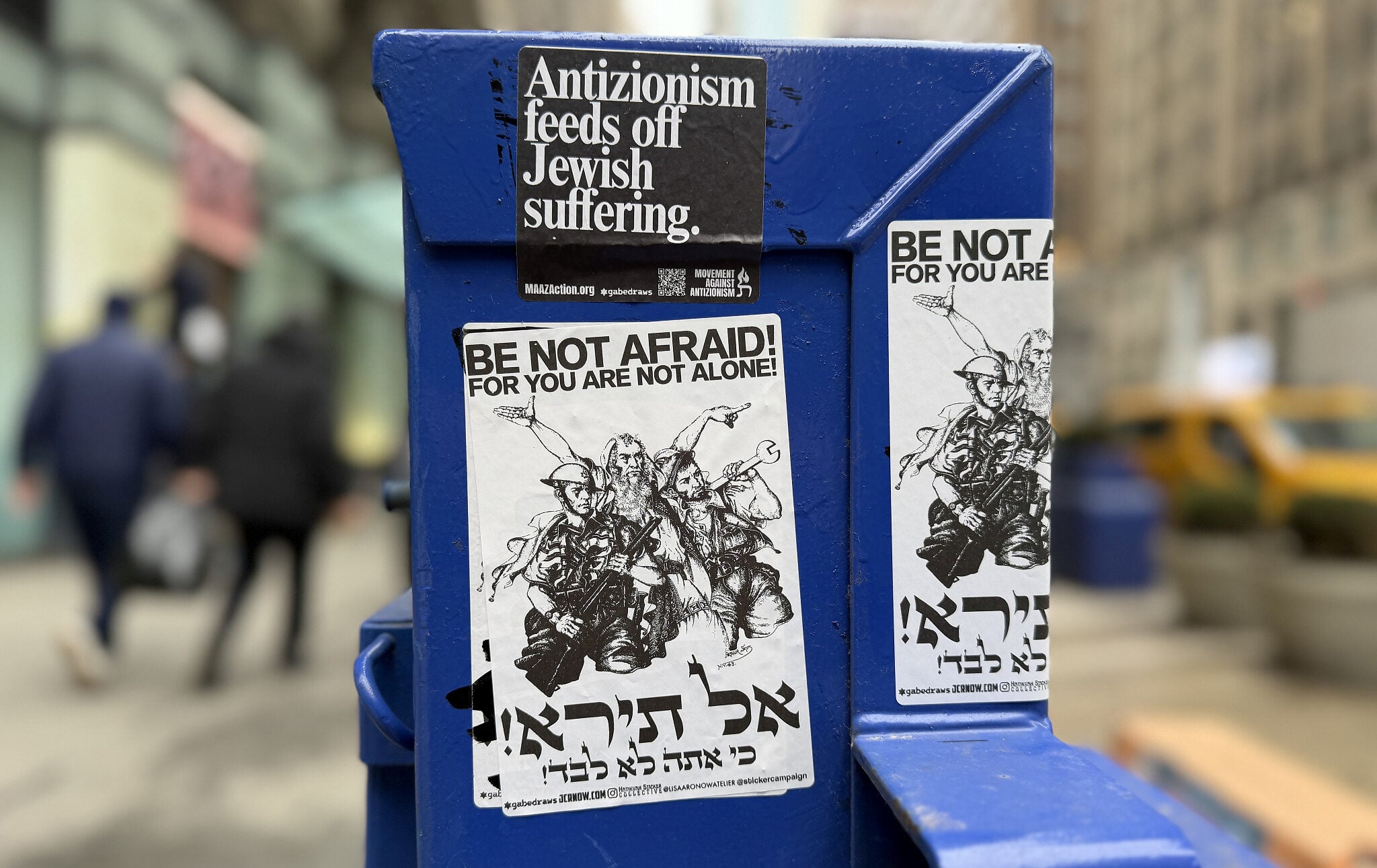
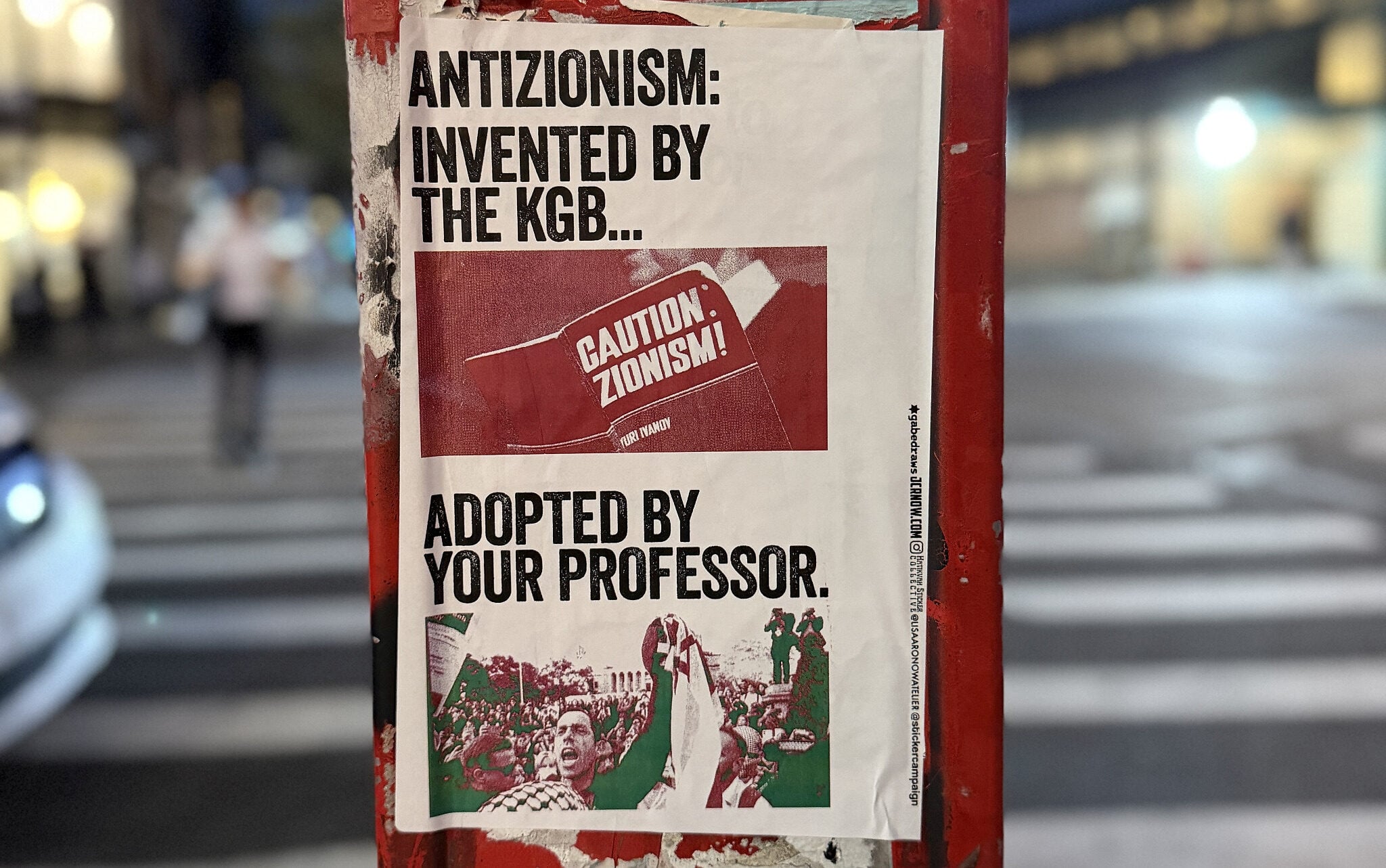
Stickers by @gabedraws and the Hatikvah Collective (HatikvahCollective.net).
Last night’s US elections, and Michigan’s Senate race above all, have forced me to try to figure out why people can’t see antizionism for what it is: an eliminationist hate movement that targets Israelis, Jews, and their allies for exclusion, intimidation, and violence.
I find myself saying two things a lot these days. The first is, “Once you see it, you can’t unsee it.” The second is, “If you can’t see it, you don’t WANT to see it.” The first is a promise, and the second is an accusation that’s only half fair: plenty of people genuinely miss what seems so obvious to many of us. Some of the reasons are psychological, while others were engineered.
So why can’t people see it? There are so many overlapping mechanisms at work, that I had to narrow them down to ten:
1. Most people only recognize one template for Jew-hatred. Most people’s mental model of antisemitism is understandably stark: Nazis, brownshirts, swastikas, racial pseudoscience, concentration camps. Antizionism looks little like that. It’s progressive; it’s academic; it purports to be about human rights, justice, decolonization. So when people ping their heuristics for “Jew-hatred,” they don’t find a match. The category doesn’t even register.
2. We’ve given antizionism permission. For me, this is the core problem. After the Holocaust, antisemitism was discredited for decades. Antizionism rapidly filled the Jew-hate vacuum. It now holds the moral standing antisemitism once had. It doesn’t just evade stigma; it claims the moral high ground. Adherents experience it as a kind of ecstatic righteousness, not hate. And that’s no accident—every form of Jew-hate presents itself as the correction and repudiation of the previous, now-embarrassing form.
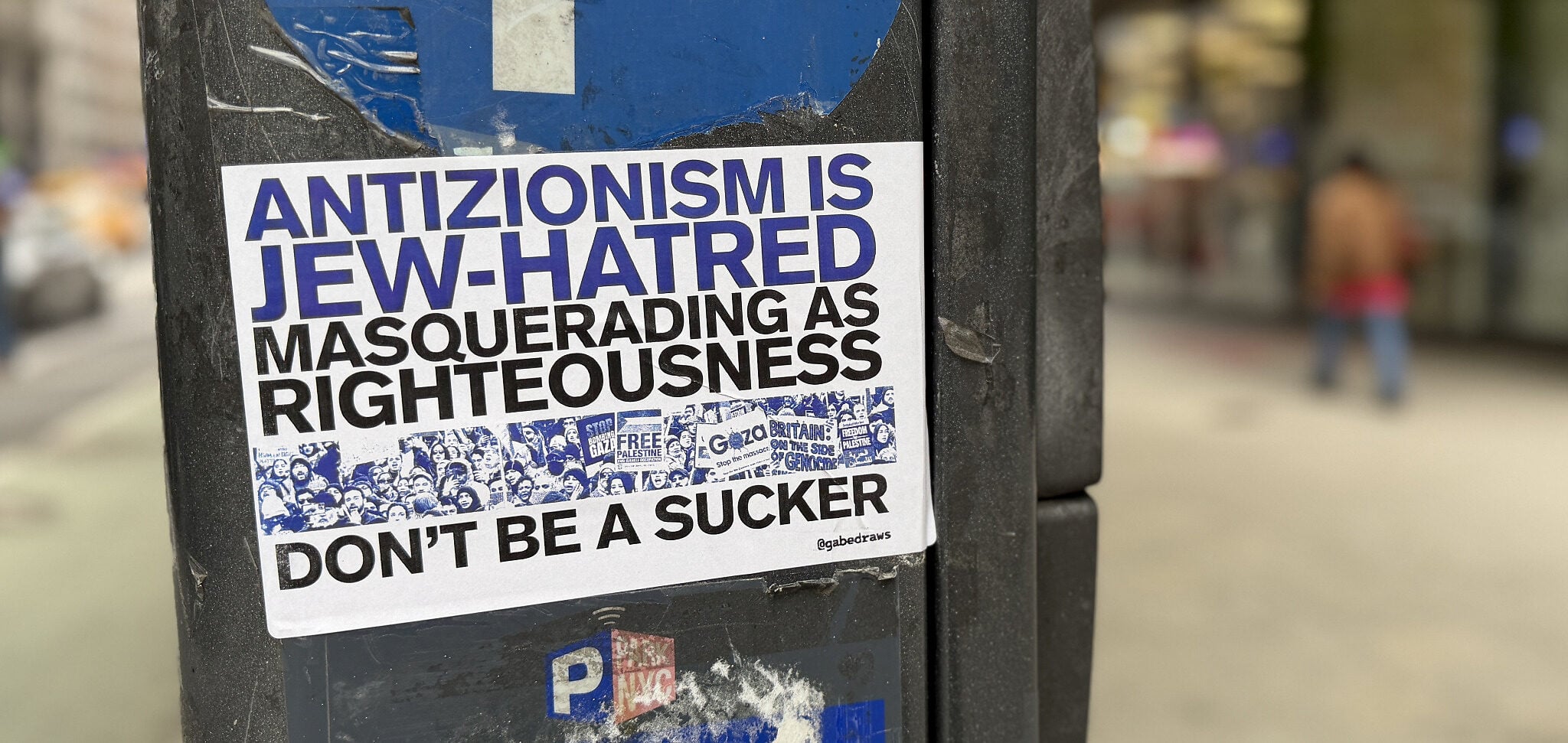 3. It’s dressed in the language of justice. Settler colonialism, apartheid, genocide, decolonization. These are concepts with legitimate uses elsewhere. Antizionism intentionally borrowed these words and wields them as libels, while benefiting from the moral authority attached to them. Antizionism masquerades as social justice, so criticizing it feels, to many people, like opposing civil rights or defending apartheid South Africa. That masquerade is antizionism’s own defense system, if you will: it shoots down criticism before it can ever land.
4. “I don’t hate Jews...” Many antizionists genuinely believe this—and it’s not entirely wrong. Classical antisemitism, which targets Jews as Jews, differs in form from antizionism, which targets Jews as Zionists or as proxies for Israel. The distinction is sufficiently real for antizionists to say it with a straight face, and for the people around them to sincerely believe it. What gets missed is that a structure of Jew-hate doesn’t require personal animus to function. All it requires is participation.
5. Token Jewish cover. When antizionists can point to Jewish participants—a Jewish Voice for Peace chapter, a progressive rabbi who signed a letter, a Jewish actor wearing the loathsome red hand pin—it creates the impression that antizionism simply can’t be anti-Jewish. But most people don’t know the Yevsektsiya (the Soviet Communist Party’s “Jewish Sections,” Jews deputized to stamp out Judaism, Hebrew, and Zionism). They don’t know that every era of Jew-hate has had Jewish collaborators, or that being Jewish confers zero immunity from participating in a bigoted structure, or from being tossed from that structure once your usefulness has been spent.
6. The inversion is cognitively disorienting. Classical antisemitism cast Jews as non-white, inferior, dangerous infiltrators. Antizionism casts them as hyper-white, hyper-powerful colonial oppressors. These images contradict each other so sharply that many folks simply can’t hold both as manifestations of the same phenomenon. The inversion is partly what makes antizionism so tough to identify. And the inversion is deliberate. It works like what actual genocide scholars call “accusation in a mirror” (accusing your target of exactly what you plan to do to them), and the Soviet architects of modern antizionism designed it to be unrecognizable as Jew-hatred.
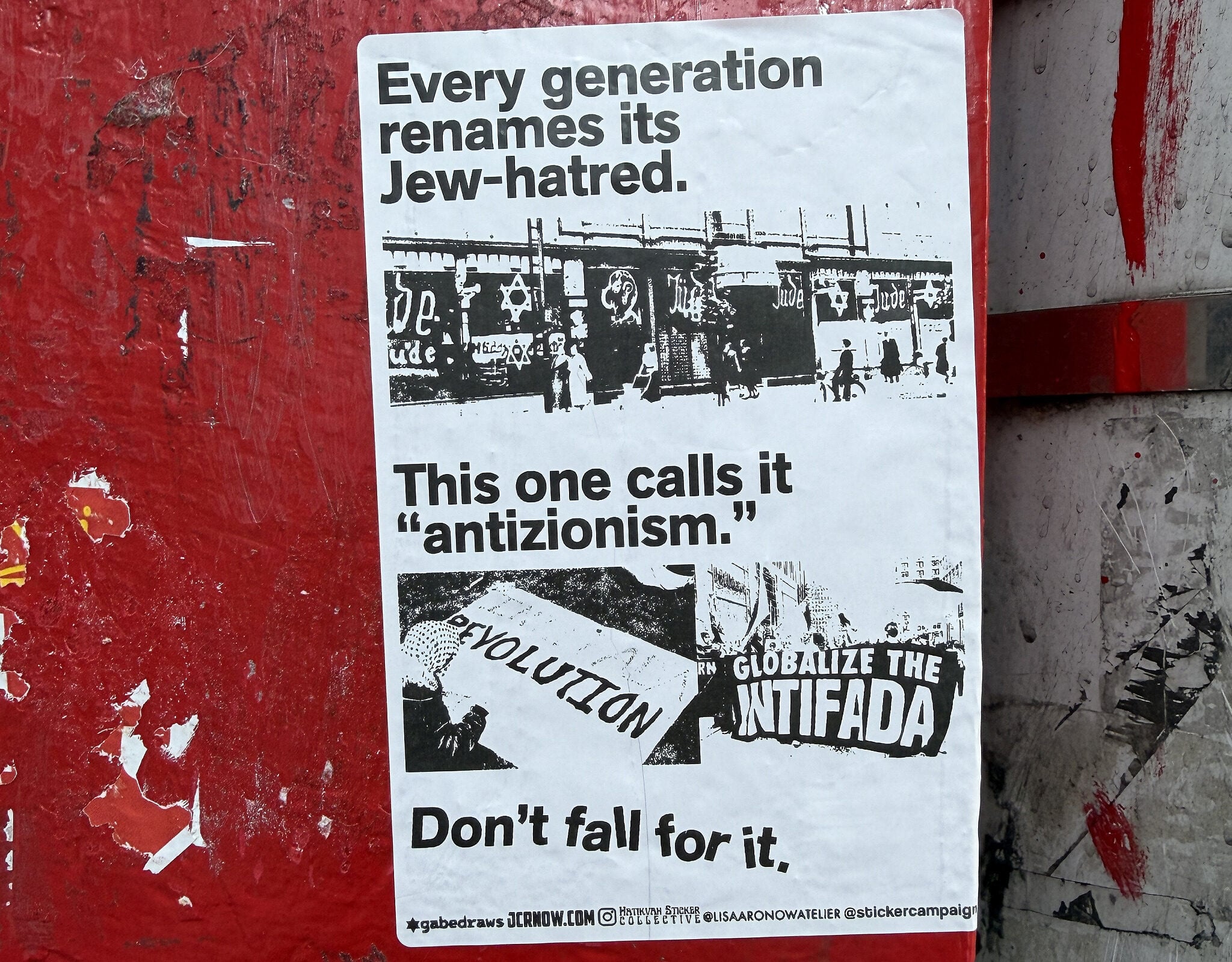 7. The word “antizionism” itself is weaponized. When it came to naming their movement, antizionists simply got there first. They successfully defined it as “criticism of Israel” or “opposing a political ideology.” That framing is now so embedded that even saying “antizionism is a form of Jew-hate” sounds paradoxical to many ears. The linguistic ground was ceded before most people even knew there was a fight over it. (Many of us are working to fix that, but it’s going to take a long time; language and culture are a self-reinforcing loop that’s exceedingly hard to break.)
8. Jews are perceived as unreasonably powerful. There was a time when the dominant cultural narrative treated Jew-hate as “punching down” at a vulnerable minority. But Jews are now simultaneously coded as “white,” “wealthy,” “elite,” and “powerful.” Antizionism exploits this: it presents itself as anti-colonial resistance against a powerful oppressor, not hatred of a persecuted people. The zero-sum thinking that says you can’t be oppressed if you have any power makes antizionist hatred invisible to people who’ve internalized that framework.
9. The antizionist hate movement has institutional capture. Universities, NGOs, UN agencies, media organizations: antizionism is embedded in the institutions that define what counts as bigotry and what counts as legitimate critique. Not just the structure, but the referees have been captured. There is no external authority most people trust that will simply say, “Antizionism is a hate movement.” And in my view unforgivably, the legacy Jewish orgs refuse to step up to the plate and SAY THE WORD.
 10. Many Jews themselves can’t or won’t name antizionism. This matters enormously. When the targeted group is divided, confused, or silent, bystanders take their cues from that. Jews who internalize the antizionist gaze and refuse to flip it, who perform ritualized self-criticism, or who use euphemisms (“inflammatory rhetoric,” “tensions,” “problematic”) signal to everyone watching that this isn’t serious. Jewish leadership has largely avoided the word “antizionism” for decades, for a mixture of reasons—fear of seeming politically partisan, deference to progressive spaces, conflict-avoidance, donor service, genuine confusion. That silence has a cost, a cost the Jewish People is paying in time, money, and lives.
These and other overlapping mechanisms are part of our culture now, having been cultivated by the antizionist hate movement for decades. And right now, antizionism has outsized permission, partly because society hasn’t yet built the conceptual vocabulary to recognize it. That vocabulary is the word “antizionism” itself—used confidently and often, paired with its history, its libels, and its outcomes. Every conversation where we use that word and explain what it means is one more stone in the foundation of the fight to come. It will take time, but we will build it stone by stone.
Related Topics
Related Posts