
Bridging faith. Defending truth. Confronting hate
Why So Many People Had Their Answer Before the Mourning Began
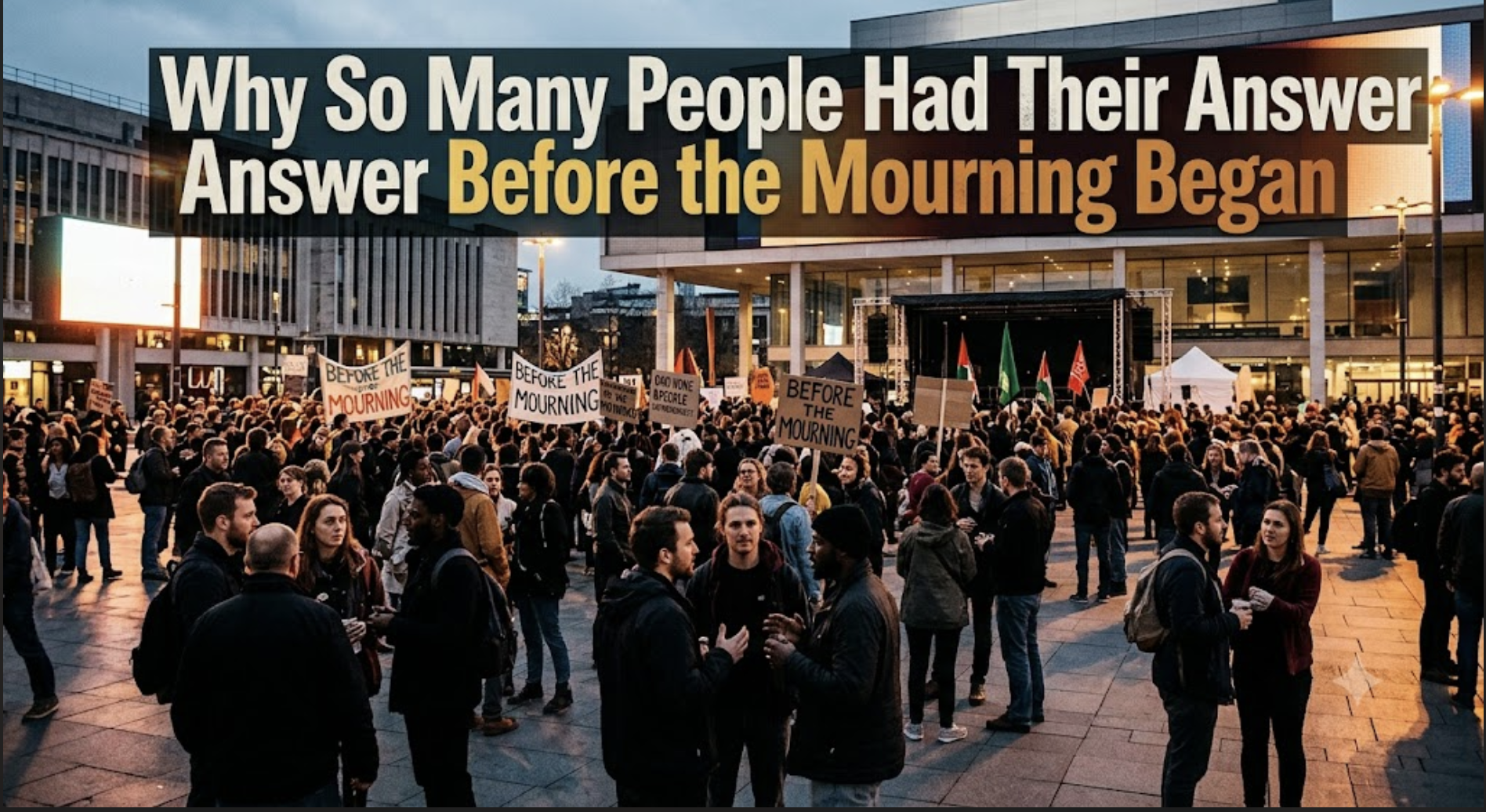
Image created from Google Gemini by Tim Orr
It’s a holiday weekend, and Faith and I just got back from getting ice cream. In case you are wondering, Faith got the Mocha MooLatté, I think it’s called, and I got the Cherry Dilly Bar. After all, I am watching my weight. This was the kickoff to the holiday weekend. Before I begin enjoying the other festivities, I thought I would write a blog about something that I think is very important for people to understand.
One of the hardest questions I couldn’t immediately answer on October 7 when I was in London was why so many people reached their conclusions about what has taken place so quickly. I witnessed protests the very next day. I remember being stunned at what I saw. There was no empathy, no mourning, at least from what I gathered from what I saw on the streets. The anger and hatred were almost palpable, as people were already protesting against Israel. I was dumbfounded. Of the 21 Uber rides I took, the drivers shared the same hostility. It was as if God had vindicated Islam.
I knew that Islam was both a spiritual and political religion, but I thought the political manifestation happened in non-Western countries. This was my wake-up call, and this is why I write and speak as I do. I now feel the clarion call not just to love Muslims but also to warn people of the danger of the political side of Islam.
As I just mentioned, Islam is political, and by this time, no one should be surprised. But that is not the case. Most people are familiar with the Islamic worship service characterized by bowing, praying, and reciting the Quran. The spiritual component also extends to practices such as repentance, judgment, and help to form people’s souls. They believe that this explains the entirety of the religion of Islam, and from some Muslims, that is true. This is how they see their faith.
But it also has a political opponent, which people are becoming increasingly familiar with. This is despite the fact that a strong movement who continues to shield Islam from criticism.
There are at least two perspectives one can take. Either one can be a moral idealist and interpret the evidence through an idealized view of Islam that accentuates the positive and denies any negative characteristics. This perspective tends to emphasize Islam’s highest ethical and moral ideas, while minimizing and explaining away anything that complicates that picture. The other approach is that of the moral realist. Rather than beginning with an idealistic view of Islam, the moral realist begins with looking at the evidence. He or she examines things like the primary sources, considers the historical record, and evaluates Islam as it has been understood and practiced across the centuries. The goal is not to defend or condemn Islam in advance, but to arrive at conclusions that are grounded in evidence rather than aspiration.
I think the latter view is very important. Americans should love their Muslim neighbors, but they should draw their understanding of the political side of Islam from the canonical sources. We should be aware that for many Muslims, the political side is vital for Islam and its mission. We should take those ideas at face value rather than impose a Western assumptions that all religions are basically the same. The political side is grounded in the Qur’an but is then interpreted through the Hadith and the classical tafsir tradition. These canonical sources concern law, governance, justice, and the ordering of public life. The goal is to expand Islam so society can be ordered under God’s law. The pursuit is to continue until every person has been called to submit to Allah’s final revelation. The danger, of course, is when political power becomes the measure of religious truth, and people seek to spread Islamic rule in the West.
Given the Islamic mandate, Islamists believe Allah will bring about success if Muslims surrender to Him. The current state of the Muslim world seems to argue against this, as they lag far behind in almost every economic and power category when compared to the West and Israel. Therefore, in the mind of many Islamists, they have been humiliated, colonized, and defeated, and they need to be vindicated on behalf of Allah.
Every movement that promises restoration eventually faces the same question: if God’s truth is final and victory is promised, why has restoration not come? One option is to look inward and do some soul-searching, but most nations are not willing to do so. When a movement seeks redemption, it often looks for an obstacle to explain why redemption has been delayed. The obstacle becomes not just an enemy. Overcoming that obstacle is the key that makes religious history coherent.
This means that the same enemy, the West and Israel, can now explain every disappointment, military defeat, political failure, and cultural humiliation. It’s always the West and the Jews. This is why Islamists can work so comfortably with many progressives. They both have the same enemy. But for Islam, they are portrayed as recurring opponents of God’s purposes.
Hamas brought this idea of political Islam to light. Civil society must respond, and must stand against this influence.
Related Topics
Related Posts