Why Sociologists and Philosophers Fail in Power
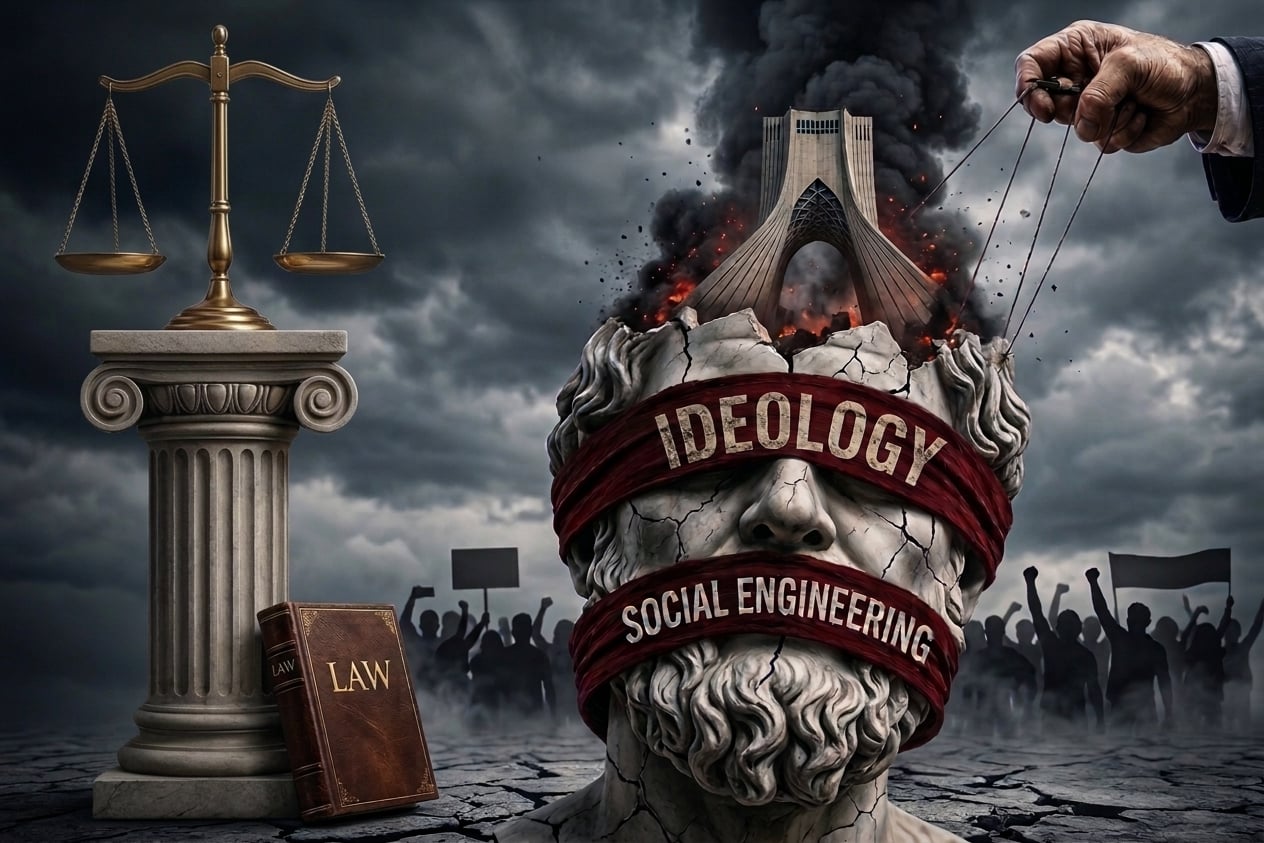
A critique of placing abstract thinkers at the helm of governance: From political theory to the 1979 Iranian Revolution.
Throughout the history of political thought, from Plato’s dream of the “Philosopher-King” to the twentieth-century architects of social engineering, a recurring question has persisted: Are those with the deepest academic grasp of philosophy and social structures the best equipped to govern? Historical experience and an examination of the nature of these disciplines suggest the exact opposite. Formal training in sociology and philosophy not only fails to produce effective statesmen, but in many instances, placing these theorists directly into positions of policymaking and executive power leads to destructive and costly consequences for society.
1. The Chasm Between the World of Thought and the Arena of Action
The fundamental difference between an abstract thinker (a philosopher or sociologist) and a statesman lies in how they confront reality. Philosophy seeks absolute truth and flawless logical systems; sociology focuses on dissecting structures and critiquing inequalities. Governance and policymaking, by contrast, are the art of the possible; a realm of crisis management, compromise, and choosing between the lesser of two evils.
Hannah Arendt, the renowned political philosopher, astutely highlighted this tension. She argued that philosophy is inherently rooted in “solitary thinking” and universal truths, whereas politics belongs to the realm of plurality, dialogue, and compromise. According to Arendt, when a philosopher attempts to impose abstract principles directly onto society, the very essence of politics is destroyed. Similarly, Isaiah Berlin observed that a successful politician requires a “sense of reality” (an intuitive grasp of human psychology, shifting circumstances, and the art of compromise) rather than mastery over rigid logical frameworks, because human society is full of contradictions that cannot be governed by academic formulas.
2. The Illusion of Social Engineering and the Utopian Fallacy
One of the gravest dangers of empowering sociologists and philosophers is their tendency to reconstruct society based on a mental utopia. Through their academic training, sociologists become adept at identifying flaws and diagnosing social ills; however, diagnosing a disease is entirely different from curing it.
Karl Popper, the philosopher of science and politics, drew a sharp distinction between “utopian social engineering” and “piecemeal social engineering.” He warned that relying on grand philosophical and sociological theories to redesign society from scratch, rather than solving concrete, incremental problems, inevitably leads to disaster. Echoing this sentiment, Friedrich Hayek criticized the “fatal conceit” of social scientists, arguing that sociologists and central planners fall prey to the illusion that they can comprehend the infinite complexities of human society and reshape it from the top down. In practice, this hubris not only breeds economic failure but also sacrifices individual liberty.
3. Decision-Making Without Consequences and the Lack of Accountability
In academia and intellectual circles, the measure of a theory’s success is its novelty and logical coherence. If a sociologist’s or philosopher’s thesis proves wrong in a book or journal, they suffer no personal cost. In the realm of policymaking, however, every miscalculation directly harms the livelihoods, security, and lives of millions of people.
Economist and social theorist Thomas Sowell, in his landmark book Intellectuals and Society, pinpoints this exact flaw. He demonstrates that intellectuals and sociologists operate in an environment insulated from the real-world consequences of their ideas. As a result, they champion idealistic theories that, when translated into policy, inflict the greatest damage on the very vulnerable populations they claim to protect. Decades earlier, Max Weber, himself a founding figure of modern sociology, drew a vital line between the “ethic of ultimate ends” (characteristic of intellectuals who care only for the purity of their ideals) and the “ethic of responsibility” (essential for politicians who must answer for the real-world outcomes of their decisions).
4. Case Study: Theorists vs. Jurists in Iran’s 1979 Revolution
Modern Iranian history and the 1979 Islamic Revolution offer one of the clearest empirical validations of this thesis. Examining the intellectual and educational backgrounds of the key actors of that era reveals a stark divide between two fundamentally different mindsets.
On one side stood a broad spectrum of revolutionaries, ideologues, and architects of the new order who were overwhelmingly rooted in philosophy, theology, and the social sciences. This camp spanned from Marxist sociologists and leftist theorists such as Ali Shariati, Amir-Hossein Aryanpour, Amir-Parviz Pouyan, and Ehsan Tabari, to philosophers and philosophy-trained clerics including Ahmad Fardid, Morteza Motahhari, Mohammad Beheshti, Mohammad-Javad Bahonar, Mohammad Mofatteh, Abolhassan Banisadr, and Abdolkarim Soroush. Relying on grand philosophical, sociological, and ideological narratives, whether Islamist or Marxist, they rejected incremental institutional reform in favor of a total transformation of human nature and society. To them, existing legal frameworks and parliamentary democracy were superficial obstacles to be dismantled so a utopia could be built from the ruins.
On the opposite side stood the moderate voices and opponents of mass revolution, who were predominantly jurists and administrators with practical governance experience, figures such as Shapour Bakhtiar (who held a PhD in law and political science alongside executive experience), Abdolrahman Boroumand (a doctor of law), and Iraj Pezeshkzad (a jurist, judge, and diplomat). The legal mind is anchored in due process, constitutional order, checks and balances, and gradual reform within existing institutions. Grounded in a practical understanding of statecraft and law, these figures accurately warned that the sudden collapse of the country’s legal and administrative structures would yield not a virtuous utopia, but a power vacuum and a new form of tyranny.
The bitter paradox of modern Iranian history is that after the revolution succeeded, many of the very philosophers and sociologists who served as its ideological engine found themselves marginalized, disillusioned, or victimized by the harsh realities of the power structure their abstract ideas helped create.
Conclusion: Ending the Illusion of the Philosopher-King
It is time to permanently abandon the ancient illusion of the “Philosopher-King” and the “Social Engineer.” As the great thinkers of the free world warned, and as Iran’s 1979 tragedy painfully demonstrated, academic training in philosophy and sociology does not confer competence in statecraft; rather, it injects a dangerous, unrealistic idealism into politics. Governance is the domain of law, economics, and the management of tangible realities. Whenever this arena is surrendered to abstract theorists instead of seasoned jurists and pragmatic administrators, the outcome is nothing less than the repetition of historical catastrophes.