Why the Hostage Pin?
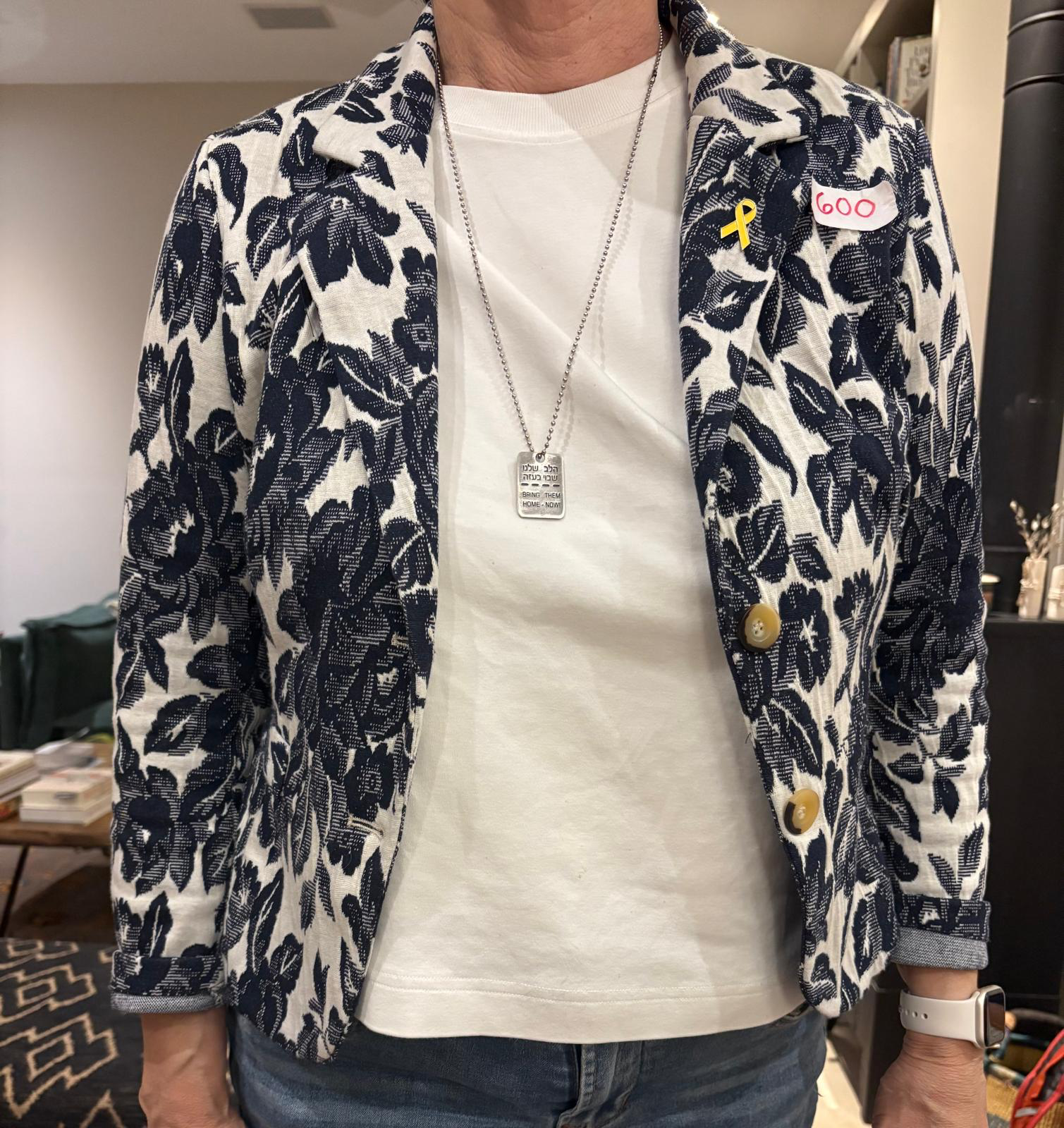
Yesterday was October 600, 2023.
We act as if we are perfectly functioning people. Our brains are in constant split-brain mode, flitting between whatever we are doing, and what the living hostages (among the 58 remaining) are doing at any given moment of day or night in the airless dungeons of Gaza. And breathless for the families who have partners, spouses and sons/daughters fighting this war inside the Gaza Strip. And sick about the abysmal humanitarian challenges inside the Gaza Strip.
Shortly after the war broke out, my daughter got me this dog tag with “Bring Them Home Now!” and said “all the mothers in Tel Aviv are wearing this.” I started wearing it, daily. No matter what. Convincing myself that if we stop wearing the dog tag, the prayers for their safe return won’t be heard. And sometimes added the yellow hostage pin. And then the Rachel and Jon Godlberg Polin-inspired tape with the number of days since the war started/hostage nightmare began, updated daily. These things are so prolific that when you see someone wearing any of these symbols, you know they share your ache and desparate desire to get the hostages back, you immediately have an unspoken kinship, like ‘we’re in this together.’
The media reports around the demonstrations and rallies are everywhere; the cultural expression of this dog tag and the pain/shame around our unreleased hostages has gotten less attention. Amit Segal opened one of the Call Me Back podcast episodes with the line that the hostages are in the minds of Israelis every day, no matter what they are doing, even while at a cafe or at the theater. We act as if we are normal people going through our days, and even dance at weddings and celebrate birthdays, attend sporting events. But in reality we are doggedly wearing the dog tag, the yellow hostage pin and/or the weathered masking tape with a new number every day, and trying to remain hopeful and focused.
In the words of Romi Gonen, a survivor of 471 days in Hamas captivity in Gaza wrote in a post this week, as she headed into her 2nd surgery: “How can I even begin to heal while I’m here and they’re still there? I’m receiving treatment while others are begging for a simple painkiller. I can order food whenever I want while they are fighting over a piece of pita bread a day….. It’s so easy to look from the outside and say we look fine, but no one has a clue what’s happening on the inside….. It will take time – with God’s help, we will all recover and get through this because we are strong. Very strong.” Since Romi’s release, she has seen the pit-bull determination of the Israeli people, our resilience and spirit.
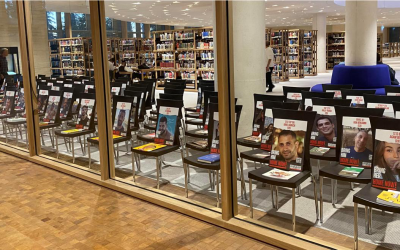
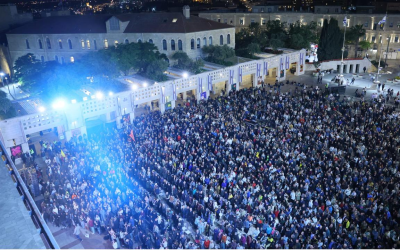
We have moments of really coming together, joined in our pain and hope, like at the Evening of Song and Prayer hosted by the Goldberg Polins and the families of the “Beautiful Six” [hostages] who were murdered in a Hamas tunnel last September. And spaces where every Israeli passes, so as not to forget for a minute what the hostages are enduring.
For now, we know that supporters and lovers of Israel are deeply connected to Israelis’ national pain. As we are to their experience of dark and dangerous antisemitic events. We have endless gratitude for all you’re doing to get our people home.