
Why the genocide resolution is fundamentally flawed
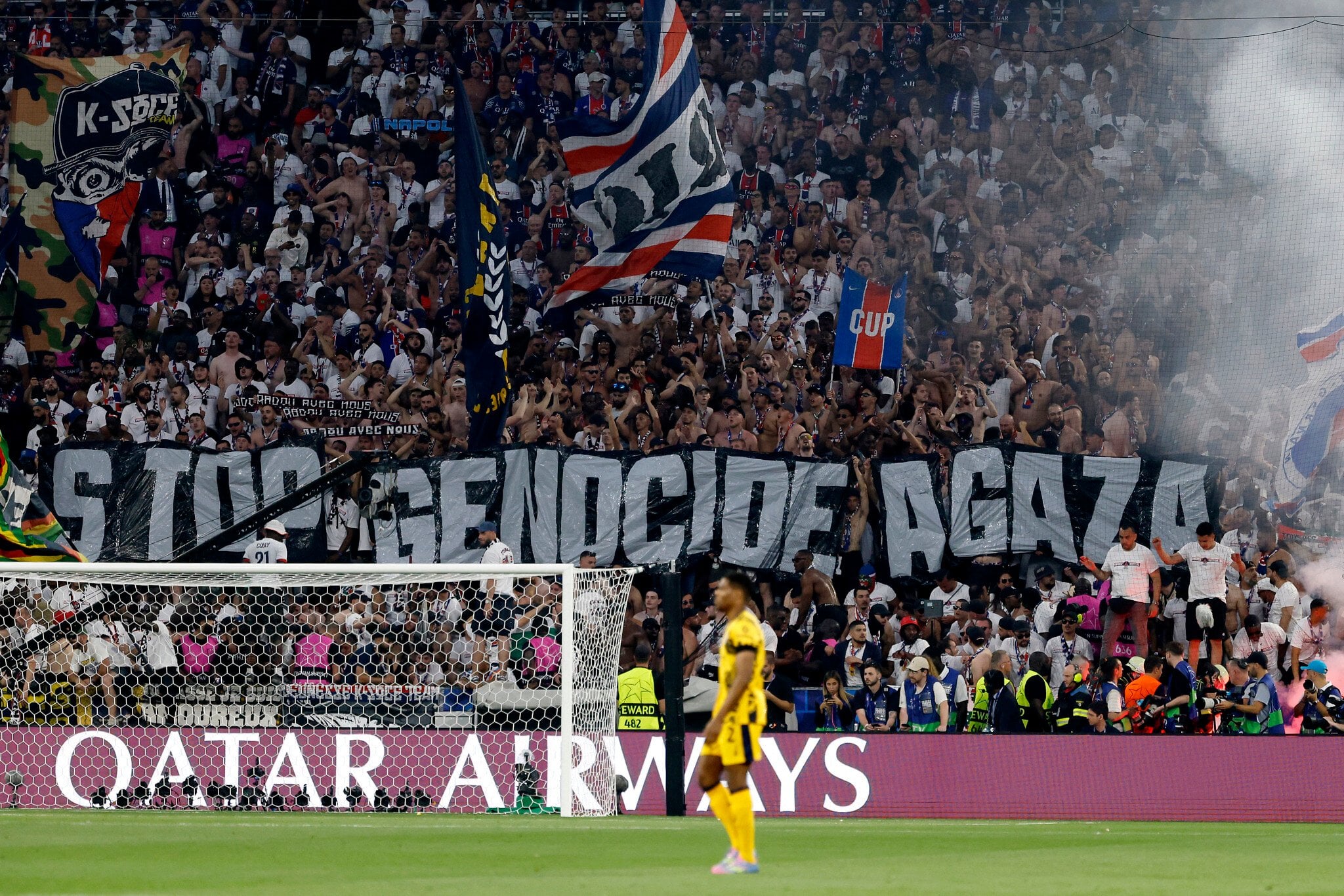
The inherent problem with the International Association of Genocide Scholars’ recent “Resolution on the Situation in Gaza” is not its criticism of the policies and actions of the government of the State of Israel. These are fair game, especially in the context of the hundreds of thousands of Israelis who regularly protest against that very government and its policies by demonstrating against them in the streets of Tel Aviv, Jerusalem, and other parts of Israel.
I join the IAGS in being horrified by the suffering of Palestinian civilians in Gaza over the course of the past 23 months. We know, the world knows, that women, children and the elderly have been subjected to the violence of a war over which they have no control whatsoever. We know, the world knows, that hospitals throughout Gaza have been rendered inoperative, alongside the destruction of homes, schools, and pretty much the entire territory’s infrastructure. We know, the world knows, that Palestinian civilians in Gaza, including children, have not received the necessary food and medicine to which they are entitled under every conceivable principle of international humanitarian law. We know, the world knows, that Palestinian children have suffered and are suffering, have died and are dying needlessly throughout this war.
As a Conservative Jew, I have tremendous respect for Rabbi Yosef Blau and the dozens of orthodox rabbis who warn that the “justified anger toward Hamas has dangerously expanded by some extremists into blanket suspicion of the entire population of Gaza—children included” and who insist that “Judaism’s vision of justice and compassion extends to all human beings.” And, as I have noted previously, I wholeheartedly agree with my former boss, World Jewish Congress President Ronald S. Lauder, when he writes that the far-right rhetoric emanating from the likes of Israeli Finance Minister Bezalel Smotrich and National Security Minister Itamar Ben-Gvir “risks eroding Israel’s moral standing, weakening its diplomatic relationships and threatening the foundations of its security.”
My issues with the IAGS resolution are its implacable hostility toward Israel and the fact that it blatantly misstates the law of genocide in a transparent attempt to score points against Israel.
I have been teaching about the law of genocide at Cornell Law School since 2008 and at Columbia Law School since 2011. I don’t know whether this qualifies me as a “genocide scholar” – I am not, have never been, and do not aspire to be a member of the IAGS – but I am quite certain that it enables me to recognize the multiple flaws in the IAGS resolution.
I also write as a longtime supporter of and occasional participant in the Israeli-Palestinian peace process. In December 1988, I was one of five American Jews who broke the taboo on interactions with the Palestine Liberation Organization by meeting with Yasir Arafat and other leaders of the PLO in Stockholm. This meeting resulted in the PLO’s first public “acceptance” of Israel as a state in the Middle East.
I believed then and I believe today that the only feasible, viable end to the Israeli-Palestinian conflict is one that will enable Israelis and Palestinians to somehow live side-by-side alongside each other.
I also believed then and I believe today that any one-sided approach to the conflict, such as that evidenced in the IAGS resolution, is counterproductive at best. Accordingly, I vehemently disagree with the IAGS and likeminded others who demonize Israel and hold it and it alone responsible for the devastation that Gaza has become.
While the IAGS resolution does make a passing reference at the outset to “the horrific Hamas-led attack of 7 October 2023, which itself constitutes international crimes,” Hamas is then deliberately airbrushed out of the resolution, as if Israel has not been and is not waging a war against that very terrorist organization whose avowed goal is Israel’s utter destruction.
Nowhere in the IAGS resolution is there even an allusion to, let alone explicit mention of, the facts that it is Hamas, not Israel, that has used Palestinian civilians in Gaza, including children, as human shields; that it was Hamas, not Israel, that established military installations behind schools and hospitals, making them legitimate targets in Israel’s wholly legitimate efforts to eliminate the threat posed by such military installations; that by all reliable accounts, Hamas bears more than its fair share of responsibility for preventing the distribution of humanitarian aid in Gaza.
I, for one, have seen no evidence of Israelis raping Palestinian women and girls or committing sexual violence against them. We all know, the world knows, that Hamas terrorists savagely raped Israeli women and girls on October 7, 2023, and that Israeli women hostages were sexually abused by Hamas members while captive in Gaza. And yet the IAGS resolution accuses Israel of “sexual and reproductive violence” against Palestinians while blatantly, deliberately ignoring Hamas’ sexual violence against Israeli women and girls.
None of this lessens any responsibility Israel may have for any violations of the laws of war that it may have committed, but there can be no excuse for the IAGS’s one-sided condemnation of Israel as opposed to providing even a pretense of an impartial assessment of the “situation in Gaza.”
As regards the law of genocide, the IAGS resolution studiously ignores the fact that under the 1948 Convention on the Prevention and Punishment of the Crime of Genocide, this particular crime requires the “intent to destroy, in whole or in part, a national, ethnical, racial or religious group, as such.”
In its 2007 ruling in Bosnia and Herzegovina v. Serbia and Montenegro (Bosnia v. Serbia), the International Court of Justice held that “The specific intent [to commit genocide] is also to be distinguished from other reasons or motives the perpetrator may have. Great care must be taken in finding in the facts a sufficiently clear manifestation of that intent [i.e., intent to commit genocide].” Thus, the ICJ went on to hold that
The dolus specialis, the specific intent to destroy the group in whole or in part, has to be convincingly shown by reference to particular circumstances, unless a general plan to that end can be convincingly demonstrated to exist; and for a pattern of conduct to be accepted as evidence of its existence, it would have to be such that it could only point to the existence of such intent.
In other words, one cannot as a matter of applicable international law infer an intent to commit genocide from actions or even a pattern of conduct that are the result of another intention altogether, such as, in the case of Israel in its war against Hamas in Gaza, the intention to eliminate a murderous terrorist organization – Hamas – as an existential threat to Israeli civilians.
What is needed most at this critical moment is a fair-minded approach that envisions at least a pathway to an end to the Israel-Hamas war. What we decidedly do not need is the IAGS’ ostrich-like self-righteousness that places the onus for Palestinian civilian deaths and suffering in Gaza exclusively on Israel’s shoulders and that studiously absolves Hamas of any responsibility for the carnage.