Why Two Rabbis Protected the Ka’ba from Destruction
The commentary Tafsir of Ibn Kathir (born 1302 CE) is one of the most widely used explanations of the Qur’an in the Arab world today. Years ago while studying the Qur’an with ibn Kathir’s Tafsir, I learned of an amazing event involving two rabbis and the Holy Ka’bah while explaining ayah 44:37 ibn Kathir relates the following events.
“One of the Tubba` left Yemen and went on a journey of conquest until he reached Samarkand, expanding his kingdom and domain. He is the one who founded Al-Hirah. It is agreed that he passed through Al-Madinah during the days of Jahiliyyah. He fought its inhabitants but they resisted him; they fought him by day and supplied him with food by night, so he felt ashamed before them and refrained from harming them.
“He was accompanied by two Jewish rabbis who advised him. They told him that he would never prevail over this city, for it would be the place to which a Prophet would migrate towards the end of time. So he retreated and took them (the two rabbis) with him to Yemen.
“When he passed by Makkah, he wanted to destroy the Ka`bah, but the rabbis told him not to do that either. They told him about the significance of this House, that it had been built by Ibrahim Al-Khalil, peace be upon him, and that it would become of great importance through that Prophet who would be sent towards the end of time.
“So he respected it, performed Tawaf around it, and covered it with a fine cloth. Then he returned to Yemen and invited its people to follow the religion of guidance along with him. At that time, the religion (Judaism) of Musa was the religion followed by those who were guided, before the coming of the Messiah (Jesus). So the people of Yemen accepted the religion of guidance (Judaism) along with him.”
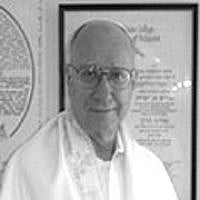
Although for more than 65 years I have been studying the Qur’an and reading other Islamic books, I had not heard of these events. I think of myself as a Reform Rabbi who is an Islamic Jew. Actually I am an Islamic Jew i.e. a faithful Jew submitting to the will of God, because I am a Reform Rabbi.
As a rabbi, I am faithful to the covenant that God made with Abraham the Hebrew (Genesis 14:13) the first Hebrew to become a muslim (faithful monotheist), and I submit to the covenant and its commandments that God made with the people of Israel at Mount Sinai.
As a Reform rabbi, I believe that Jewish spiritual leaders should modify Jewish tradition as social and historical circumstances change and develop. I also believe we should not make religion difficult for people to practice by adding an increasing number of restrictions to the commandments we received at Mount Sinai.
These are lessons that prophet Muhammad taught 12 centuries before the rise of Reform Judaism in the early 19th century Germany. Although most Jews today are no longer Orthodox, if the Jews of Muhammad’s time, had followed these teachings of prophet Muhammad, Reform Judaism would have started 1,400 years ago.
I believe that Muhammad was a prophet of Reform Judaism to the Orthodox Jews of his day; although he was 1,200 years ahead of his time.
During the six centuries between the birth of Jesus and the arrival of Muhammad in Yathrib, the city of Jews (Medina), most Jews had become Orthodox Jews.
Since ibn Kathir writes that “At that time, the religion (Judaism) of Musa, peace be upon him, was the religion followed by those who were guided, before the coming of the Messiah (Jesus), peace be upon him.” we know that the events he relates took place prior to the birth of Jesus and the rise of Orthodox Judaism.
Jews first came to live in Arabia and the Yemen in the centuries after the destruction of Jerusalem and its Holy House; first built in the mid tenth century BCE by prophet Solomon. At that time Jewish Torah scholars were called scribes or sages.
Why was it so important for these Jewish sages to convince the King of Tubba not to destroy the Ka’bah?
Jewish mystics often referred to their belief that there was in the high heavens above, an ideal Holy House-Beit HaKodesh which was in some transcendent metaphorical way a House of God-Beit El.
The Qur’an states: Their Prophet (Samuel) then proclaimed, “The sign of the blessings of Talut’s kingship over you is that Allah will give you back the Tabut (Ark-a wooden box placed centrally in the Tabernacle) that was taken from you, wherein is Sakinah from your Lord (inward) peace and reassurance. and a remnant of that which Musa (Moses) and Harun (Aaron) left behind carried by the angels. Verily, in this is a sign for you if you are indeed believers. (2:248)
Ibn Kathir explains “carried by the angles” by quoting Ibn Jurayj who stated that Ibn `Abbas said, “The angels came down while carrying the Tabut from between the sky and the earth, until they placed it before Talut (Saul) while the people were watching.”
Thus, there is always a Holy House for monotheistic Pilgrimage. When it does not exist materially in Makka or Jerusalem, it exists ideally/spiritually in the heavens above.
When it is not called Beitullah, it is called Beit El. When it is not called Bayt al-Maqdis, it is called Beit HaMiqdash; there are many names, two places on earth and one in heaven, but all of them are one.
When Prophets Abraham and Ishmael rebuilt the Holy House in Makka, there was no House in Jerusalem.
When, in mid tenth century Jerusalem, Solomon built the Holy House, the Holy House in Makka had already been polluted by the 360 idols the Makkans had put in it. So when Prophet King Solomon dedicated the Temple Mount (1 Kings 8:38) he stated that: “ When a prayer or plea is made by anyone among your people Israel—being aware of the afflictions of their own hearts, and spreading out their hands toward this temple— 39 then hear from heaven, your dwelling place. Forgive and act; deal with everyone according to all they do, since you know their hearts (for you alone know every human heart), 40 so that they will be in awe of you all the time they live in the land you gave our ancestors.
41 “As for the foreigner who does not belong to your people Israel but has come from a distant land because of your name— 42 for they will hear of your great name and your mighty hand and your outstretched arm—when they come and pray toward this temple, 43 then hear from heaven, your dwelling place. Do whatever the foreigner asks of you, so that all the peoples of the earth may know your name and fear you, as do your own people Israel, and may know that this house I have built bears your Name.”
In the year 587 BCE the Babylonians destroyed the Holy House in Jerusalem.
About 70 years later the Jews, whom King Cyrus had helped to returned from exile in Babylonia, rebuilt the Holy House in Jerusalem.
A generation after the death of Jesus, in the year 70 CE, the Romans destroyed Jerusalem and its Holy House.
All during the days of Jahiliyyah the Holy House in Makkah remained polluted until it was purified of its 360 idols by Muhammad near the end of his life. Since that time it has remained pure.
The one ideal Heavenly Holy House has been rebuilt physically several times in two different holy geographical places.
But the one God who is worshipped in each separate holy place is the one God of every place. “Why is God called Makom (place)? Because He is the place of the world’ and the world is not His place. (Yalqut Shimoni Vayetze 117)
Indeed, one of the names of God in Jewish tradition is Makom- place; because when prophet Jacob, was fleeing from his hate filled brother Esau (Genesis 27:41), he slept one night on a special place where he had a vision of a ladder connecting heaven and earth.
“Jacob came to a certain place and spent the night there, because the sun had set; and he took one of the stones of the place and put it under his head, and lay down in that place. He had a dream: a ladder was set on the earth with its top reaching to heaven; and the angels of God were ascending and descending on it.
And behold, the LORD stood above it and said, “I am the LORD, the God of your father Abraham and the God of Isaac; the land on which you lie, I will give it to you and to your descendants.
“Your descendants will also be like the dust of the earth, and you will spread out to the west and to the east and to the north and to the south; and in you and in your descendants shall all the families of the earth be blessed.
“Behold, I am with you and will keep you wherever you go, and will bring you back to this land; for I will not leave you until I have done what I have promised you.” Then Jacob awoke from his sleep and said, “Surely the LORD is in this place, and I did not know it.”
There is a old Arabic and Hebrew narrative about this special place and the two brothers who lived there.
Two brothers who inherited a valley to hilltop farm from their father, divided the land in half so each one could farm his own section. Over time, the older brother married and had four children, while the younger brother was still not married. One year there was very little rain, and the crop was very meager. The younger brother lay awake one night praying and thought. “My brother has a wife and four children to feed and I have no children. He needs more grain than I do; especially now when grain is scarce.
So that night the younger brother went to his barn, gathered a large bundle of wheat, and left his wheat in his brother’s barn. Then he returned home.
Earlier that very same night, the older brother was also lying awake praying for rain when he thought. “In my old age my wife and I will have our grown children to take care of us, as well as grandchildren to enjoy, while my brother may have no children. He should at least sell more grain from his fields now, so he can provide for himself in his old age.
So that night, the older brother also gathered a large bundle of wheat, and left it in his brother’s barn, and returned home. The next morning, the younger brother, surprised to see the amount of grain in his barn seemed unchanged said “I did not take as much wheat as I thought. Tonight I’ll take more.”
That same morning, the older brother standing in his barn, was thinking the same thoughts. After night fell, each brother gathered a greater amount of wheat from his barn and in the dark, secretly delivered it to his brother’s barn. The next morning, the brothers were again puzzled and perplexed. “How can I be mistaken?” each one thought. “There’s the same amount of grain here as there was before. This is impossible! Tonight I’ll make no mistake – I’ll take two large sacks.”
The third night, more determined than ever, each brother gathered two large sacks of wheat from his barn, loaded them onto a cart, and slowly pushed his cart toward his brother’s barn. In the moonlight, each brother noticed a figure in the distance.
When the two brothers got closer, each recognized the form of the other and the load he was pushing, and they both realized what had happened.
Without a word, they ran to each other and embraced.
God looked down at the two brothers and smiled thinking their love and concern for each other would make this place good for a holy sanctuary. Someday their descendants will each build and rebuild a holy House in this valley and on this hill.
When all those, both near and far, who revere this place as a standard, share it in love with everyone else who reveres it, then I will do as Prophet Abraham requested, and “Make this a land of Peace, and provide its people with the produce of of the land”. (Qur’an 2:126). Then will all the children of Adam and Abraham live in Holiness, Peace and Prosperity.
This narration, transmitted orally in both Arabic and Hebrew for many centuries, was finally written down in several versions in the 19th century. Jews believe the hill is Jerusalem. Muslims believe the valley is Makka. I believe, God willing, both perspectives will someday be seen as peacefully correct.