Why We Stood Taller When Israel Entered the Olympic Stadium
I have watched Olympic opening ceremonies for as long as I can remember. There is something timeless about them—the steady cadence of nations entering the stadium, one after another, each carrying its history, its burdens, its dreams.
Albania. Bhutan. Great Britain. Australia.
It is a long march before the “I’s.” And then, suddenly, there it is: Israel.
This year, fewer than a dozen athletes walked into that arena beneath the blue-and-white flag—three here, five there. That was our delegation.
But pause for a moment and really take it in.
It is 2026. Our people have endured two and a half years of brutal war brought to our borders by those who openly sought our destruction. We buried 1,200 souls—men, women, children—massacred, violated, kidnapped in ways that still defy comprehension. Families shattered. Innocence stolen. Once again, Israel was forced to defend not just its citizens, but its very right to exist.
And yet, there they were.
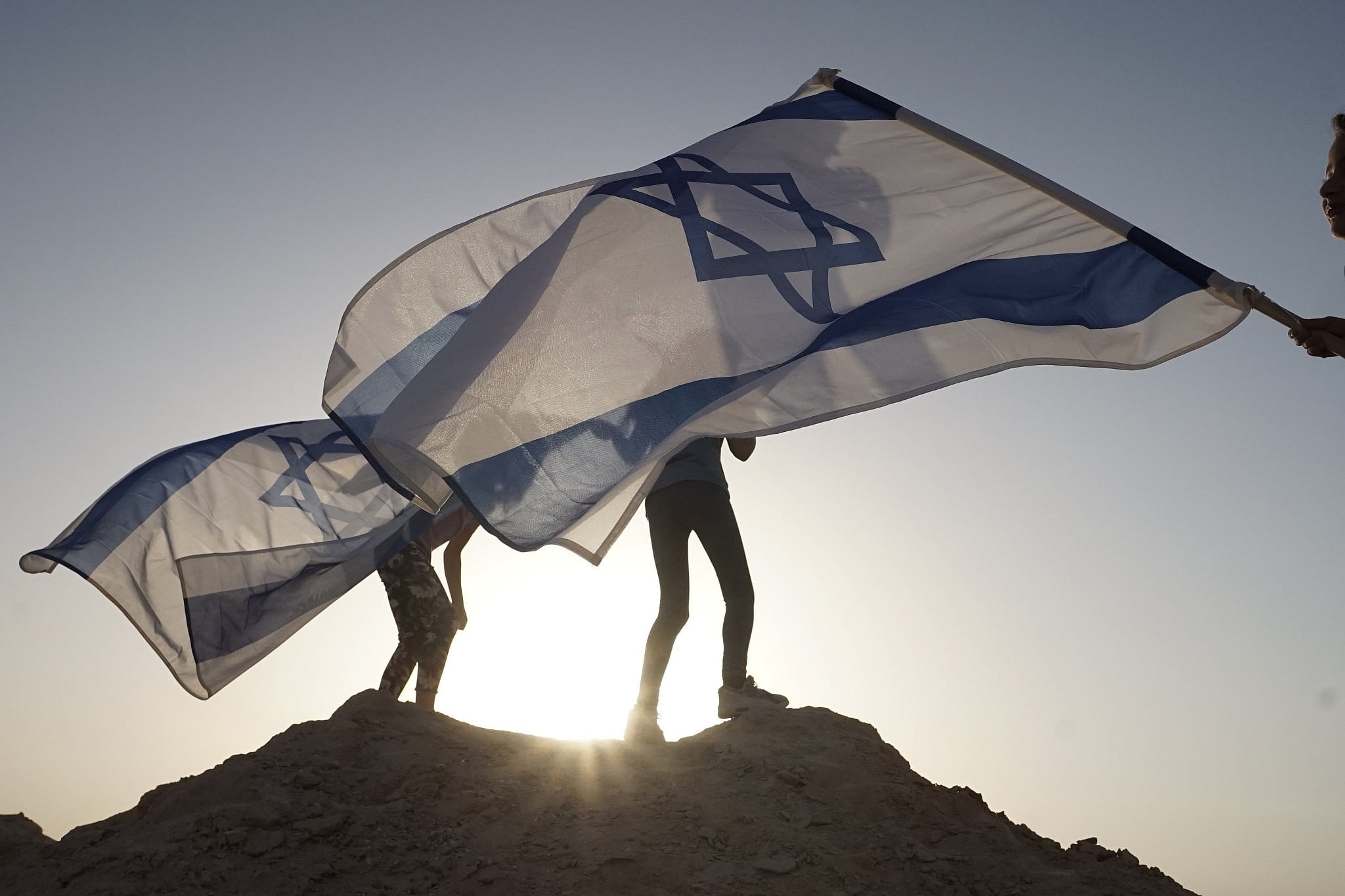
They were not walking with heads bowed. They were not draped in sorrow. They almost skipped into that stadium, waving Israeli flags with unmistakable pride. Their faces were alive. Their shoulders were back. Their energy radiated through the screen.
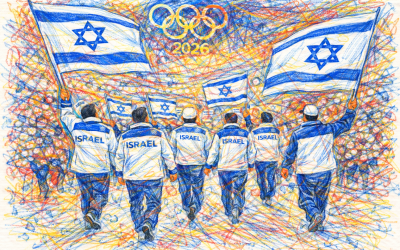
Though few, they felt mighty. And we—Jews everywhere—felt mighty with them.
In that moment, I was reminded of something essential: strength is not measured by numbers. It is measured by spirit. It is measured by the refusal to disappear. It is measured by showing up—especially when the world expects you to shrink.
I do not know how many medals Israel will win at these Games. Maybe none. Maybe a few. But medals are not the story.
The story is that they arrived with life in their eyes and fire in their hearts. They arrived carrying the soul of a nation whose anthem is about hope—Hatikvah. Not conquest. Not domination. Hope.
And look closely at who was marching. Jews and Druze under the same flag. Religious and secular. Different backgrounds, different beliefs, different journeys. Not uniform. Not monolithic. But bound together by a shared commitment to a country that is far from perfect, yet wakes up every day determined to try harder and be better.
That is Israel.
A nation that argues loudly, holds demanding elections, debates fiercely—and then rises the next morning to serve, to innovate, to heal, to protect.
A nation that absorbs pain and turns it into purpose. That absorbs grief and insists on life.
I read the criticisms. I hear the accusations. Let me be clear: Israel is not perfect. But then again—except perhaps for my grandchildren—no one in my family is perfect either. And I love my family not despite its imperfections, but because we strive, day after day, to be better than we were before.
My own family’s story is woven into the broader Jewish journey. We arrived in Virginia in the 1790s, among the earliest Jewish immigrants to this country—seeking opportunity, promised nothing. Generations later, part of our family was murdered in the Holocaust, a wound that never fully heals. After that, we began again in El Paso, Texas, rebuilding from the ground up.
We rebuilt not only for ourselves but also with a sense of responsibility—to the Jewish people and to the broader world around us.
That is the Jewish story.
And that is the story of the land and people of Israel.
The modern rebirth of our homeland was powered by refugees and dreamers, skeptics and believers, lovers and fighters, builders and healers. In partnership with Jewish National Fund-USA, the people of Israel have turned a barren landscape into thriving communities. It advances medicine, technology, agriculture, and humanitarian aid. It shows up after earthquakes and disasters in places that will never vote for it at the United Nations. It makes the world better—not in theory, but in practice.
And it makes the Olympics better, too—not because of medal counts, but because of what it represents: the defiant presence of a people counted out too many times to remember, who keep showing up anyway.
Those athletes reminded us of something profound. We may not win every battle. We may not win every medal. We may stumble. We may argue among ourselves. We may fall short.
But we will always show up.
We will try harder to be better.
And we will be there at the next Games.
As I watched those athletes wave our flag—born from the stripes of a tallit and the ancient symbol of Jewish identity—I felt something deeply personal and profoundly collective at once: pride, gratitude, responsibility, hope – and Zionism.
I am a Zionist. I am part of this remarkable, complicated, resilient family. And I could not be prouder to stand with it—on the world stage, and every day after.