More in love with my land and my people every day
Featured Post
‘Wicked’ness and goodness in an inverted world
Discerning one's true character these days is no small task, but judging superficially is not the Jewish way
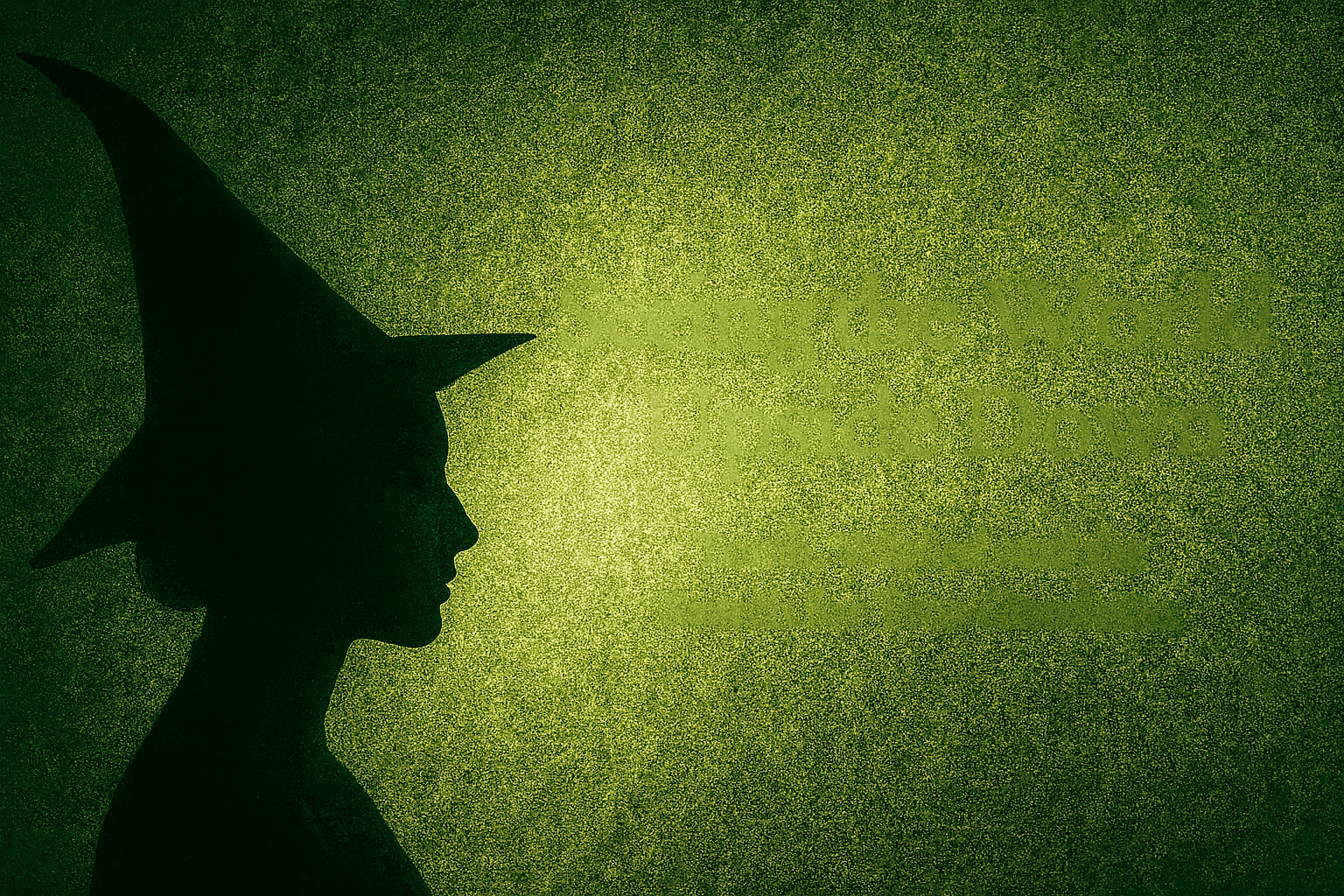
Silhouette of a witch against a green backdrop (AI-generated, courtesy)
I’ve long been a fan of musical theatre. Really, any art form that uses storytelling to convey powerful ideas — and I have a soft spot for anything musical. (Does anyone else hear echoes of Tanach in that description?)
So, true to form, I’ve been a big fan of Wicked since I first saw the show in Melbourne in 2006 at age 16. I love many aspects of the show, especially the music, but I particularly love what I see clearly as an underlying theme of the show. It powerfully explores the complexity of goodness and wickedness, and demonstrates that what looks “good” or “evil” at first glance may not be so.
Because of this, I was surprised to read Allison “Jew in the City” Josephs’ piece, Wicked Could Not Have Come at a Worse Time for America, in which she argues:
“Wicked is ultimately a story that offloads responsibility for actual wickedness, laying blame on society for creating its monsters while absolving them from their wrongdoing…”
She continues that the recently-released second instalment of the Wicked film adaptation “could not have come at a worse time for America” because it may encourage viewers to sympathize with those who commit wicked deeds, at a time when many people are already confused about who is a villain and who is a victim.
I can understand how she came to this conclusion when viewing Wicked solely as a backstory to The Wizard of Oz, where the Wicked Witch of the West (Elphaba in Wicked) is painted as a one-dimensional villain. From that vantage point, giving Elphaba a sympathetic backstory may look like an attempt to “offload responsibility” for her actions.
But this view ignores the full arc of Wicked, which highlights the importance of context and thoughtful evaluation for a true understanding of goodness and evil.
Contrary to Josephs’ takeaway message, I believe the narrative of Wicked reflects deep Jewish ideas about how difficult it can be to perceive true goodness and “wickedness,” especially in our post-truth era of social media and propaganda.
To be clear, I don’t subscribe to a relative view of morality. Good and evil are real, and we should aim to reflect the former in our actions. But it isn’t always obvious which actions are truly good and which are truly evil.
A famous story in Bava Batra 10b speaks to this challenge. Yosef, the son of Rabbi Yehoshua, became ill and lost consciousness. When he recovered, his father asked what he had seen in his unconscious state. Yosef replied:
“עוֹלָם הָפוּךְ רָאִיתִי — עֶלְיוֹנִים לְמַטָּה, וְתַחְתּוֹנִים לְמַעְלָה.”
“I saw an inverted world — those [who seemed] ‘above’ were below, and those [considered] ‘below’ were above.”
Rabbi Yehoshua responded:
“עוֹלָם בָּרוּר רָאִיתָ”
“You have seen a clear [accurate] world.”
A similar idea appears in the book of Shmuel. When the prophet Shmuel is sent to anoint a king from among the sons of Yishai, he is immediately drawn to Eliav, the eldest. Presumably based on appearance and stature, Shmuel assumes this is G-d’s chosen king. But G-d rebukes him:
“אַל־תַּבֵּט אֶל־מַרְאֵהוּ וְאֶל־גְּבֹהַּ קוֹמָתוֹ כִּי מְאַסְתִּיהוּ כִּי לֹא אֲשֶׁר יִרְאֶה הָאָדָם כִּי הָאָדָם יִרְאֶה לַעֵינַיִם וַה’ יִרְאֶה לַלֵּבָב׃”
“Pay no attention to his appearance or his height, for I have rejected him. Humans see only what is visible, but G-d sees into the heart.” (Shmuel I 16:6)
Seeing truly — beyond surfaces, narratives and assumptions — requires a kind of spiritual discernment.
To understand good and evil in Torah terms, we look to their earliest mention. In the case of good and evil, this occurs at the beginning of Bereishit, where the Garden of Eden is described in all its glory, including the “tree of knowledge of good and bad”.
“וַיַּצְמַח ה’ אֱלֹקים מִן־הָאֲדָמָה כׇּל־עֵץ נֶחְמָד לְמַרְאֶה וְטוֹב לְמַאֲכָל וְעֵץ הַחַיִּים בְּתוֹךְ הַגָּן וְעֵץ הַדַּעַת טוֹב וָרָע׃”
“And from the ground G-d caused to grow every tree that was pleasing to the sight and good for food, with the tree of life in the middle of the garden, and the tree of knowledge of good and bad.” (Bereishit 2:9)
The Sforno explains this knowledge as the ability to make bad choices — to choose something “sweet” even when it is harmful, and to reject something “unsweet” even when it is beneficial. This human tendency — to confuse sweetness for goodness — lies at the heart of Wicked.
Glinda the “Good” Witch reveals this confusion in the song, “Thank Goodness/I Couldn’t Be Happier,” sung after Elphaba has been scapegoated and driven from Oz. Glinda has everything she ever wanted: fame, influence and a handsome fiancé. Yet she admits her “happiness” is “the tiniest bit unlike [she] anticipated.
There’s a kind of a sort of cost.
There’s a couple of things get lost.
There are bridges you cross
You didn’t know you crossed
Until you’ve crossed…”
We live in an upside-down world. We have eaten from the Tree of Knowledge of Good and Bad, and we are easily confused (though hopefully not as confused as Glinda) about what goodness and wickedness really look and feel like. Sometimes, morally correct actions lead to pain (as the famous line goes, and as echoed in the Wicked soundtrack: “No good deed goes unpunished”), and sometimes — often — the wicked prosper and enjoy “sweet,” “happy” lives. Part of the heartbreak of living in the world is coming to terms with this while doing our best to navigate complexity and do what we think is right, while knowing that in the end, only G-d can really judge whether our actions are truly “good.”
Understanding this requires looking beyond the surface and resisting assumptions shaped by popular opinion or propaganda. This is the real story of Wicked. It is, in many ways, a profoundly Jewish story: a person scapegoated and vilified for being different, whose efforts to do good are misunderstood and spun to serve the agenda of those who want to maintain power. Far from encouraging sympathy for villains or absolving wrongdoing, the narrative pushes us to challenge our own biases and our assumptions about what “good” and “wicked” actions truly look like.
Perhaps Allison Josephs is right, and many uncritical viewers may conclude that villains are victims and that this means they are not morally responsible for their actions.
But I don’t believe we should avoid complex stories about the nature of good and evil just because many people prefer simplicity and will choose a “sweet,” easy view if given the choice.
If anything, the irony of that instinct makes stories like this even more important to share, study and contemplate.
—
 Ladies in Israel, if you like musical theatre, Torah and moral complexity, you won’t want to miss this musical production, ‘David the Servant King’ by New Note Productions, about King David’s journey from rejected outcast to celebrated king of Israel. I am honoured to be performing in it, along with an incredible cast, and I know will be a night to remember.
Tickets are available now at https://www.davidservantking.com/ .