From Kibbutz to the global stage
Will Pilgrims Leave Qasr al-Yahud After Jordan’s Decision on the Baptism Site?
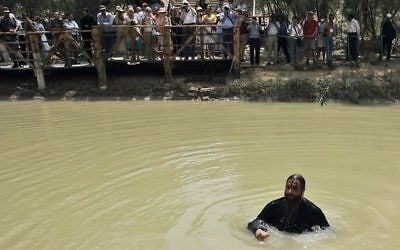
The Copper Scroll, Jordan’s New Nature Reserve and the Dispute over Jesus’ Baptism Site.
As Amman positions Bethany Beyond the Jordan for “Baptism 2030,” an early Hebrew text and a reconstruction of the region’s changing waterscape may help connect Second Temple Jewish purification practices with early Christian baptism.
In October 2026, Jordan’s Cabinet approved the designation of approximately 10 square kilometers around Bethany Beyond the Jordan, also known as Al-Maghtas, as a nature reserve. The decision coincided with international media coverage of research by Professor Mohammad Waheeb, published in the Egyptian Journal of Archaeological and Restoration Studies (EJARS), bringing the location of Jesus’ baptism back into public discussion.
Waheeb argues that archaeological excavations on the eastern bank of the Jordan River, considered alongside historical accounts, support identifying Al-Maghtas as the place associated with John the Baptist’s activities and Jesus’ baptism. This interpretation challenges competing identifications associated with Qasr al-Yahud, on the Israeli-controlled western bank.
The Jordanian announcement also fits the country’s preparations for “Baptism 2030,” commemorating the 2,000th anniversary of Jesus’ baptism. Beyond its religious, tourism and diplomatic significance, however, it raises a fundamental historical and archaeological question: What was the original character of the water infrastructure and ritual landscape of the lower Jordan basin during the first century CE?
An Earlier Hebrew Source: Section 4 of the Copper Scroll
While pilgrim accounts from late antiquity play a central role in identifying the baptism site, an earlier Hebrew text deserves consideration in this international discussion: Section 4 of the Copper Scroll (3Q15).
The scroll, generally associated with the late Second Temple or early Roman period, lists concealed deposits at locations across the Judean Desert and the Jordan Valley. Section 4 includes the following wording, rendered here in a working translation:
“At the mound of Kahlat … at the northern edge of the aqueduct, six cubits toward the immersion cavity …”
The interpretation of the wording, the identification of Kahlat and its possible relationship to the baptism landscape all require investigation. Nevertheless, the passage raises three relevant questions.
First, the terminology of immersion. The expression nikrat ha-tevilah, understood here as an “immersion cavity” or “immersion recess,” may provide textual evidence for a recognizable place of ritual immersion within the landscape described by the scroll. Its precise architectural meaning and geographical location remain to be established.
Second, the relationship between immersion and hydraulic engineering. On the reading proposed here, the passage places an immersion facility in relation to an aqueduct. This invites comparison with the water-management installations documented at Al-Maghtas, where pools and water-collection systems formed part of the religious landscape. Such a comparison must distinguish between structures from different periods; similarity alone cannot establish that the scroll describes the excavated Jordanian site.
Third, the relationship between Jewish purification and Christian baptism. John’s baptism emerged within a Jewish world in which ritual immersion was already familiar. Section 4 may therefore contribute to investigating the infrastructure associated with that broader ritual environment, before the later development of Byzantine churches and organized Christian pilgrimage.
The proposal is not that the Copper Scroll identifies the place where Jesus was baptized. Rather, it is that this Hebrew source may help frame a question that deserves closer attention: How were ritual immersion and engineered water supplies connected in the lower Jordan region before the Byzantine period?
A Changing Landscape: Water Levels, River Channels and Immersion Sites
A central premise of my research—one that still requires fieldwork, sediment analysis and detailed geographical mapping—concerns changing Dead Sea levels, the course of the lower Jordan and the configuration of its mouth over time.
The present landscape cannot simply be projected backward onto the first century BCE, the first century CE or the Byzantine period.
Three lines of investigation are particularly relevant.
Reconstructing ancient shorelines and exposed land. Understanding Section 4 and the region’s early immersion facilities requires reconstructing the shorelines, riverbanks and areas of dry land available during each historical period. These reconstructions must rest on dated geological and archaeological evidence.
Investigating multiple facilities and changing locations of use. The research should allow for the possibility that several immersion places existed, either simultaneously or successively. As channels shifted and access to water changed, communities may have established new facilities farther east or west, or at different elevations. The installations themselves would not have “migrated”; the locations used for immersion may have changed.
Reassessing the relationship between early and later sites. A first-century immersion place need not occupy precisely the same location as a Byzantine structure built centuries later. Changes in the river channel, flooding, sediment deposition and water availability could help explain differences between successive locations. Whether they did so here remains a question for investigation.
Dead Sea levels, the configuration of the river mouth and local channel changes should also be examined separately before their effects are combined. Their influence on any particular installation must be demonstrated rather than assumed.
Beyond the Geopolitical Dispute
Jordan’s initiative, supported by its World Heritage status and preparations for 2030, strengthens Al-Maghtas’s international standing. It may also renew attention to the competing traditions associated with the two banks.
This issue was already visible in July 2015, when The Times of Israel reported on UNESCO’s recognition of the Jordanian site. The report described competition over religious tourism while distinguishing between an accepted Christian tradition and archaeological proof of the precise location of Jesus’ baptism.
That distinction remains essential. UNESCO recognition acknowledges the site’s outstanding religious and cultural significance; it does not, by itself, resolve every historical question about an event in the first century.
The new nature-reserve designation and renewed publicity surrounding Waheeb’s research could bring these disagreements back into public debate, against the background of a sensitive relationship between Israel and Jordan.
This makes the proposal advanced in my earlier articles especially relevant: a joint research initiative involving Israeli, Jordanian and Palestinian scholars.
Such a project could bring together archaeological findings, Hebrew and Christian texts, historical maps, sediment records and reconstructions of ancient water levels. It could test possible relationships between the immersion place mentioned in Section 4, the proposed location of Kahlat and the wider baptism landscape—without presupposing that they describe the same site.
Rather than treating “Baptism 2030” solely as a diplomatic or tourism challenge, it could become an opportunity for shared historical investigation.
Section 4 of the Copper Scroll offers a potential point of contact between textual research, hydraulic engineering and the history of ritual immersion. Its contribution will depend on testing its language, chronology and geography against physical evidence.
The question is therefore broader than which modern bank can claim the “true” baptism site. It is how a changing river landscape shaped places of purification, baptism and pilgrimage—and whether studying that shared landscape can create an opportunity for cooperation.
Related Topics
Related Posts