

Courtyards and Characters: Wandering Through Jerusalem’s Living Stories
Winning Doesn’t Mean You Own the Country
What an Israeli soldier, a rabbi on a hilltop, and an eighty-year-old letter can teach us about the day after the election
The Morning After
The people have spoken. After months of campaigning, accusations, promises, flip-flopping, and the seemingly endless drama that’s called Israeli democracy, we finally have a winner. Or do we?
Certainly, someone won the most votes. Someone will receive the mandate to attempt to cobble together a coalition, and assume responsibility for governing the Jewish state. That’s how democracy works, and thank God for it. But as Dr. Tal Becker, a senior fellow at the Shalom Hartman Institute and veteran Israeli peace negotiator, observed at a recent Times of Israel pre-election event I attended, the more important question isn’t who wins the election. It’s what happens afterward. How do we begin repairing this country?
Because there is something the victorious coalition, whoever it may be, needs to understand: Just because you won the election doesn’t mean you won the country.
You may have 61 seats, or 63, or 65. You may have the legal authority to pass legislation, appoint ministers, and implement your agenda. But for millions of Israelis, the government you are about to establish represents the worst possible nightmare for the country they love. Those fears deserve to be heard and taken seriously. Winning an election gives you the right to govern, but it also brings an enormous responsibility to listen to those who voted against you.
Twelve Tribes, One People
This past Shabbat, coinciding with the Torah portion of Lech Lecha, our community celebrated Shabbat Lech Lecha, a Shabbat dedicated to recognizing and honoring those who have made aliyah and immigrated to this country.
Lech Lecha tells the epic story of Abraham’s journey to the Land of Israel. His journey established the spiritual prototype for generations of Jews who would follow in his footsteps, leaving behind what was familiar and precious to uproot themselves physically, emotionally, and spiritually in search of a deeper, more meaningful life here.
As part of our celebration, we hosted a guest speaker, and inevitably, the conversation turned to politics. He offered an analogy that resonated with me. Imagine a precious family heirloom, a beautiful vase passed down through generations, upon which every member of the family has inscribed a name. One day, the vase falls and shatters. Looking at the fragments, you discover that the largest piece bears your name. Would that offer any consolation? Your piece may be the biggest, but the vase is still broken.
Sadly, that is where we find ourselves today. One party will emerge “victorious,” with the “largest piece” in hand, but the vase is still shattered. If the Jewish people remain so deeply divided, what exactly have they won?
The Jewish people have always been composed of twelve tribes, each with its own character, priorities, and understanding of its place within the larger nation. Our differences are part of the Jewish story, and the challenge has always been to bring those differences together in pursuit of a shared national destiny.
A Meeting on a Hilltop
That challenge was brought home to me in a remarkable way recently, during a visit to a tiny, new hilltop community outside Hebron.
I brought a small group from Chicago to meet some of these so-called “hilltop Jews” and to learn about their experience. We were sitting around a table in a small mobile home in a newly established hilltop community just beyond the gates of Kiryat Arba. Our hosts were the rabbi and his wife, the couple who had founded the community, and they were telling us about their experiences twenty-one years earlier in Sa-Nur, one of four Jewish communities in northern Samaria evacuated during Israel’s 2005 disengagement. Approximately 700 residents from these four communities were uprooted from their homes, alongside the much larger evacuation of the 21 Jewish communities that formed Gush Katif inside Gaza.
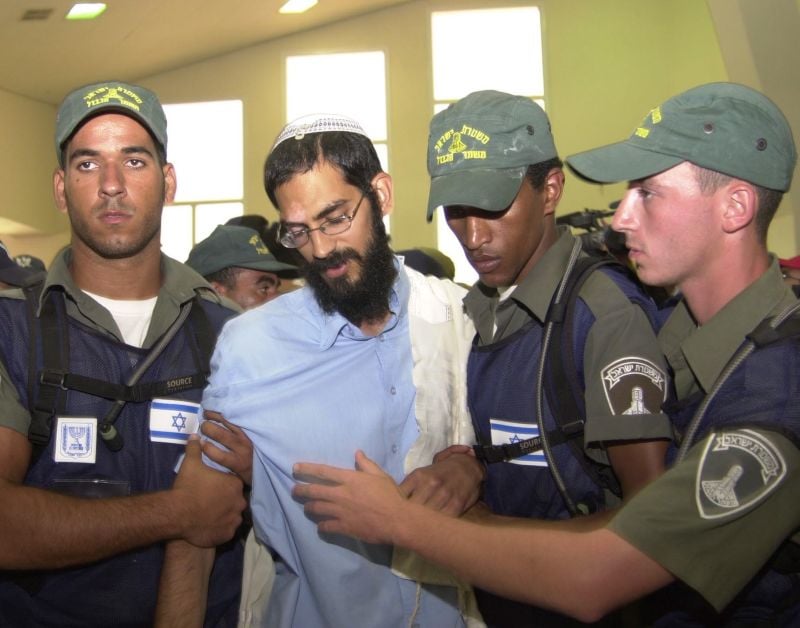
The rabbi and his wife described the anguish of being literally dragged from their homes by Israeli soldiers, the devastation of losing the community they had helped build, and the particularly painful experience of being uprooted by the very army they loved and supported.
Sitting with us at the table was a new friend named Alon, an Israeli special forces reservist who has spent close to 500 days in uniform since October 7. We had met him only the previous week, and he had decided to join us on our excursion into the Judean hills. Alon is normally animated and engaged, but as our hosts spoke, we noticed that he had become unusually quiet. His eyes were filling with tears.
Eventually, he looked across the table at the rabbi and said, “In 2005, I was a soldier,” pause, gulp. “I was one of the soldiers assigned to evacuate the homes in Sa-Nur.”
There was a moment of silence as everyone absorbed what he had just said. Here were two men who had found themselves on opposite sides of one of the most painful episodes in modern Israeli history, now sitting together twenty-one years later, neither having had any idea of the other’s involvement.
Then the rabbi’s wife immediately turned to her husband and said, “Get up and give him a hug.”
The rabbi walked around the table and embraced Alon, and the two held each other, crying.
It was an extraordinarily moving moment. The rabbi who had been dragged from his home and the soldier who had participated in the dragging were standing together, embracing, with all the painful history of that experience between them. I honestly felt privileged to be witnessing it.
Neither of them attempted to revisit the political arguments surrounding the disengagement, and I doubt either has fundamentally changed his views about what happened in 2005. But in that moment, they were able to recognize one another’s pain and humanity, and perhaps begin to heal something that had remained unresolved for more than two decades.
“It Is My Brothers Whom I Seek”
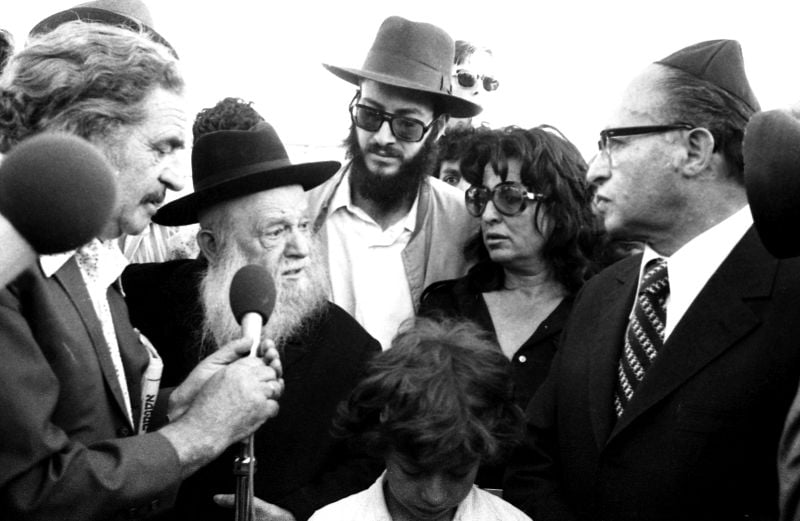
I recently came across a letter written nearly eighty years ago by Rav Tzvi Yehuda HaKohen Kook, the son of Rav Abraham Isaac Kook and one of the most influential spiritual leaders of religious Zionism.
It was late 1947, just months before the establishment of the State of Israel. The Jewish community was struggling against British rule, while bitter divisions between the Haganah, Irgun, and Lehi, three Jewish underground fighting organizations, had sometimes erupted into violence between Jews. At the very moment the Jewish people were approaching the realization of their two-thousand-year-old dream of sovereignty, internal divisions threatened their ability to face the enormous challenges ahead.
Rav Tzvi Yehuda published an appeal entitled Et Achai Anochi Mevakesh, “It Is My Brothers Whom I Seek,” borrowing the words of Joseph as he searched for his brothers in the book of Genesis.
Addressing Jews of every political persuasion, party, and organization, he opened with a heartfelt plea:
“My brothers and my sisters, in every part of our people, in every party and every organization … I seek all of you, and I plead before you.”
He then urged them to recognize the seriousness of their shared responsibility, warning against the conviction that any one faction possessed the whole truth:
“Let none of us, no party, organization, or faction, decide that it alone possesses all the truth and all the justice.”
He warned against imposing political convictions through force and urged his fellow Jews to remember the sincerity of one another’s ideals. In another particularly relevant passage, he wrote:
“Let us remember the desire for justice and the idealism within each of us.”
And from that recognition, he urged them to find a proper way to resolve their differences and repair their relationships. His appeal was grounded in the belief that the various factions, despite their bitter disagreements, shared a genuine concern for the welfare of the Jewish people and the rebuilding of their homeland.
I find it remarkable how relevant those words remain nearly eighty years later. Rav Tzvi Yehuda understood that the pursuit of even the most deeply held convictions must be accompanied by humility and an appreciation for the sincerity of those who see things differently.
Sitting in that mobile home outside Kiryat Arba, I witnessed a beautiful expression of precisely that idea. The rabbi and Alon may still disagree about the 2005 disengagement, but they were able to acknowledge each other’s sacrifice and pain without demanding that either surrender his convictions.
Our Shared Future
Israel today is filled with people who feel betrayed and frightened by the direction in which their fellow citizens want to take the country. The religious and the secular, the right and the left, the settlers and those who believe the settlements threaten Israel’s future, those who believe judicial reform is essential to preserving democracy and those who believe it threatens democracy itself.
These disagreements are real and profound, and they aren’t going to disappear because someone assembles 61 seats in the Knesset. A healthy democracy allows for passionate disagreement, and a healthy Jewish society must make room for competing understandings of what it means to live as a sovereign Jewish people in our ancestral homeland.
But somewhere along the way, too many of us have become so convinced of the righteousness of our own positions that we have stopped hearing the fears of those on the other side. We dismiss their concerns as ignorance, extremism, or bad faith, and convince ourselves that if only our side could win decisively enough, the country could finally move forward.
The government that emerges from this election will have the responsibility to govern and should pursue the policies on which it campaigned. But governing wisely requires recognizing that the people who voted against you are fellow citizens whose hopes, fears, and aspirations deserve to be taken seriously. A narrow parliamentary majority is not a blank check to remake the country without regard for the millions who disagree.
The objective must be to build a country in which the other side can live, too.
We are partners in one of the most extraordinary chapters of Jewish history. After two thousand years of exile, persecution, wandering, and longing, we have returned to our homeland and rebuilt a sovereign Jewish state. We now have the privilege and responsibility of deciding what kind of country it will become.
We will disagree about that, sometimes fiercely. But surely we can agree that we want our children and grandchildren to inherit a thriving, secure, morally serious Jewish state, rooted in the values of our Torah and our people, where Jews with different visions of its future can still recognize one another as brothers and sisters.
Each tribe has something indispensable to contribute, and our shared national mission is greater than any one of us. If we hope to fulfill our ancient mission of becoming a light unto the nations, we must first learn how to live together as a nation.
I’ll end with the short prayer that I said as I dropped my ballot in the box:
Hashem, thank You for the extraordinary privilege of living in a sovereign Jewish state and having a voice in shaping its future. May those we elect lead with wisdom, humility, integrity, and a genuine love for all of Am Yisrael. May they always place the welfare of our people and our country ahead of their own political and personal interests, and may they help us find greater unity despite our differences. May we continue to build a strong, secure, prosperous, and compassionate Jewish state, one that lives up to the ideals and dreams of the generations who came before us, and one that we will be proud to pass on to our children and grandchildren.