

Words Outrun Diplomacy: Spain, Israel, and the Rhetoric of the Nuclear Option
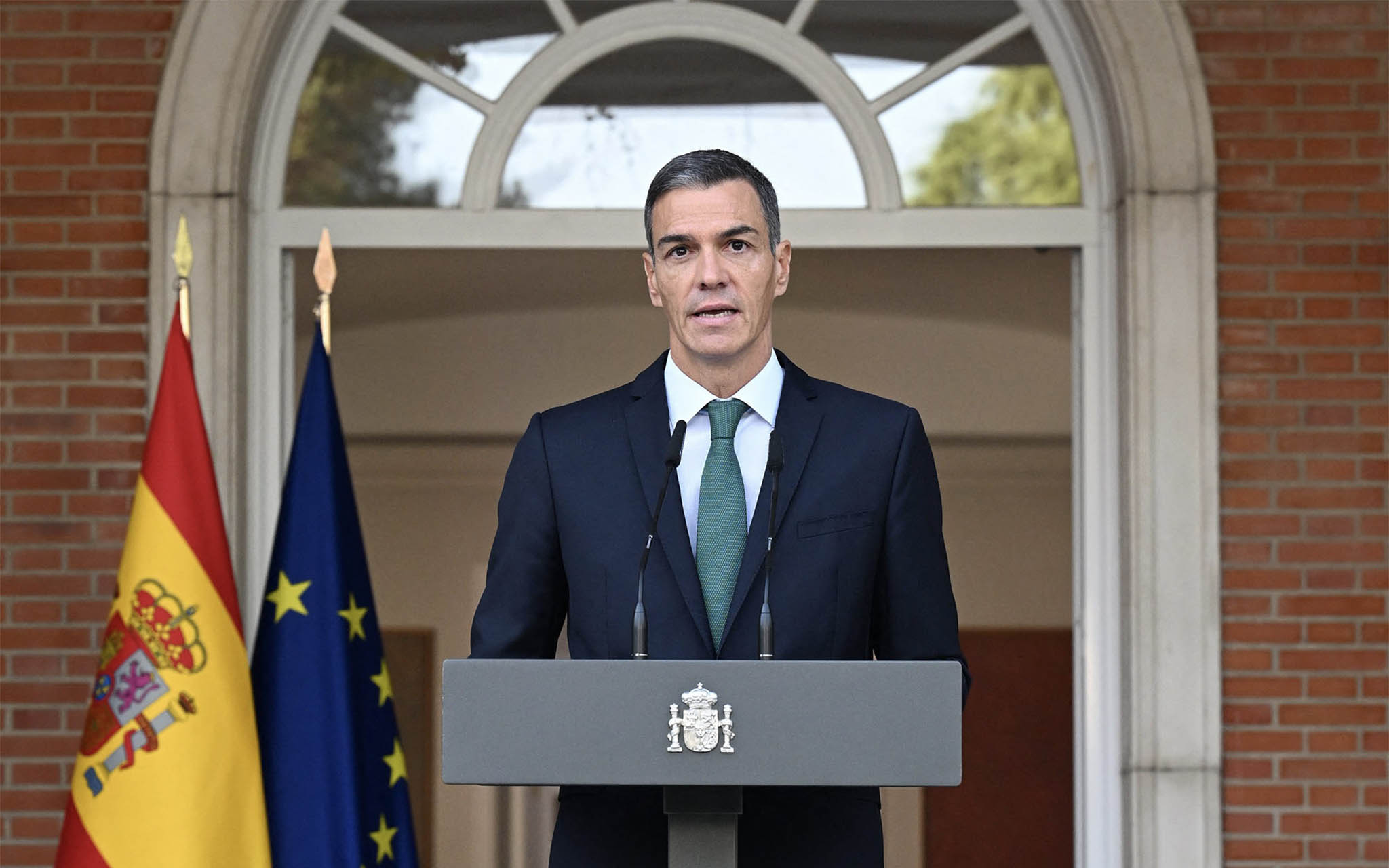
The remark attributed to the Spanish Prime Minister—“Our country does not have nuclear bombs, and we cannot, on our own, bring an end to Israel’s offensive”—is striking. In the highly codified world of international relations, words themselves are weapons. Invoking nuclear weapons is never a neutral action: it alters the balance of diplomatic discourse and directs it toward the highest level of power. Understanding this statement requires a more profound understanding of the state of Spanish diplomacy and the evolving relationship between Europe, Israel, and the Middle East conflict.
Nuclear Hyperbole as an Admission of Powerlessness
By mentioning “nuclear bombs,” the Spanish leader was not making a technical observation but rather using a dramatic exaggeration. The message is clear: in the face of Israel, the usual instruments of pressure—diplomacy, sanctions, and UN resolutions—appear negligible. Only the ultimate force, hypothetical and out of reach for Madrid, might truly sway Israeli policy.
This kind of statement is not meant to be taken literally. It is meant to underline the asymmetry of the situation: on one side, a militarily dominant state, confident in its leverage and backed by the United States; on the other, Spain, constrained by its lack of military clout and the sluggish machinery of the European Union. The effect sought is to leave a mark. But the risk is equally obvious: that such language will be read as outright hostility toward Israel, moving beyond political critique into symbolic confrontation.
Spain is breaking with Europe’s caution.
Spain has long set itself apart in the EU by taking a more vocal stand in favor of the Palestinian cause. It has constantly condemned Israeli military actions, pushed for the recognition of a Palestinian state early on, and attempted to be a moral voice in a divided Europe.
.This stance comes from two places. Firstly, Spanish public opinion is strongly sympathetic to Palestinians, with broad support for NGOs and solidarity campaigns. Second, a diplomatic tradition of counterweight: lacking France’s military reach or Germany’s economic heft, Madrid has sought to stand out with sharper positions—even if this risks being seen as out of step with European consensus.
The nuclear allusion fits squarely within this strategy: making words hit harder in order to claim a presence on the international stage. Yet the cost is that Spain risks reinforcing an image of being “”maximalist”—principled, yes, but sometimes impractical in the eyes of its partners.
The Paradox of a Divided Europe
The Spanish Prime Minister’s phrase also exposes Europe’s deadlock over the Israeli–Palestinian conflict. Germany, the Czech Republic, and Hungary are among the states that prioritize strategic solidarity with Israel, which is rooted in history and security concerns. Conversely, countries such as Spain, Ireland, and Belgium are pushing for a tougher stance, condemning what they view as a disproportionate attack and violation of international law.
The EU thus finds itself paralyzed: unable to impose credible mediation, condemned to issue contradictory statements, and left powerless next to U.S. diplomacy or regional initiatives. In that sense, the Spanish leader’s words carry a blunt truth: without military leverage or political unity, Europe has little weight on the ground.
The Collateral Effects of Radical Rhetoric
Striking words are not without consequence. In Jerusalem, they will be read as an aggressive delegitimization—an accusation that Israel is impervious to anything short of military force. That narrows the space for dialogue and weakens Madrid’s credibility as a mediator.
In Brussels, the statement risks deepening internal rifts and feeding the image of a dissonant Europe, incapable of speaking with one voice on a defining issue. And at home, it will likely sharpen Spain’s political polarization, where divides over the Middle East often mirror deeper ideological fractures.
More of a political gesture than a strategy.
Ultimately, the phrase is not a blueprint for action but a communications gambit. It reveals the frustration of a mid-sized power that, lacking military means, turns to verbal escalation to be heard. But this is not without cost: it positions Spain squarely as a radical opponent of Israel’s offensive and widens Europe’s internal fractures.
The Perils of Verbal Escalation
Diplomacy lives on nuance, quiet channels, and carefully measured formulations. When a leader instead opts for hyperbole, they may capture attention, but they weaken their country’s credibility as a serious diplomatic actor. Spain’s use of the nuclear metaphor portrays it as an indignant but powerless voice, more skilled at denouncing than taking action. Madrid’s strength will not come from exaggerating but rather from building European coalitions, reinforcing the legitimacy of international law, and speaking to partners as equals. In other words, by transforming moral outrage into lasting diplomatic action